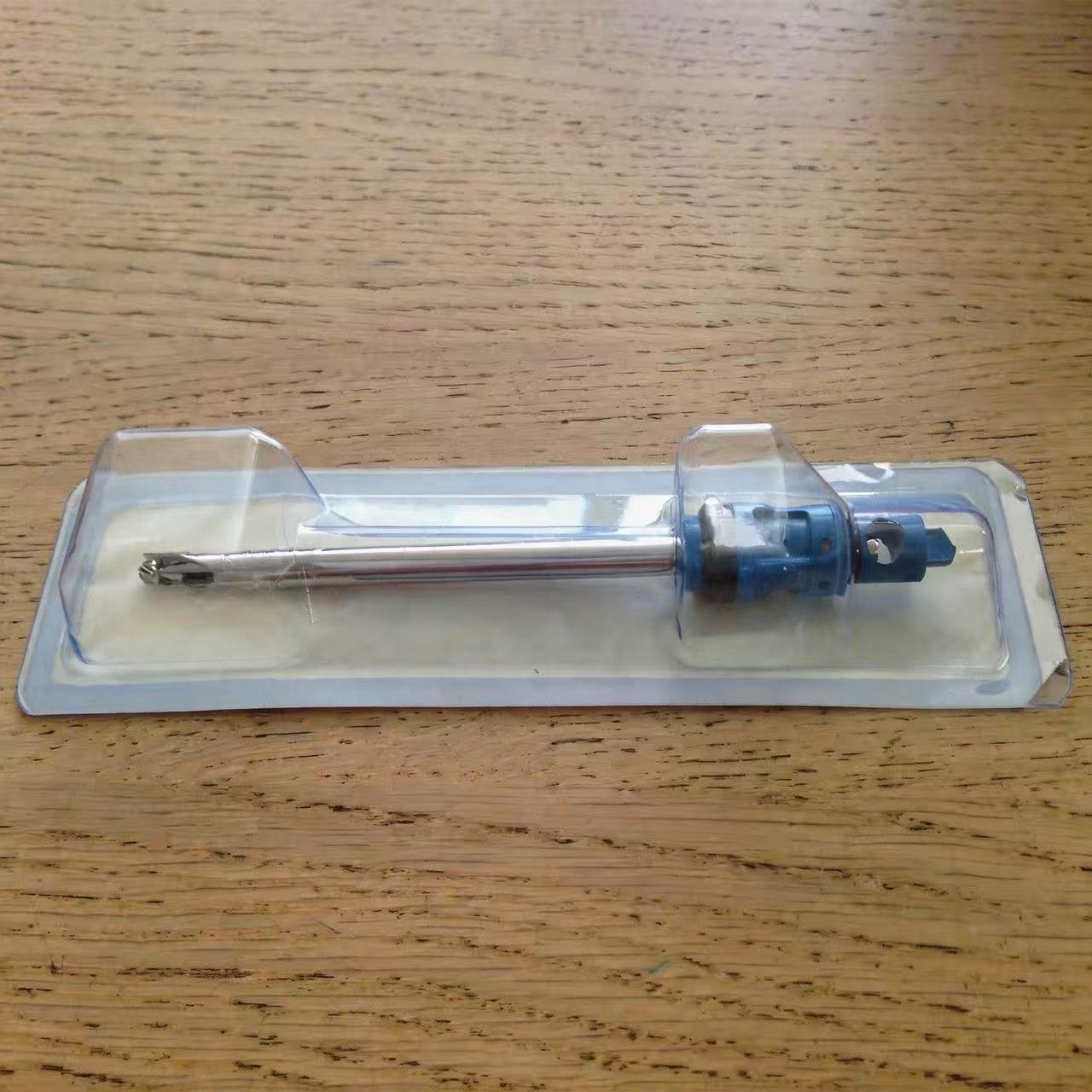
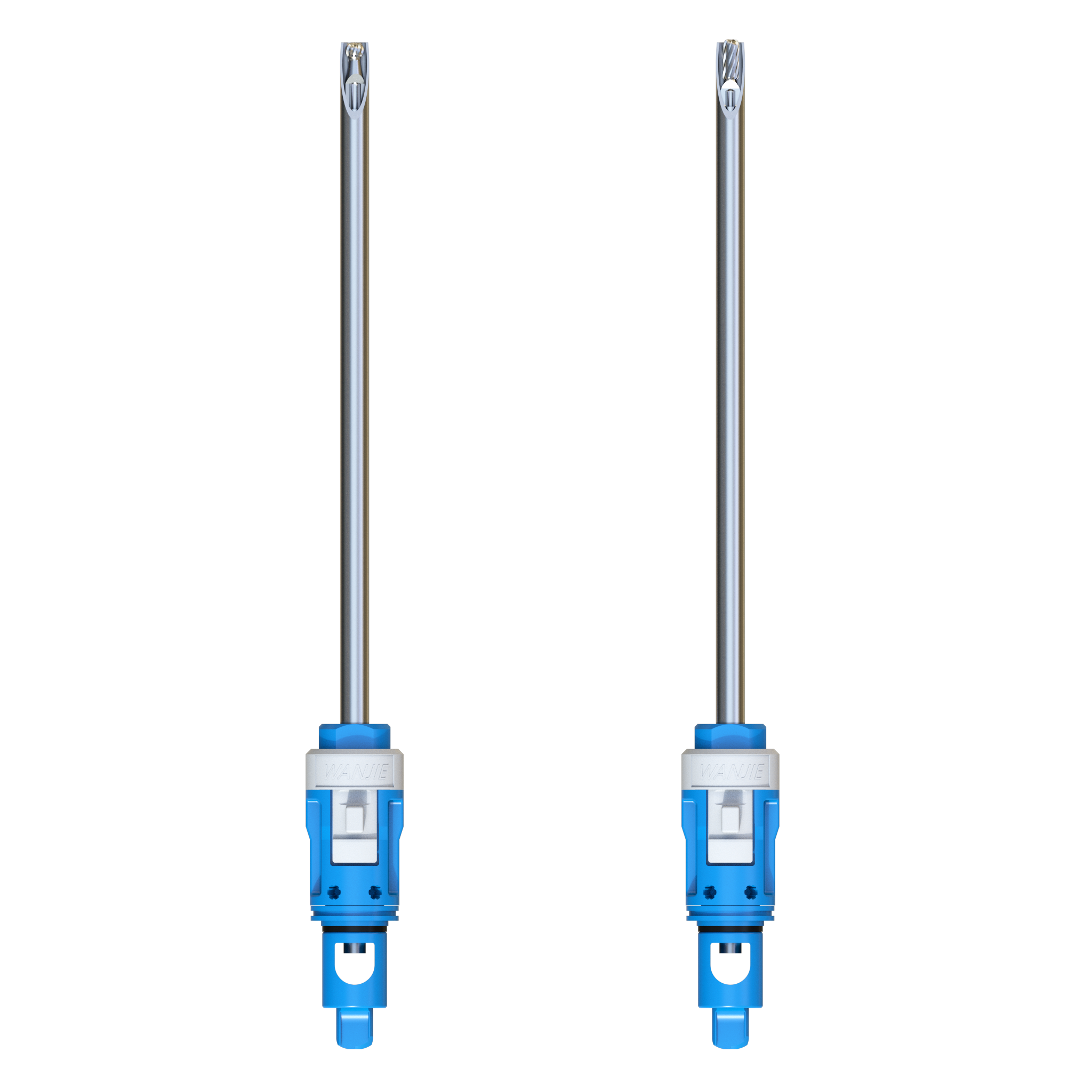
Angle | Key Specifications (Diameter × Length) | Surgical Application & Advantage |
0° | 4.0mm × 11cm | Ethmoid sinus / total sinus surgery. Straight-ahead view for routine polyps and ethmoid cell removal. Double-sided serrated design provides sharp cutting while protecting surrounding mucosa. |
12° | 4.0mm × 11cm | Uncinate process / ethmoidectomy. Slightly angled for precise treatment of the uncinate process and ethmoid sinus opening. Sharp-tooth design enables minimally invasive cutting. |
15° / 20° | 2.5-4.5mm × 11-15cm | Skull base surgery. For bone drilling in regions such as the sella turcica and clivus; typically burs. Angled design facilitates precise grinding. |
40° | 3.5-4.0mm × 11cm | Maxillary sinus / uncinate process / adenoids. Curved shaft for accessing the maxillary sinus and clearing lesions around the ostium. Adenoid-specific blade with reverse opening for transoral removal. |
60° | 3.5-4.0mm × 11cm | Frontal sinus / maxillary sinus floor. Greater angle suitable for accessing the frontal recess (frontal sinus drainage pathway) or clearing the maxillary sinus floor. Beveled cutting for high efficiency. |
70° / 90° / 120° | 3.5-4.0mm × 11-13cm | Deep frontal sinus / maxillary sinus. For frontal sinusotomy (70°); "sentinel" complex lesions within the maxillary sinus, reaching the deepest and most curved corners. |
Laryngeal | 1.9-3.8mm, varying lengths | Vocal cord / laryngeal tumors. Requires extreme precision – thin, flexible diameter for ultra‑slow aspiration cutting of micro‑tissues (e.g., papillomas on vocal cords) to maximize voice preservation. |
Otological | 1.5-6.0mm, length ~7cm | Mastoid / ossicular chain surgery. Used primarily for bone grinding rather than soft tissue cutting. Available in diamond (polishing) and tungsten carbide (high‑speed cutting) materials. |

