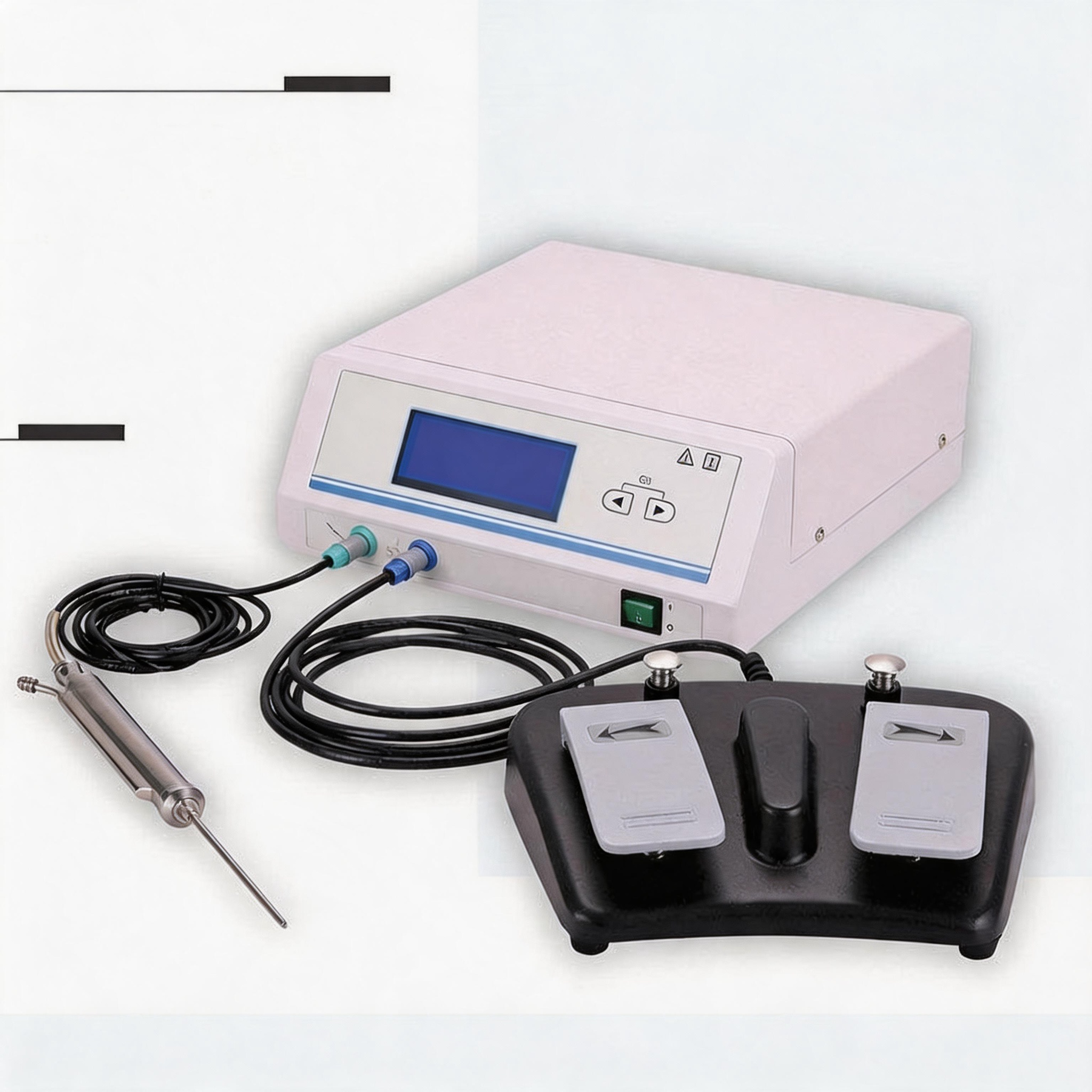
Component | Parameter Category | Specification / Value | Remarks / Requirements |
Console | Basic Specifications | Power Supply: Input 100-240VAC, 50-60Hz | Universal voltage, adapts to different hospital power supplies. Console should be compact and portable. |
Smart Functions | Auto-identification: Automatically identifies handpiece and blade/bur type, recommends or sets default parameters | Simplifies operation and ensures safety. | |
Display & Interface | Display: High-resolution touchscreen showing real-time speed, rotation direction, blade angle, irrigation volume, etc. | Clear, intuitive information and easy operation. | |
Expandability | Software Upgrade: Via USB or flash card | Facilitates future function expansion and maintenance. | |
Handpiece | Speed & Torque | Nasal Shaver Handpiece: Unidirectional speed ≥12,000 rpm (continuous rotation), reciprocating ≥5,000 rpm (oscillating cutting) | Torque is a key indicator of cutting power. High-speed drills often require dedicated high-torque handpieces. |
Physical Characteristics | Design/Weight: Pen-grip design for delicate operation, weight typically <240 g | Lightweight, ergonomic design, and good sterilization tolerance reduce surgeon fatigue. | |
Key Design Features | In-line Suction: Cutting and suction in a straight line, effectively prevents intraoperative clogging | In-line suction is a core standard for handpiece design. | |
Blades / Burs | Blades | Angles: Common angles: 0°, 12°, 40°, 60°, 120°, etc. | Angles, diameters, and lengths must precisely match the surgical anatomy. |
Burs | Types: Cutting bur (tungsten carbide, sharp) for rapid bone removal; Diamond bur (diamond grit, fine) for delicate polishing | Choose bur material based on surgical goal (e.g., fenestration vs. bone grinding). | |
Foot Switch | Basic Functions | Control: Stepless speed adjustment, rotation direction switching, blade opening angle control, etc. | Anti-slip, anti-tip design reduces operator fatigue. |

