

The Modern ENT Surgical Advantage: How Coblator, Endoscopy, and Microdebrider Work Together
In today’s ENT operating rooms, three technologies have become essential for many minimally invasive procedures: the high-definition endoscope, Coblator, and powered microdebrider.
These devices are not competing technologies. Instead, they work together to provide surgeons with better visualization, precise tissue treatment, and efficient tissue removal.
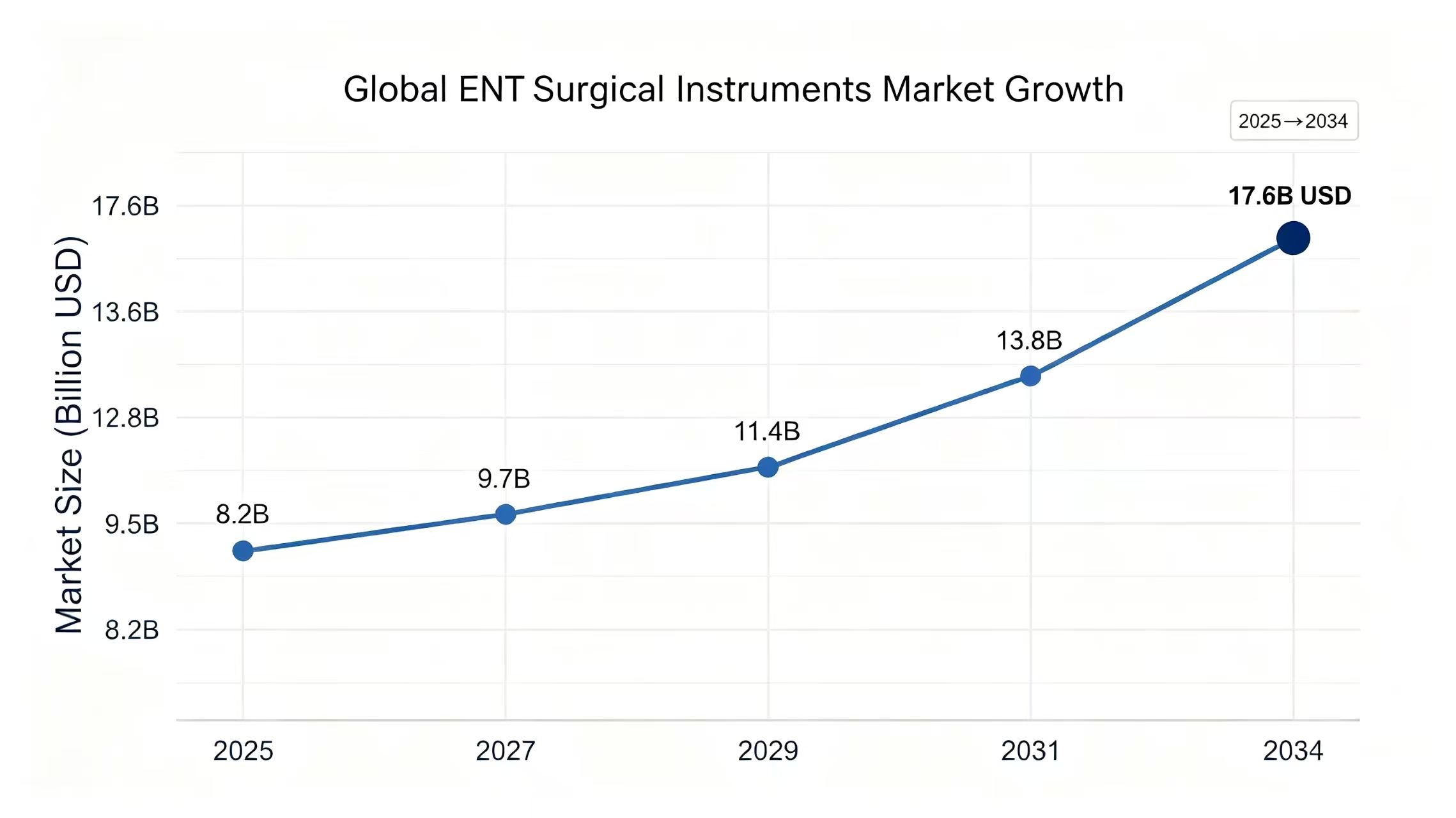
The global ENT surgical devices market is projected to reach $17.6 billion by 2034, driven by the increasing adoption of advanced minimally invasive technologies. Among them, Endoscopy, Coblator, and Microdebrider systems play a key role in improving surgical accuracy, reducing complications, and enhancing patient recovery.
1. Endoscope – The Surgeon’s Eyes
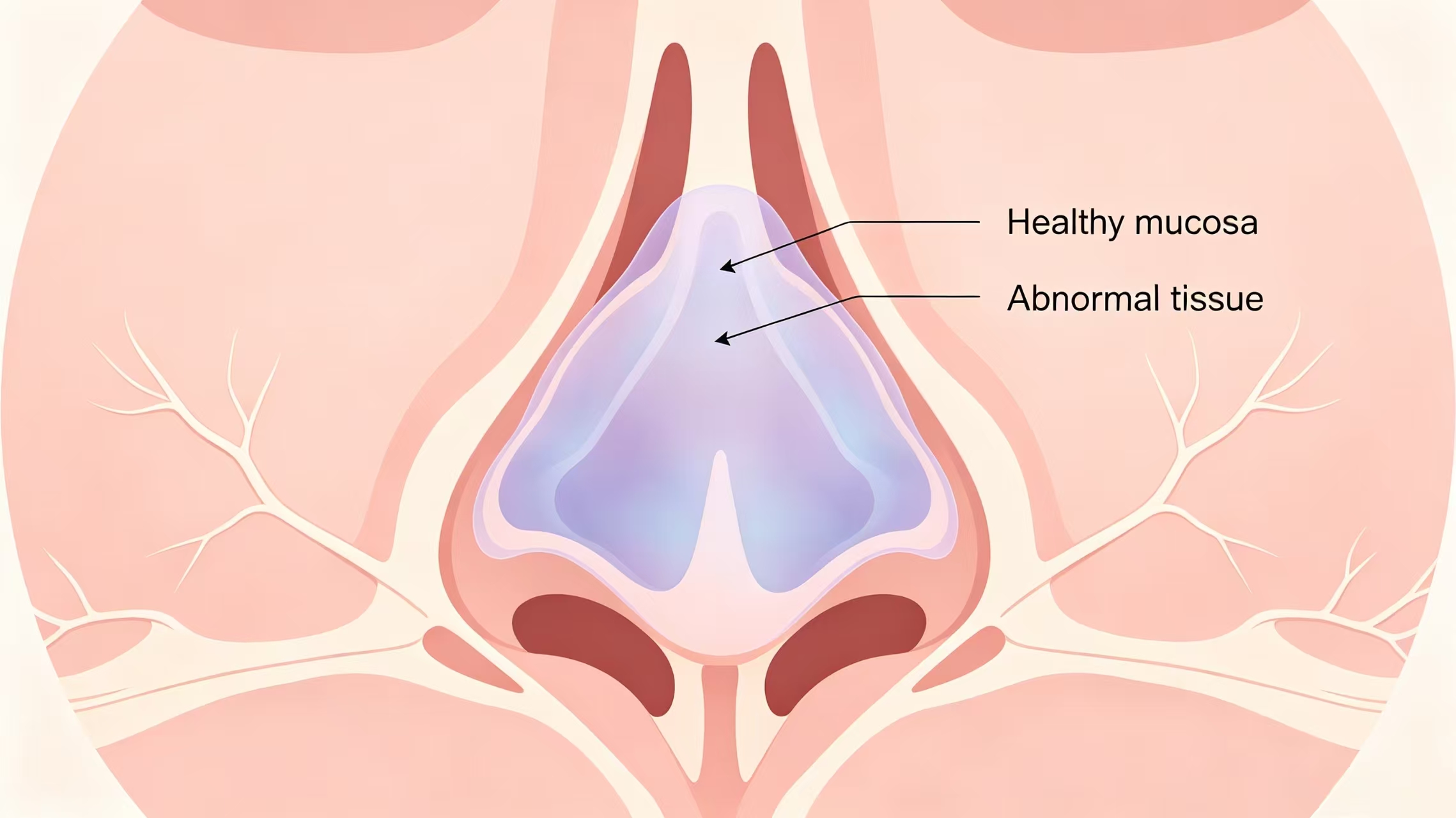
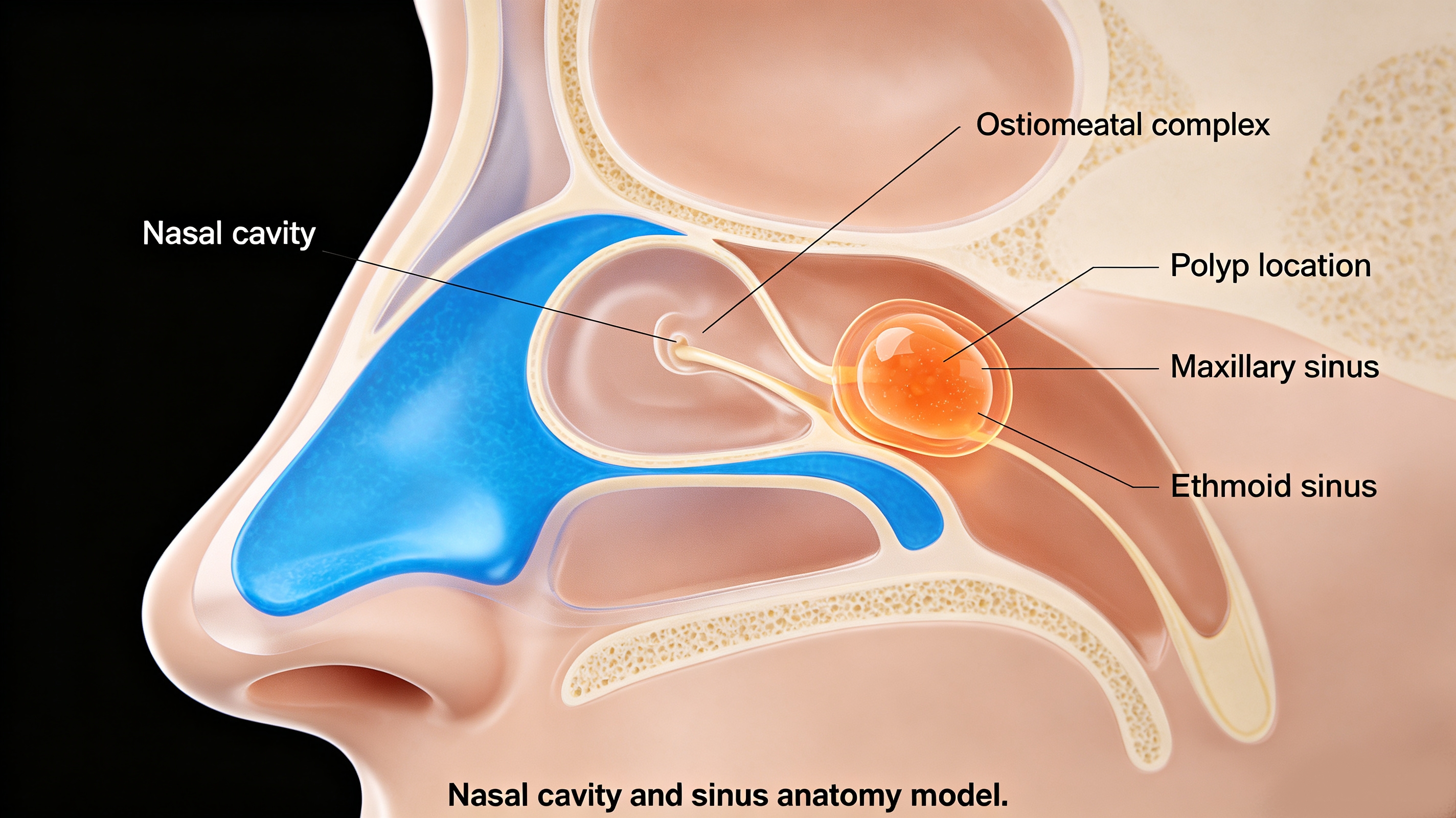
Endoscopic sinus surgery (ESS) has transformed modern sinus treatment. Without an endoscope, surgeons would have limited access and visibility inside the nasal cavity, sinuses, and skull base.
Modern 4K high-definition endoscopes provide detailed visualization of delicate anatomical structures, allowing surgeons to distinguish healthy tissue from diseased areas with greater accuracy. This improves surgical precision, reduces unnecessary tissue damage, and helps achieve better outcomes.
For patients, ESS is typically performed as a minimally invasive procedure. Many patients can return home the same day, with noticeable breathing improvement within several weeks and continued healing over the following months.
2. Coblator – Precision Ablation with Low Thermal Damage
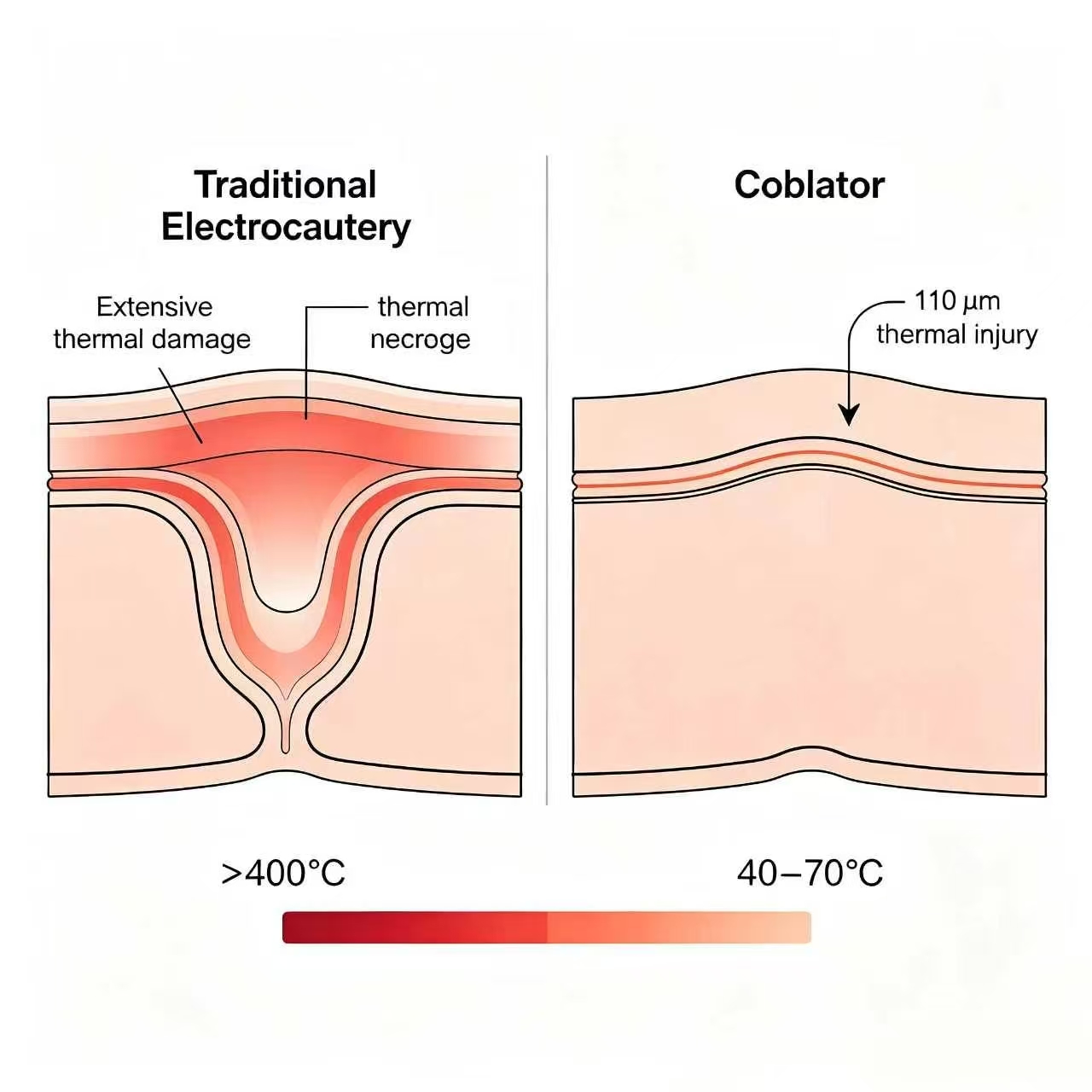
The Coblator uses low-temperature plasma technology (approximately 40–65°C) to remove targeted tissue while providing simultaneous hemostasis.
Unlike traditional electrocautery, Coblation does not rely on high-temperature burning or charring. It minimizes thermal injury, with tissue damage limited to approximately 110 microns.
Clinical studies have shown that coblation tonsillectomy can reduce postoperative pain, bleeding, and recovery time compared with traditional cold steel or diathermy techniques.
Coblation is particularly popular in pediatric ENT procedures, including tonsil and airway-related surgeries, where reducing discomfort and improving recovery are important considerations.
In nasal procedures, Coblator turbinate reduction is also increasingly used for patients with turbinate hypertrophy and nasal obstruction.
3. Microdebrider – Efficient Tissue Removal
While the Coblator focuses on controlled ablation and hemostasis, the powered microdebrider is designed for fast and precise mechanical tissue removal.
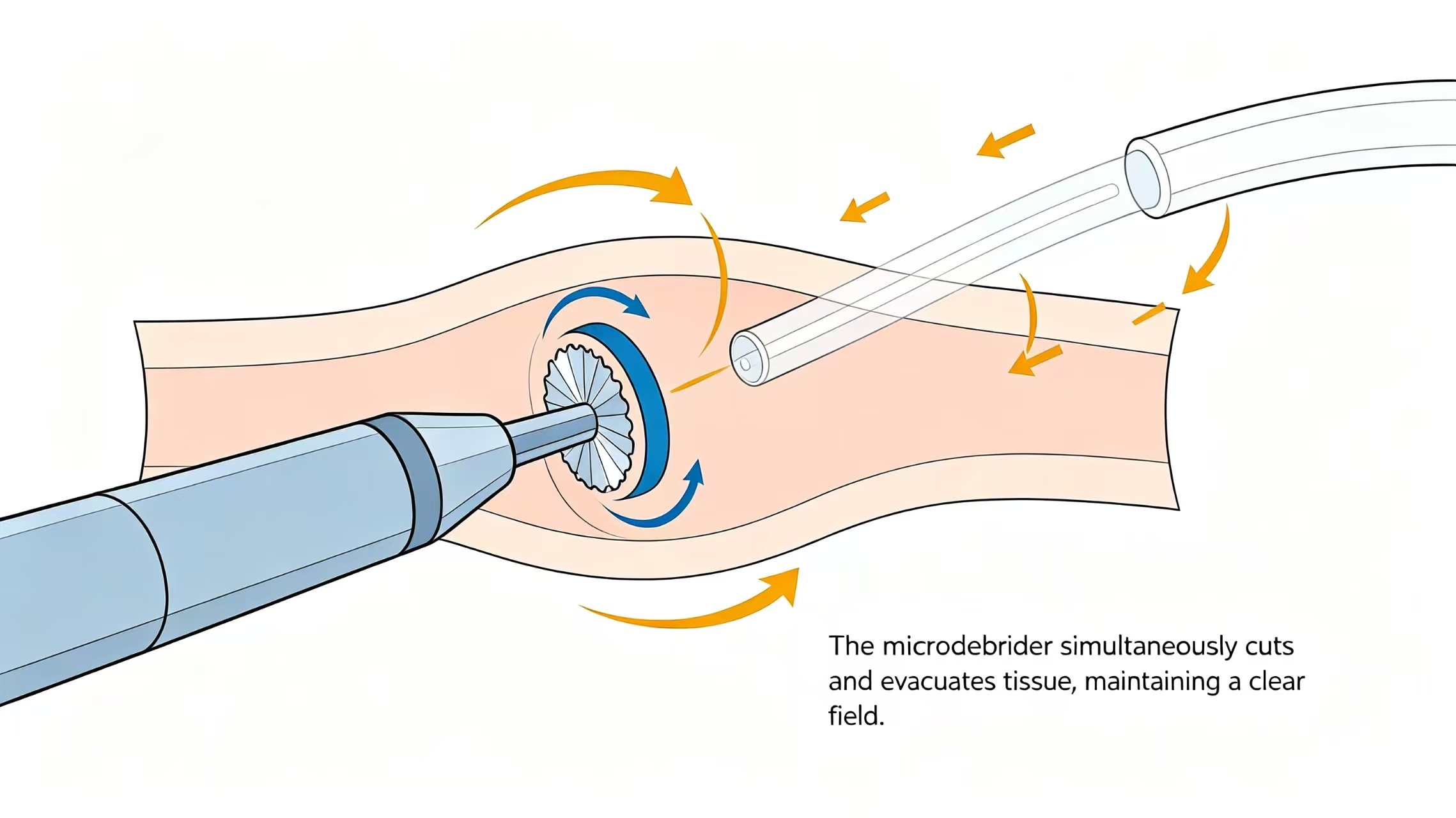
The microdebrider uses a rotating blade inside a suction tube to simultaneously cut and remove tissue, maintaining a clear surgical field throughout the procedure.
It is widely used in endoscopic sinus surgery (ESS), especially for removing nasal polyps, clearing obstructive tissue, and performing selected tumor debulking procedures.
Studies have demonstrated that microdebrider-assisted ESS can reduce intraoperative bleeding, shorten surgical time, and decrease postoperative crusting compared with conventional techniques.
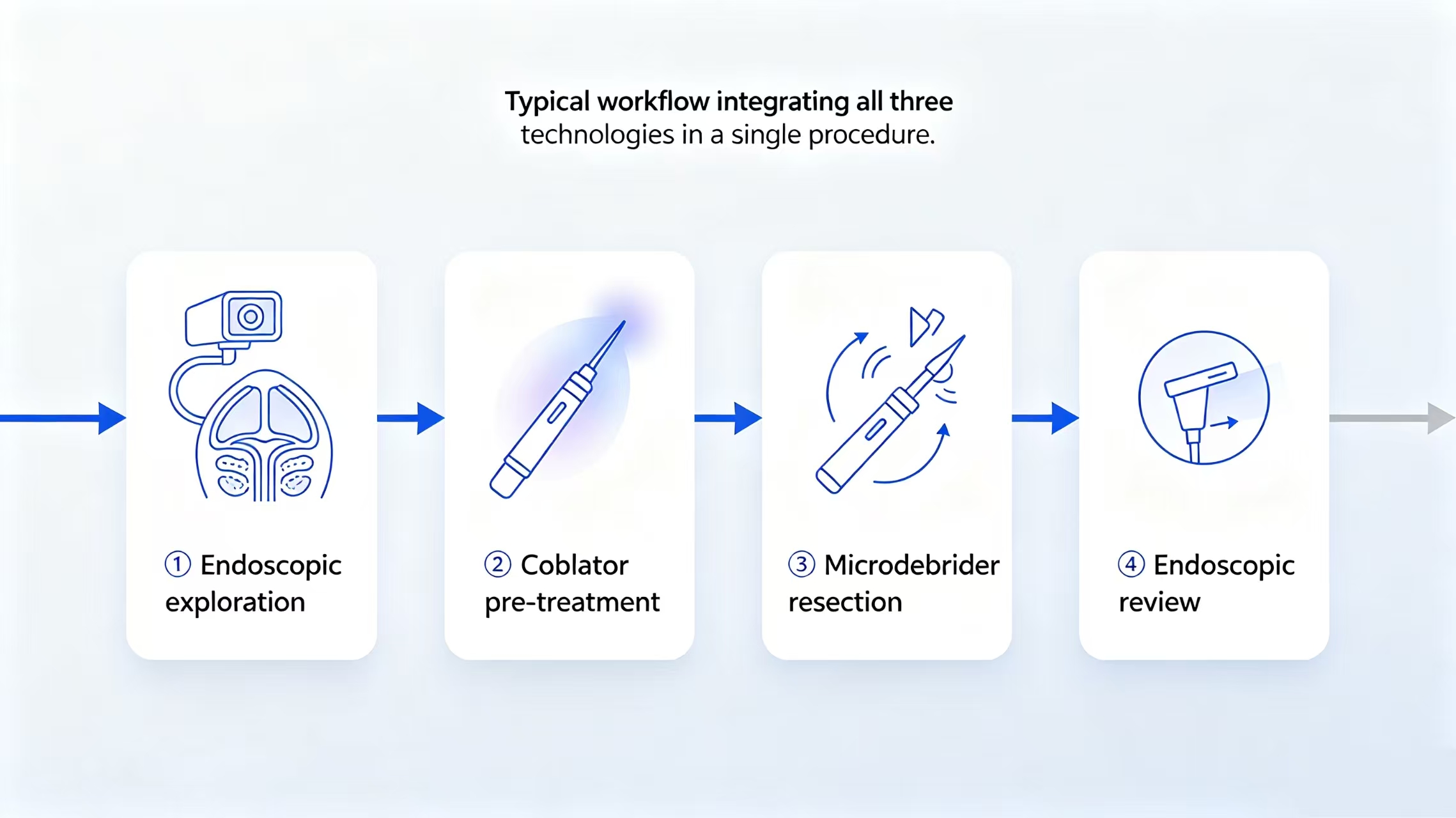
4. Why Coblator, Endoscope, and Microdebrider Work Better Together
The strength of these technologies comes from their combination:
· Endoscope provides visualization
· Coblator provides controlled ablation and hemostasis
· Microdebrider provides rapid tissue removal
In many ENT procedures, surgeons may use multiple technologies during the same operation. For example, Coblation can help control bleeding and reduce tissue volume, while the microdebrider efficiently removes larger amounts of tissue under clear endoscopic guidance.
This integrated approach allows surgeons to work with greater precision, minimize trauma to surrounding structures, and improve patient recovery.
5. Frequently Asked Questions
What is Coblator surgery?
Coblator surgery uses low-temperature plasma technology to remove tissue while controlling bleeding. It is designed to reduce thermal damage and support faster recovery.
Coblator vs Microdebrider: Which is better?
Neither technology replaces the other. The choice depends on the surgical goal. Coblator is ideal for controlled ablation and hemostasis, while the microdebrider is preferred for rapid tissue removal.
Many ENT surgeons use both devices in the same procedure.
Is coblation tonsillectomy safe?
Yes. Coblation tonsillectomy is a widely used ENT technique with proven clinical benefits, including reduced intraoperative bleeding and improved postoperative recovery.
How long does recovery from ESS take?
Most patients can leave the hospital on the same day. Many return to normal activities within about one week, while nasal breathing continues to improve over the following weeks.
Who needs microdebrider surgery?
The microdebrider is commonly used for patients with chronic sinusitis with nasal polyps, turbinate hypertrophy, and other conditions requiring controlled tissue removal.
Conclusion
Endoscopy, Coblator, and Microdebrider are not simply surgical instruments—they represent a modern approach to minimally invasive ENT surgery.
By combining clear visualization, precise tissue treatment, and efficient removal, these technologies help surgeons preserve healthy tissue, reduce complications, and improve patient outcomes.
As ENT procedures continue moving toward less invasive techniques, the combination of Endoscopy, Coblator, and Microdebrider will remain an important part of advanced surgical practice.