

OEM Coblation Electrodes: What Medical Device Distributors Should Know
For medical device distributors, choosing an OEM Coblation electrode manufacturer is not simply a matter of comparing product specifications and prices.
You also need to know whether the supplier can maintain consistent quality, support your registration requirements, customize the product for your market, and deliver reliably as your business grows.
If you are evaluating a new supplier for Coblation wands or RF plasma surgical electrodes, here are the areas worth checking first.
1. Check the Quality System and Product Documentation
ISO 13485 is a good starting point, but don't stop at the certificate.
Ask what products are covered by the manufacturer's quality system and what documentation is available for the electrode you plan to purchase.
Depending on your market and product classification, this may include:
· Product specifications
· Material information
· Biocompatibility documentation
· Sterilization documentation
· Electrical and functional test information
· Labeling and packaging information
· Batch traceability
· Available regulatory certificates and technical documents
This becomes especially important when you plan to register the product under your own brand.
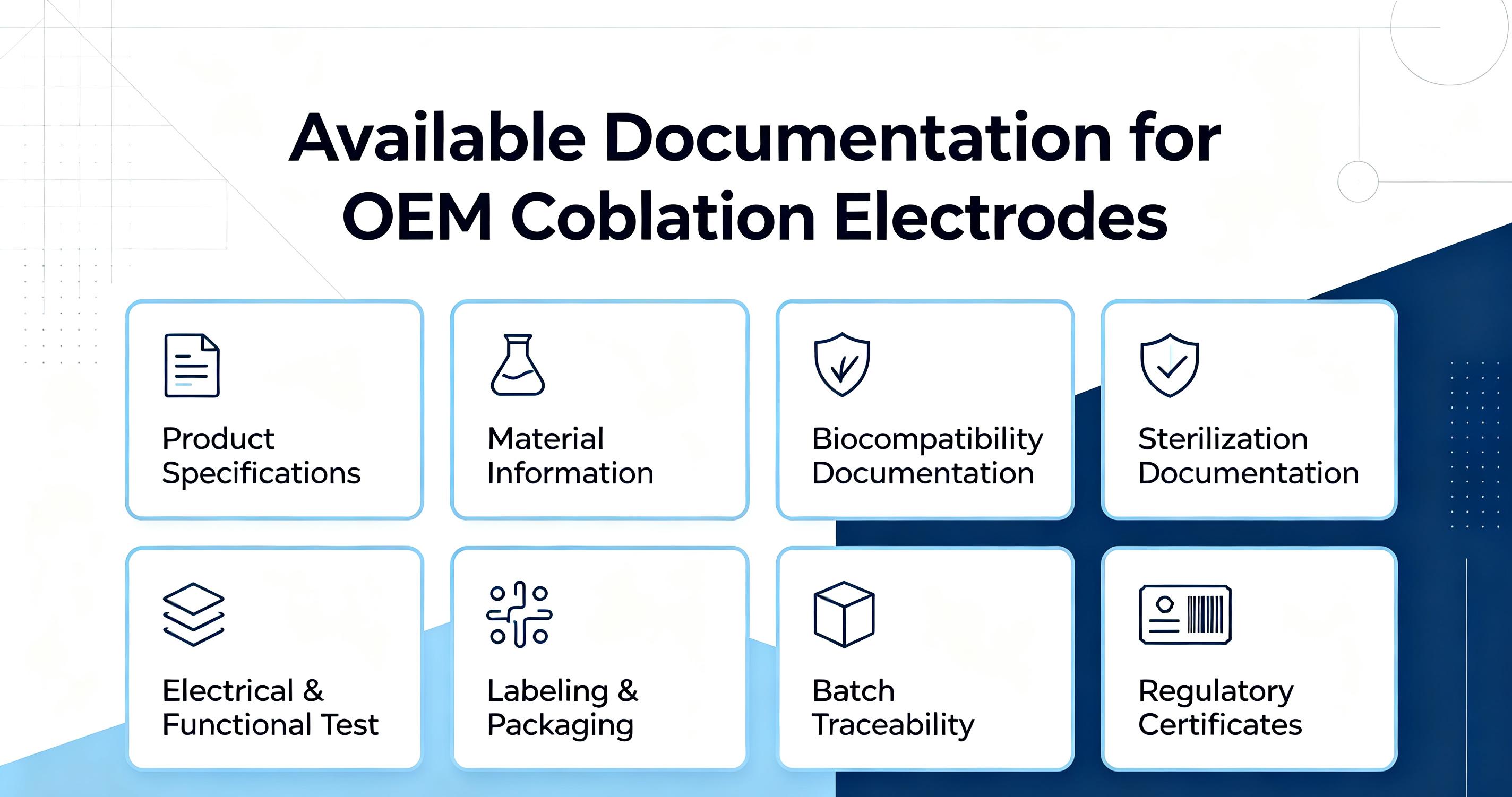
Documentation gaps discovered after an OEM project has started can delay registration and market entry. It is better to review the available documents before committing to a large order.
2. Look at Product Consistency, Not Just the Sample
A good sample is important, but it does not tell you everything about a manufacturer.
For a distributor, the bigger question is whether the supplier can maintain the same performance from one production batch to the next.
Coblation electrodes involve several critical elements, including electrode geometry, insulation, assembly, electrical performance, suction design and connector configuration. These need to remain consistent during volume production.
Before selecting a supplier, ask how critical production steps are controlled and what inspections are performed before batch release.
You may also want to ask about:
· Incoming material inspection
· In-process quality controls
· Final functional testing
· Batch records
· Product traceability
· Handling of non-conforming products
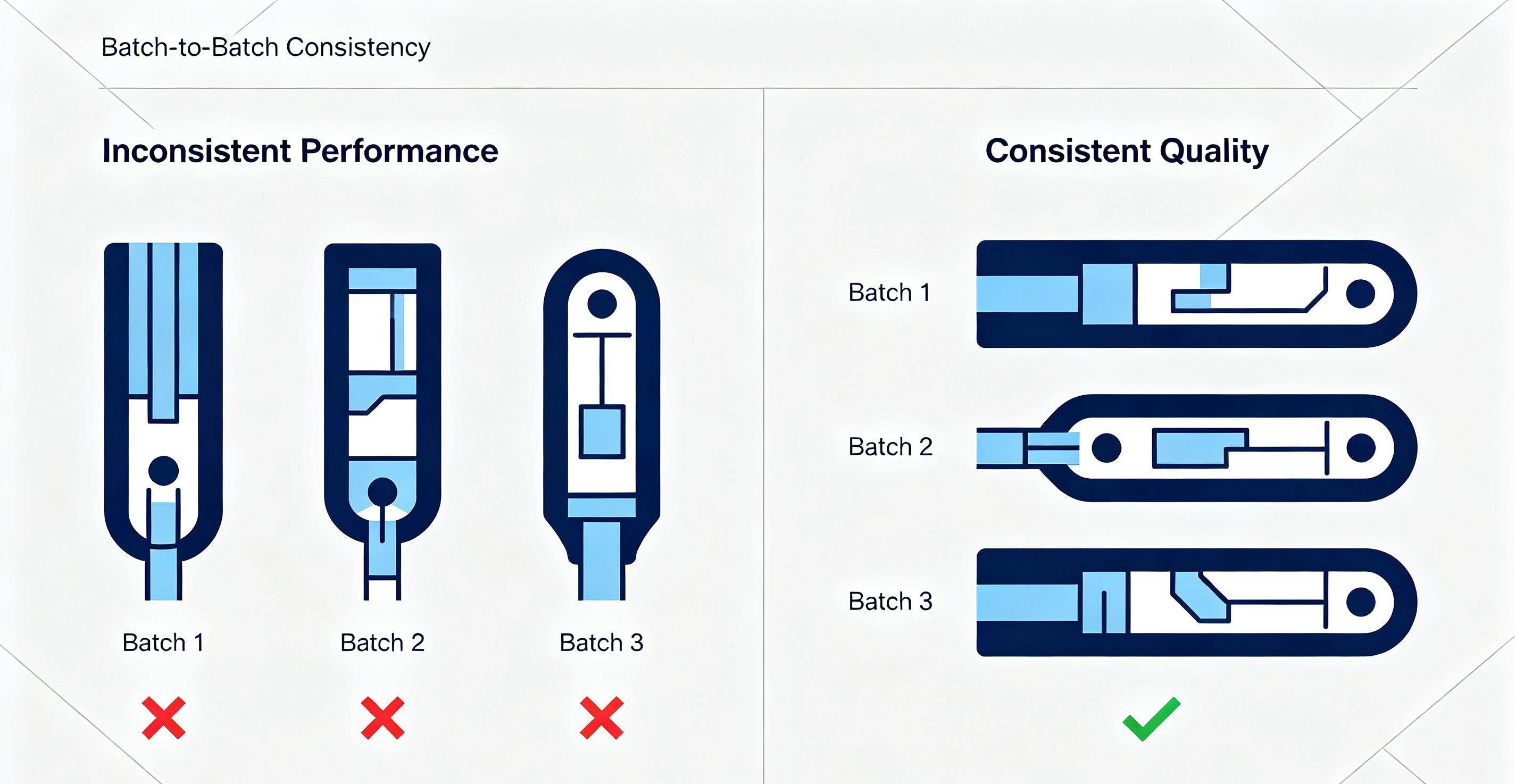
These details matter when your customers are hospitals and surgeons who expect the same performance every time they open a new device.
3. Make Sure the Manufacturer Understands Your Surgical Application
Not every RF electrode is designed for the same procedure.
A Coblation wand for tonsil and adenoid surgery, for example, may have different requirements from an electrode used for turbinate reduction or another minimally invasive procedure.
The manufacturer should understand the intended application before discussing customization.
This includes factors such as:
· Tip design
· Shaft dimensions
· Suction configuration
· Cable and connector
· Generator compatibility
· Ablation and coagulation requirements
· Packaging and labeling
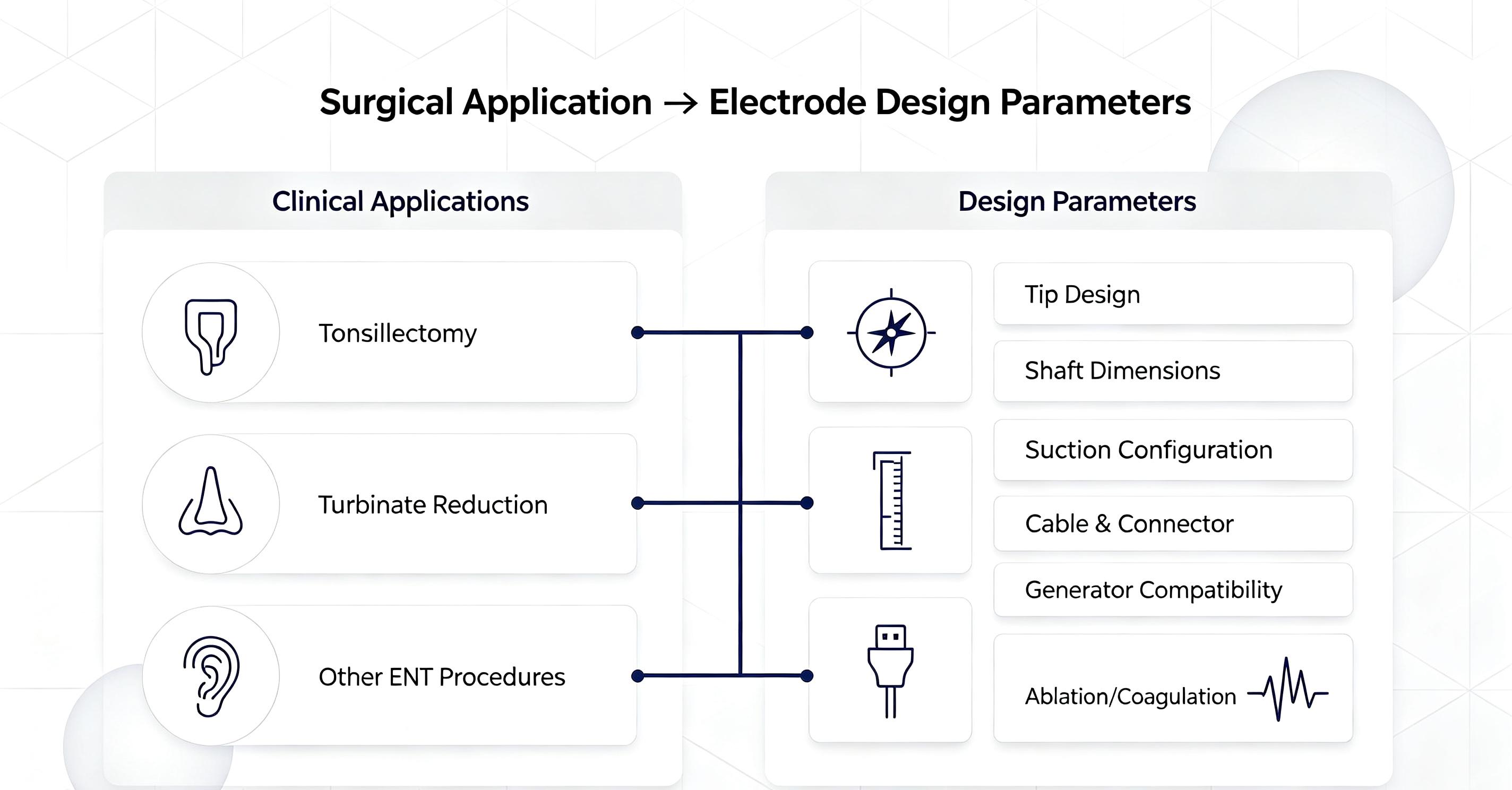
This is also where working directly with a manufacturer can be useful. Clinical feedback from distributors and surgeons can be translated into practical product changes rather than simply selecting another item from a catalog.
OEM/ODM Coblation Electrodes from ENT&PAIN
Hunan ENT&PAIN specializes in the manufacture of Coblation wands and RF plasma surgical electrodes for ENT and minimally invasive surgical applications.
We work with distributors and medical device companies that need both standard products and OEM/ODM solutions.
Depending on the project, OEM cooperation may include:
Distributor Requirement | ENT&PAIN Support |
Private-label products | Custom branding, labeling and packaging |
Product differentiation | Electrode configuration and specification options |
Existing RF platform | Connector and compatibility evaluation |
Local registration | Available technical and regulatory documentation |
Product identification | Custom model and part numbering |
Trial orders | Sample evaluation before volume production |
Long-term supply | Production planning based on expected demand |
The exact requirements are reviewed project by project because different markets, generators and surgical applications may require different solutions.
Starting an OEM Project
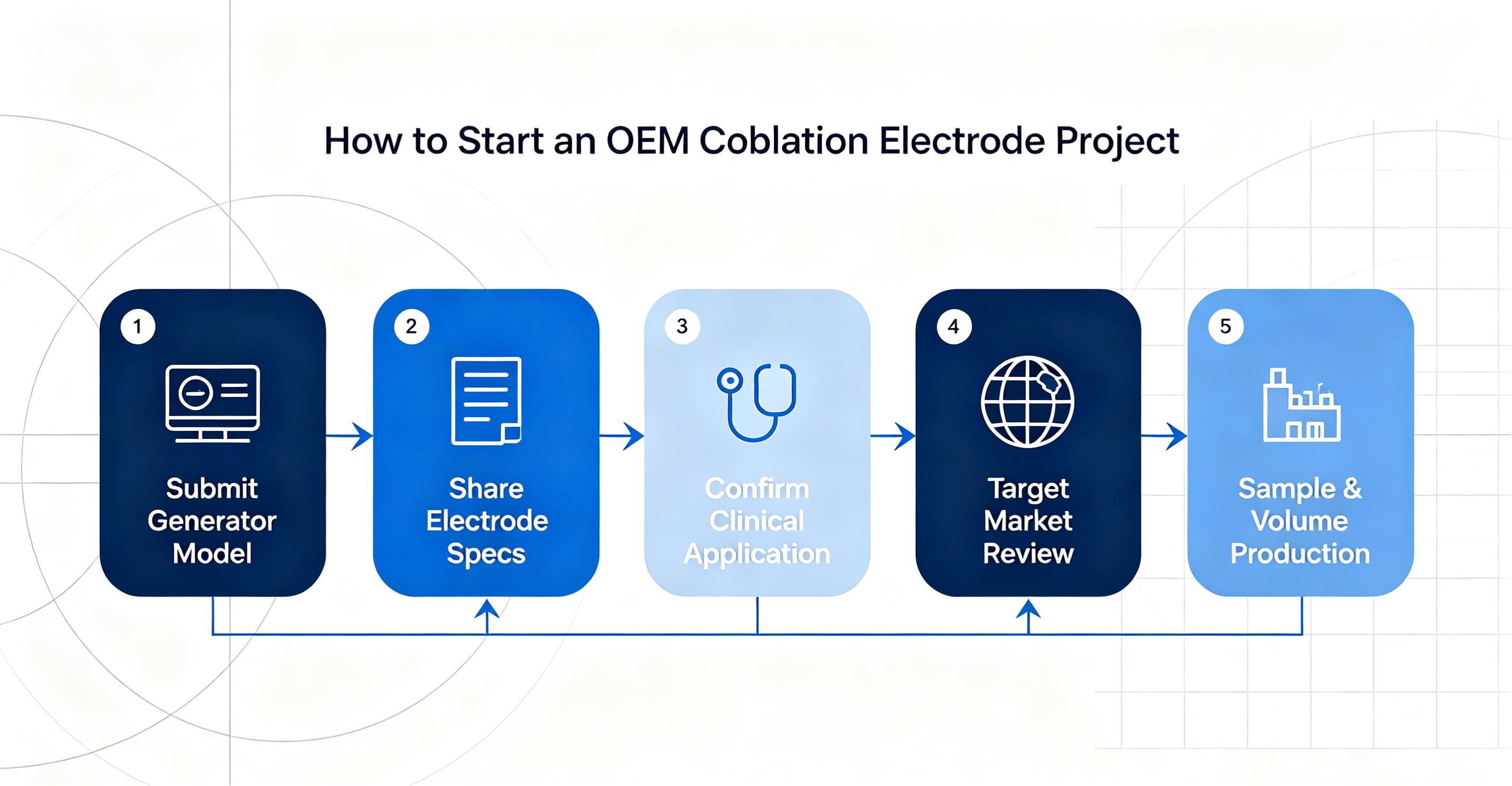
If you already distribute an RF plasma or Coblation system, the easiest way to start is to send us information about the product you need.
Useful information includes:
Generator or system model
Tell us which RF plasma platform the electrode will be used with.
Current electrode or specification
A model number, specification sheet, drawing or product photo can help our team understand your requirements.
Clinical application
For example, tonsillectomy, adenoidectomy, turbinate reduction or another ENT procedure.
Target market
This allows us to review which available documents may be relevant to your local registration requirements.
Estimated order volume
An approximate annual or per-order quantity helps us evaluate the appropriate production and OEM arrangement.
Once we understand these requirements, we can discuss available models, customization options, documentation and samples before moving to volume production.
What Should You Ask a Potential OEM Supplier?
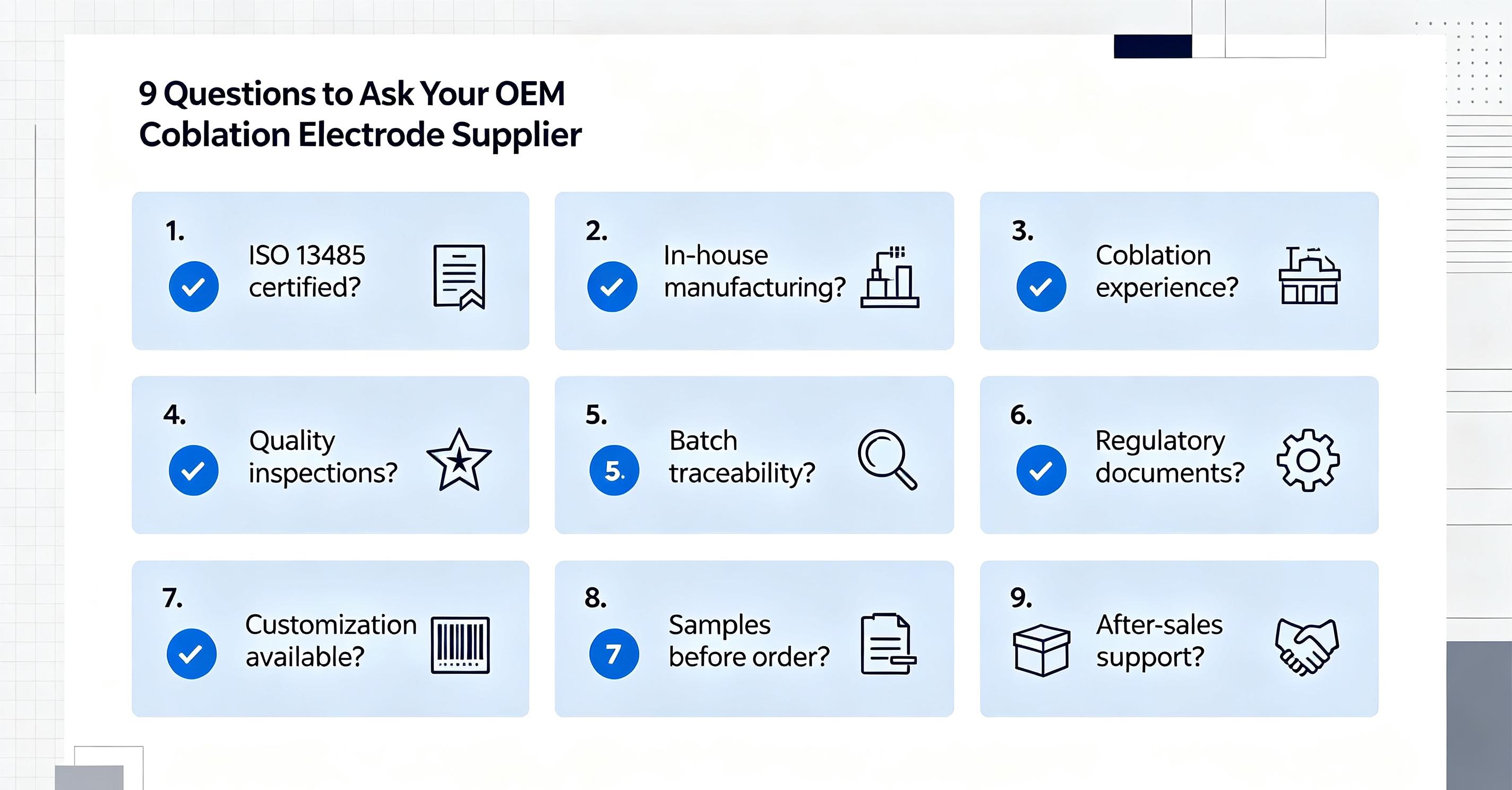
Before making a decision, ask a few direct questions:
· Is the manufacturer ISO 13485 certified?
· Does the company manufacture the electrodes itself?
· Does it have experience with Coblation or RF plasma surgical devices?
· Which quality checks are performed during production?
· Can the supplier provide batch traceability?
· What technical and regulatory documents are available for your market?
· Can the electrode, connector, packaging and labeling be customized?
· Can samples be evaluated before placing a volume order?
· What happens if a quality issue occurs after delivery?
The answers usually tell you more about a potential manufacturing partner than the quotation alone.
FAQ
Can Coblation electrodes be supplied under our own brand?
Yes. OEM/private-label projects can include customized branding, packaging, labeling, model numbers and other product requirements, subject to technical and regulatory review.
Can you develop an electrode for our existing RF plasma generator?
Compatibility needs to be evaluated before a product is recommended. Send us the generator model and your current electrode specifications so our technical team can review the requirements.
Can you provide documents for product registration?
Available documentation depends on the product and target market. Tell us where you plan to register and sell the device, and we can review which certificates and technical documents are available for the project.
Can we test samples before placing an OEM order?
Sample evaluation is an important part of an OEM project. Product requirements, compatibility and customization should be confirmed before moving to volume production.
Looking for an OEM Coblation Electrode Manufacturer?
Hunan ENT&PAIN is an ISO 13485-certified medical device manufacturer specializing in Coblation wands and RF plasma surgical electrodes for ENT and minimally invasive procedures.
We support international distributors with OEM/ODM manufacturing, private labeling, product customization, technical documentation and long-term product supply.
If you are looking for a new Coblation electrode supplier or developing a private-label product line, send us:
1. Generator model
2. Electrode model or specifications
3. Intended surgical application
4. Target country or market
5. Estimated order quantity
Our team can review your requirements and discuss suitable product and OEM options.
Have an existing electrode you want us to evaluate? Send us the model number, specifications or product photos to start the discussion.