Introduction
Endoscopic sinus surgery (ESS) is widely used to treat chronic rhinosinusitis, nasal polyps, and other sinonasal conditions that do not respond adequately to medical treatment.
During ESS, surgeons work through the nasal cavity using an endoscope, without external incisions. Good visualization and controlled tissue removal are therefore essential.
The microdebrider has become an important powered instrument in modern sinus surgery. By combining tissue cutting with continuous suction, it allows surgeons to remove diseased tissue while keeping the surgical field clear.
This article provides a practical overview of how microdebriders are used in endoscopic sinus surgery.
What Is a Microdebrider?
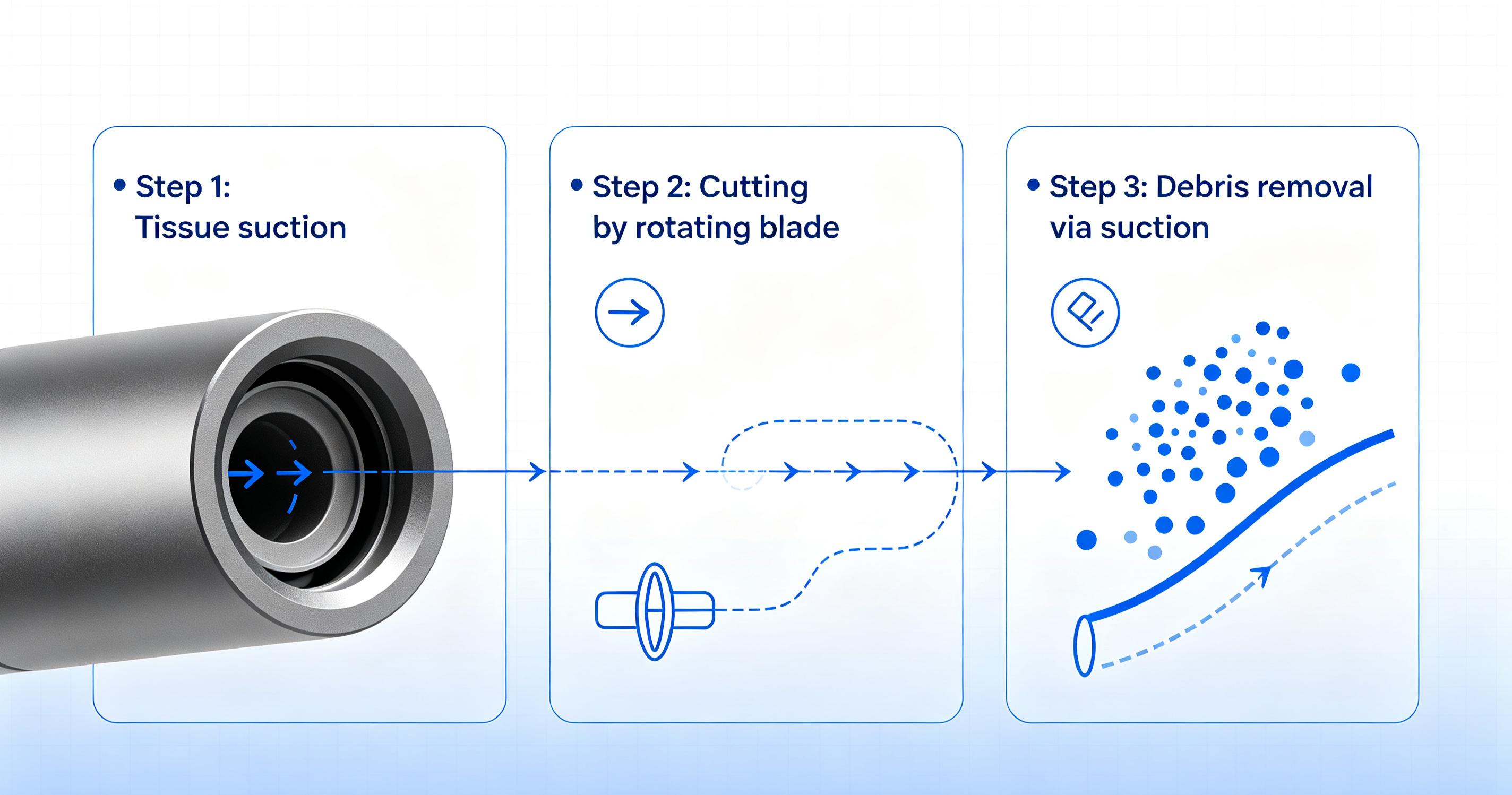
A microdebrider is a powered surgical instrument designed for controlled removal of soft tissue and, with appropriate blades, bone.
The system typically consists of a console, handpiece, suction connection, and interchangeable blades. Inside the blade, an inner tube rotates or oscillates against the outer tube. Suction draws tissue into the blade opening, where it is cut and removed.
This combination of cutting and suction helps surgeons maintain visibility while working in the narrow spaces of the nasal cavity and paranasal sinuses.
Why Use a Microdebrider in Sinus Surgery?
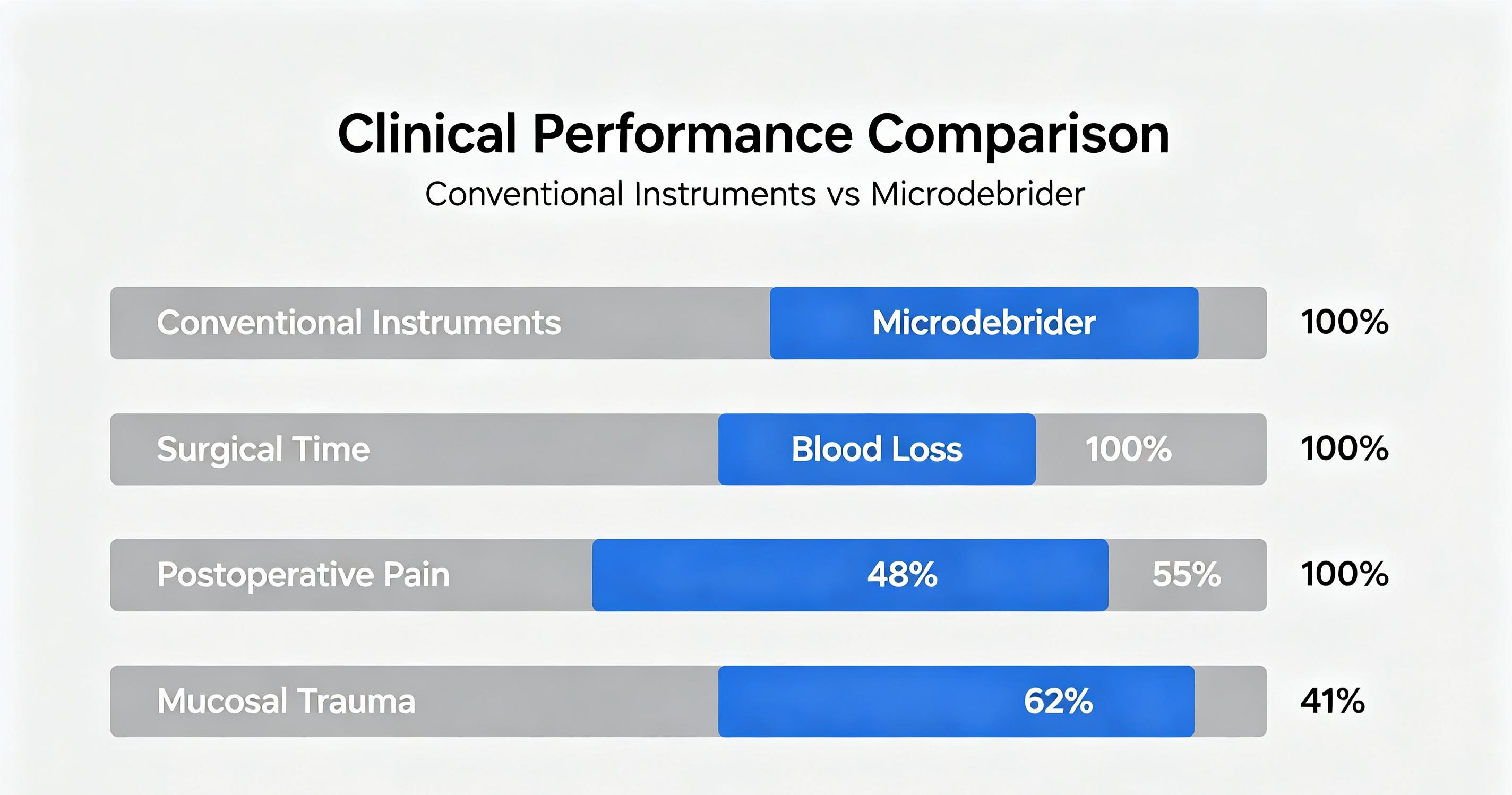
Compared with traditional manual instruments, a microdebrider can offer several practical advantages:
· Controlled tissue removal
· Continuous suction of blood and tissue debris
· Better visualization of the surgical field
· Efficient removal of polyps and diseased mucosa
· Access to different sinus areas with angled blades
· Reduced instrument exchanges during surgery
One of its main advantages is control. Rather than removing large pieces of tissue at once, the surgeon can gradually remove tissue while observing the operative field through the endoscope.
Common Applications in Endoscopic Sinus Surgery
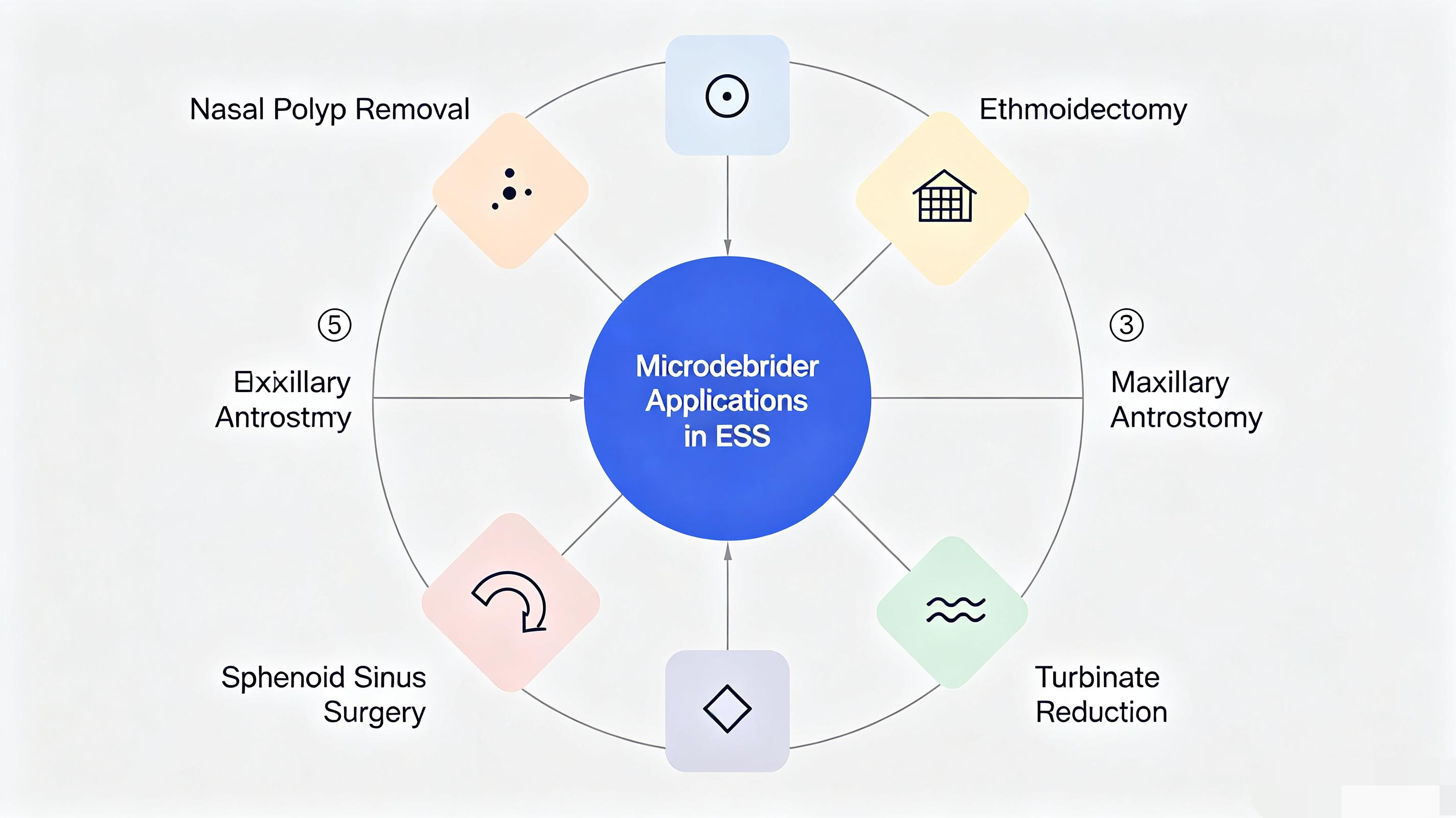
1. Nasal Polyp Removal
Microdebriders are commonly used in patients with chronic rhinosinusitis with nasal polyps (CRSwNP).
The powered blade allows the surgeon to remove polyps efficiently while working around healthy mucosa and important anatomical structures.
Continuous suction is particularly useful when treating extensive polyposis because it removes tissue fragments as they are cut.
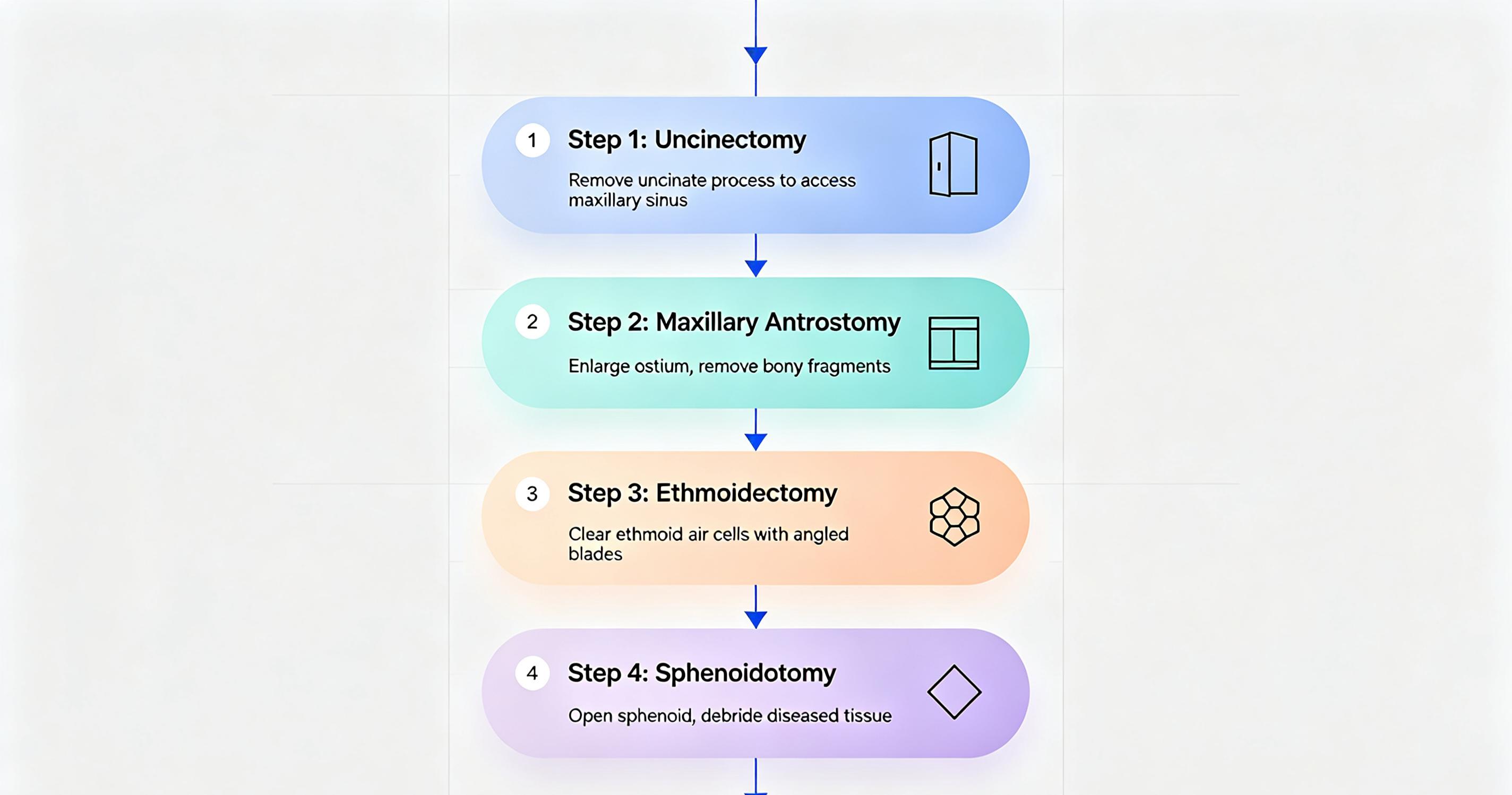
2. Ethmoidectomy
During ethmoid surgery, the surgeon works around multiple small air cells located between the nasal cavity and the orbit.
Microdebrider blades can be used to remove diseased tissue and selected thin bony partitions. Different blade angles help the surgeon reach specific areas while maintaining endoscopic visualization.
3. Maxillary Antrostomy
A maxillary antrostomy enlarges the natural drainage pathway of the maxillary sinus.
After the sinus opening is identified, a microdebrider may be used to remove residual soft tissue or small fragments around the opening and help create an adequate drainage pathway.
4. Sphenoid Sinus Surgery
The sphenoid sinus is located deep within the skull and close to important structures.
In selected cases, microdebriders can assist with controlled removal of diseased tissue around the sphenoid opening. Careful visualization and knowledge of the surrounding anatomy remain essential.
5. Turbinate Reduction
Microdebriders are also used for inferior turbinate reduction in patients with turbinate hypertrophy and persistent nasal obstruction.
In microdebrider-assisted turbinoplasty, submucosal tissue can be reduced while preserving much of the surface mucosa. The goal is to improve airflow without unnecessarily damaging normal nasal function.
Choosing the Right Microdebrider Blade
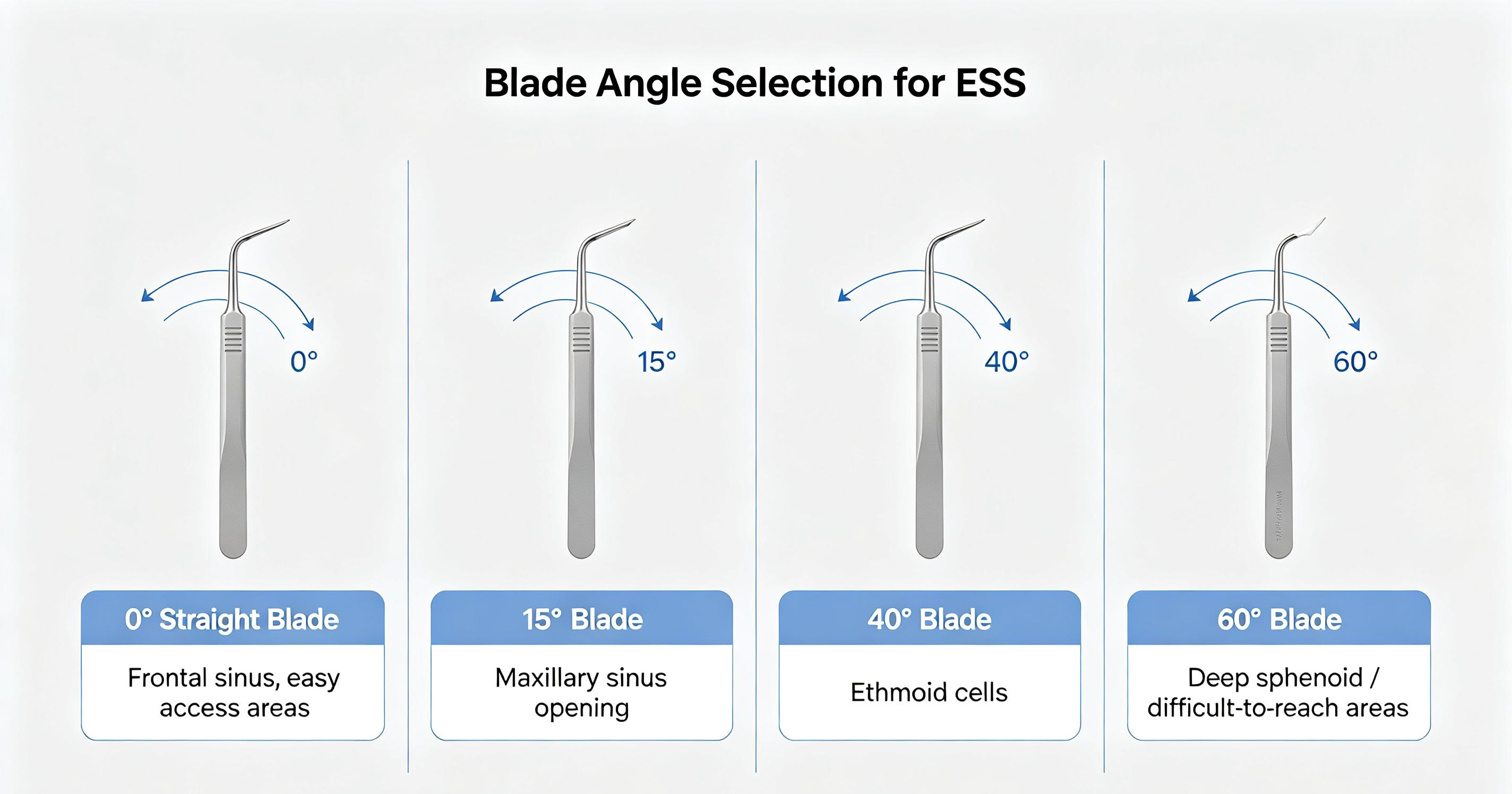
Blade selection can have a significant impact on surgical access and control.
Microdebrider blades are available in different diameters, cutting-window designs, and angles. Straight blades are useful for easily accessible areas, while angled blades can help reach deeper or less accessible parts of the sinus anatomy.
Common blade angles may include 0°, 15°, 40°, 60°, and other configurations, depending on the system and manufacturer.
The appropriate blade depends on the procedure, anatomy, tissue type, and surgeon preference.
For distributors and hospitals evaluating a microdebrider system, blade availability is therefore just as important as the performance of the console and handpiece.
Safety Considerations
A microdebrider is a powerful surgical instrument and must be used with a clear view of the blade tip.
This is particularly important when operating near the orbit, skull base, optic nerve, and other critical structures.
Safe use depends on several factors:
· Proper surgeon training
· Continuous endoscopic visualization
· Appropriate blade selection
· Correct suction settings
· Reliable handpiece and blade connection
· Inspection of the blade before use
The microdebrider improves surgical efficiency, but it does not replace careful technique or a detailed understanding of sinonasal anatomy.
Recovery After Endoscopic Sinus Surgery
Recovery varies according to the extent of surgery and the patient's condition.
Many patients return to normal daily activities within one to two weeks, although nasal congestion, mild bleeding, crusting, and discharge may continue during the early healing period.
Postoperative saline irrigation and follow-up care are commonly used to support healing and keep the sinus cavities clear.
Frequently Asked Questions
Are the sinuses removed during sinus surgery?
No. Endoscopic sinus surgery does not remove the sinuses themselves.
The procedure is designed to open blocked drainage pathways and remove diseased tissue while preserving as much normal anatomy and healthy mucosa as possible.
What does a microdebrider do during sinus surgery?
A microdebrider cuts and removes tissue while simultaneously applying suction. This helps the surgeon remove polyps and other diseased tissue while maintaining a clear surgical field.
Are different blades required for different procedures?
Yes. Blade diameter, angle, cutting window, and intended tissue type can vary depending on the surgical area and procedure.
Hospitals and distributors should consider the available blade range when selecting a microdebrider system.
Conclusion
Microdebriders have become an important part of modern endoscopic sinus surgery. Their combination of powered tissue removal and continuous suction can improve surgical efficiency and help maintain a clear operative field.
From nasal polypectomy and ethmoidectomy to turbinate reduction, different procedures may require different blade designs and working angles.
For hospitals and distributors, choosing a microdebrider system should therefore involve more than comparing console specifications. Blade selection, handpiece performance, system reliability, supply continuity, and technical support are also important considerations.
ENT Microdebrider Solutions from Hunan ENT & Pain
Hunan ENT & Pain provides ENT microdebrider systems and microdebrider blades for international distributors and medical device partners.
Our ENT product portfolio also includes Coblation wands, RF plasma electrodes, and other disposable ENT surgical products.
We support OEM/ODM cooperation, product documentation, and international distribution projects. If you are looking for an ENT microdebrider manufacturer or a long-term supply partner, contact our team to discuss available models, blade specifications, and cooperation options.

