Choosing the right microdebrider blade is important for efficient and controlled tissue removal during ENT surgery. Different procedures may require different blade diameters, angles, lengths, and cutting designs.
For procedures such as functional endoscopic sinus surgery (FESS), turbinate reduction, and adenoidectomy, the blade should match the surgical site and the type of tissue being removed.
What Is a Microdebrider Blade?
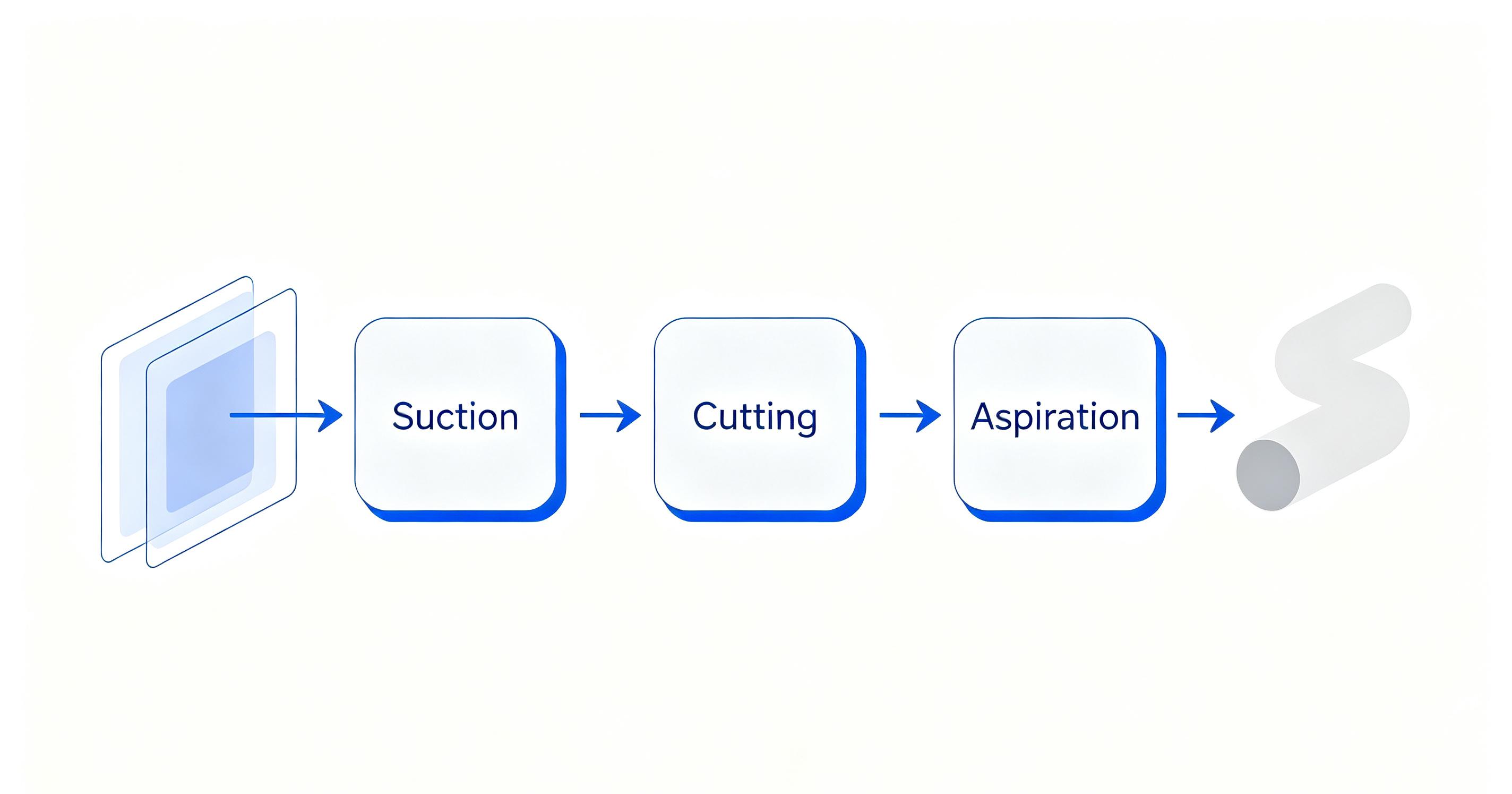
A microdebrider blade is a disposable cutting component used with a powered microdebrider system. The inner blade rotates inside the outer tube while suction draws tissue into the cutting window.
This allows the surgeon to cut and remove tissue while clearing blood and tissue debris from the surgical field.
The blade design affects cutting efficiency, suction, access, and control.
1. Choose the Right Blade Diameter
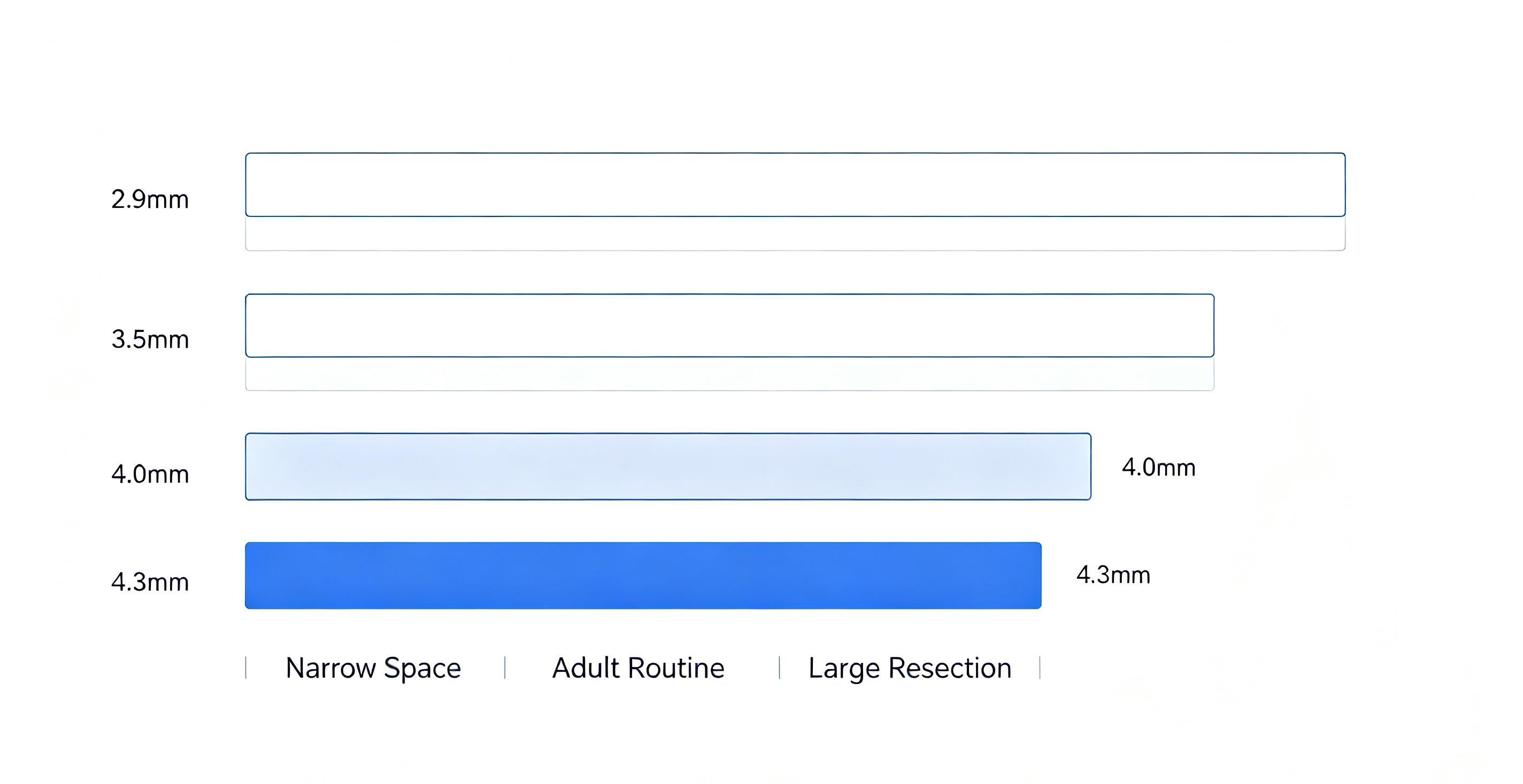
Microdebrider blades are available in different diameters, with 2.9 mm, 3.5 mm, 4.0 mm, and 4.3 mm being common options.
2.9 mm Blades
Smaller blades are useful when working in narrow anatomical spaces. They can be particularly suitable for pediatric procedures or areas where access is limited.
3.5 mm Blades
The 3.5 mm blade is a versatile option for many adult ENT procedures. It provides a good balance between access, cutting capacity, and suction.
4.0–4.3 mm Blades
Larger blades provide a wider cutting area and can be useful for removing larger amounts of soft tissue, depending on the procedure and surgical technique.
In general, smaller blades offer better access, while larger blades provide greater tissue removal capacity.
2. Select the Appropriate Blade Angle
Blade angle is especially important in endoscopic sinus surgery.
Straight Blades
Straight blades provide a direct cutting path and are commonly used for general tissue removal in areas such as the ethmoid and sphenoid sinuses.
They also generally provide efficient suction because tissue has a direct path into the cutting window.
Angled Blades
Angled blades help surgeons reach areas that are difficult to access with a straight blade.
Common options include 12°, 40°, 60°, and 90° designs. More highly angled blades can be useful when accessing areas such as the maxillary or frontal sinus.
Highly angled blades may have lower suction efficiency than straight blades, so the angle should be selected according to the target anatomy.
Rotatable Blades
Some blades feature a rotatable cutting tip. This allows the surgeon to change the direction of the cutting window without repositioning the handpiece.
This can be useful when working around complex sinus anatomy.
3. Consider Cutting and Suction Performance
A microdebrider blade needs to cut tissue efficiently while maintaining stable suction.
Blade performance can be affected by:
· Cutting window design
· Inner blade design
· Tooth configuration
· Suction channel
· Blade diameter and angle
· Operating speed
For soft or polypoid tissue, good suction and consistent tissue capture are particularly important.
The most aggressive blade is not always the best choice. In delicate areas, controlled tissue removal may be more important than maximum cutting speed.
4. Match the Blade to the Procedure
FESS and Sinus Surgery
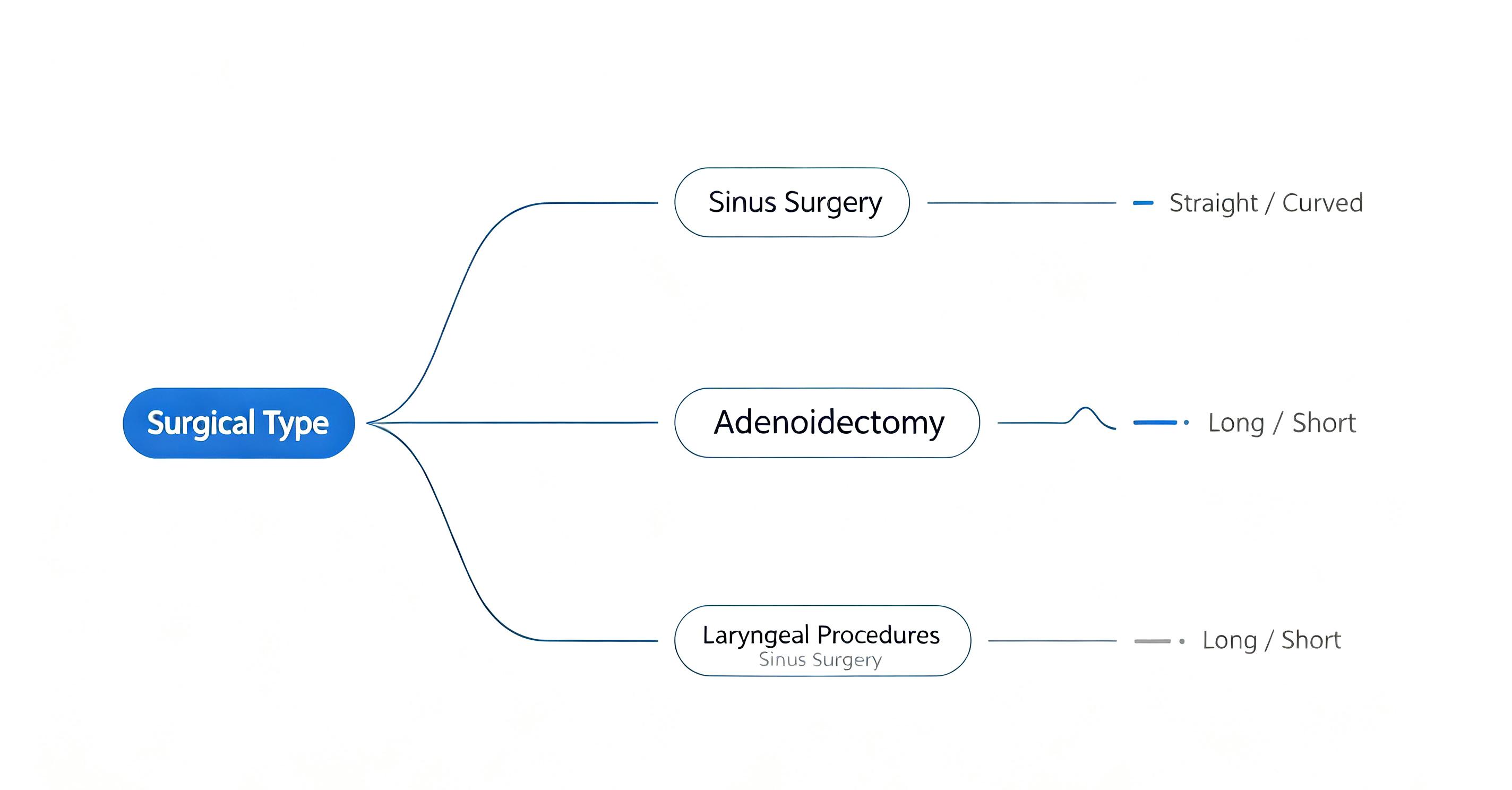
Straight blades are commonly used for general tissue removal, while angled blades can provide better access to difficult areas such as the maxillary and frontal sinuses.
For nasal polyps and other soft-tissue lesions, the blade should provide effective cutting while maintaining good suction and visualization.
Inferior Turbinate Reduction
Microdebriders can be used for submucosal reduction of hypertrophic inferior turbinates.
A smaller blade can provide better control through a limited access point and help the surgeon work while preserving the overlying mucosa.
Adenoidectomy
Microdebrider-assisted adenoidectomy requires good visualization and controlled tissue removal.
An angled blade can improve access to the nasopharynx and lateral areas while helping the surgeon maintain control around important structures.
Laryngeal and Airway Procedures
Laryngeal and airway procedures may require longer blades to reach deeper anatomical areas.
For delicate lesions, a less aggressive cutting design may provide better control. Larger or more aggressive blades may be considered for bulky tissue.
5. Don't Overlook Blade Length
Blade length determines how far the instrument can reach.
Shorter blades are commonly used for nasal and sinus procedures, while longer blades may be needed for laryngeal and airway applications.
The blade should be long enough to reach the target area without making the instrument difficult to control.
5. What Should Hospitals and Distributors Consider?

When purchasing disposable microdebrider blades, hospitals and distributors should consider more than cutting performance.
Key factors include:
· Compatibility: Make sure the blade is compatible with the existing handpiece and console.
· Sizes and angles: A wider product range can support different ENT procedures.
· Cutting and suction: The blade should provide consistent tissue capture and suction.
· Sterility and packaging: Products should be supplied in appropriate sterile packaging for single use.
· Quality: Consistent manufacturing is important for disposable surgical instruments.
· Regulatory documentation: Technical and registration documents may be required for different markets.
· OEM/ODM support: Private-label customers may require customized specifications, packaging, labeling, and documentation.
Microdebrider Blade Selection at a Glance
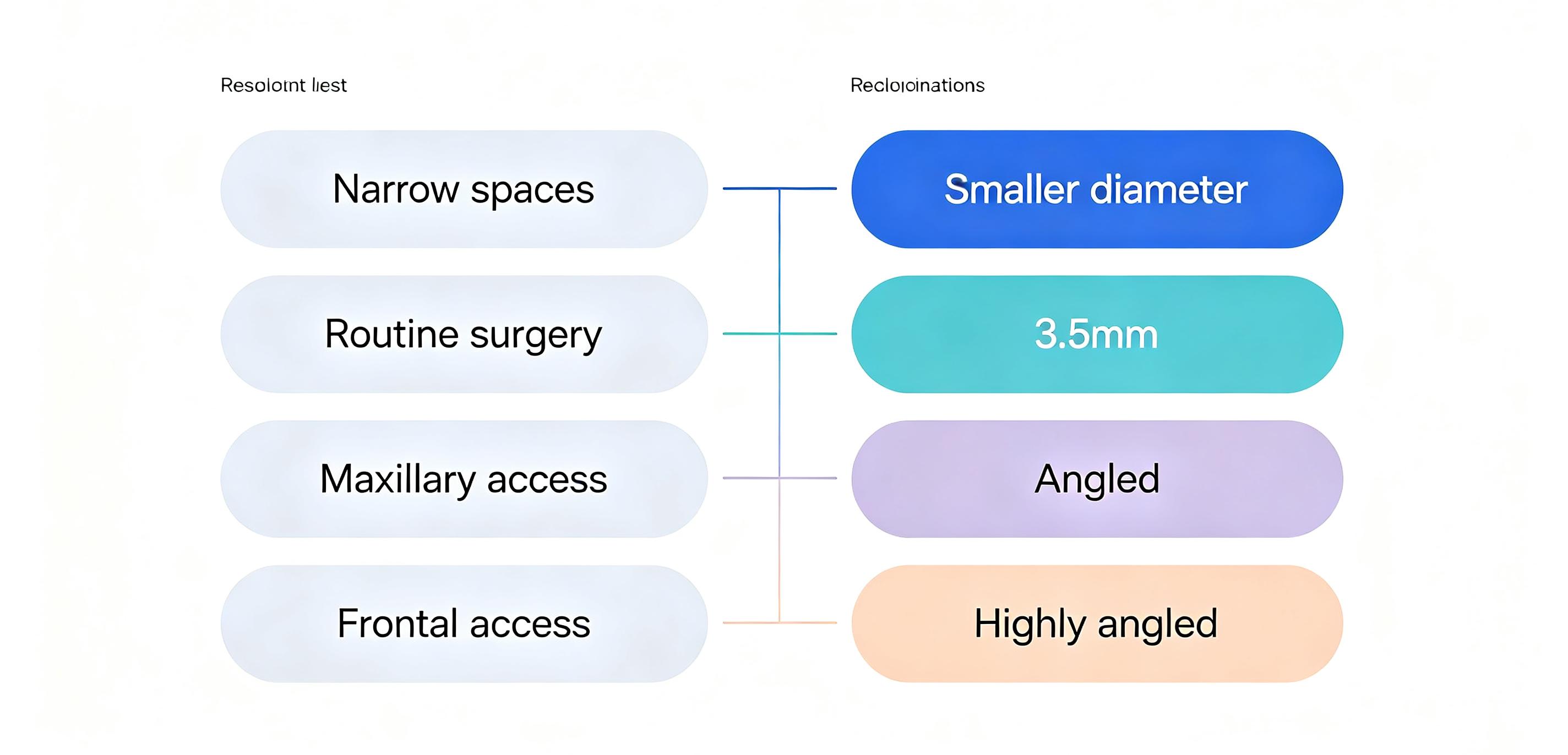
Surgical Requirement | Blade Consideration |
Narrow anatomical spaces | Smaller diameter |
Routine adult sinus surgery | 3.5 mm |
Larger tissue removal | Larger diameter |
Ethmoid or sphenoid surgery | Straight or mildly angled |
Maxillary sinus access | Angled blade |
Frontal sinus access | Highly angled or rotatable blade |
Pediatric procedures | Smaller diameter |
Laryngeal or airway procedures | Longer blade |
Conclusion
Choosing the right microdebrider blade means balancing access, cutting efficiency, suction, and control.
Smaller blades can improve access in narrow spaces, while larger blades can provide greater tissue removal capacity. Straight blades offer a direct cutting path, while angled and rotatable blades can improve access to difficult anatomical areas.
For hospitals and distributors, compatibility, sterility, quality, regulatory documentation, and supply reliability are also important.
At Hunan ENT&PAIN, we develop and manufacture disposable ENT surgical devices, including microdebrider blades and Coblation wands. We support hospitals, distributors, and OEM/ODM partners with product customization and technical documentation.
If you are looking for microdebrider blades for ENT surgery or developing a private-label ENT product line, contact ENT&PAIN to discuss your requirements.

