Choosing an ENT medical device manufacturer is about more than comparing prices.
For products such as Coblation wands, RF plasma electrodes, microdebrider blades, and other ENT surgical consumables, small differences in materials, manufacturing consistency, sterilization, packaging, or documentation can create problems later during registration or market launch.
For distributors and medical device companies looking for an OEM/ODM supplier, the following areas are worth checking before moving forward.
Start with the Quality System
ISO 13485 is one of the first things to check when evaluating a medical device manufacturer. However, a certificate alone does not tell you everything about how the factory operates.
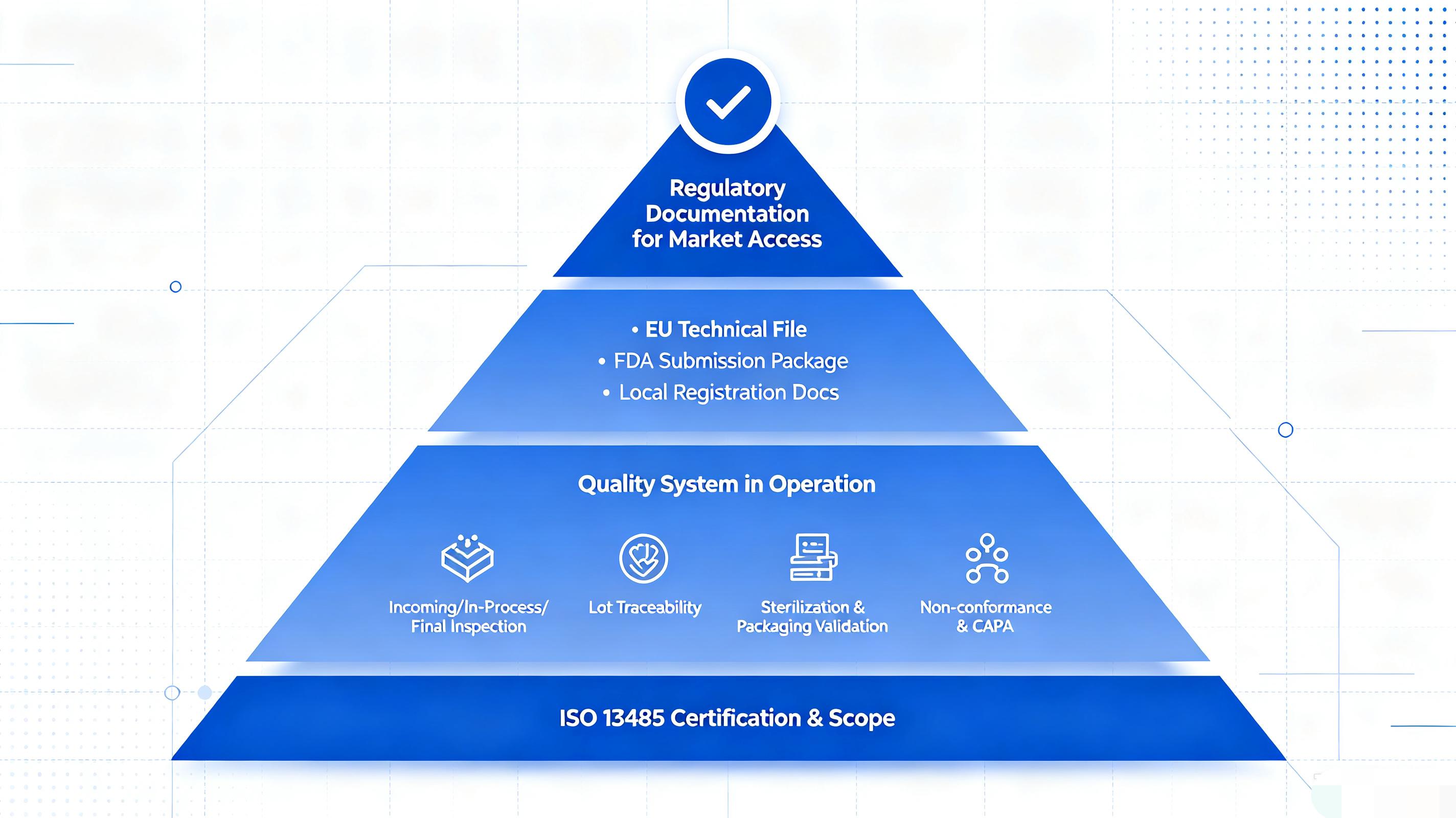
Ask the supplier about:
· ISO 13485 certification and scope
· Product registration or regulatory status in relevant markets
· Incoming, in-process, and final inspection
· Lot traceability
· Sterilization validation, where applicable
· Packaging validation
· Non-conformance and CAPA procedures
· Change control
If you are sourcing for the EU, US, Middle East, Southeast Asia, or other regulated markets, also confirm what regulatory documentation the manufacturer can provide for your specific product.
The important question is not simply, “Are you certified?”
It is: “Can you provide the documentation we will need to register and sell this product in our market?”
Look for Relevant ENT Manufacturing Experience
A general medical device factory is not necessarily the right factory for an ENT surgical product.
ENT devices can involve small components, narrow working channels, RF energy delivery, insulation, precision assembly, specialized polymers, metal components, and sterile packaging. The requirements for a Coblation wand, for example, are very different from those of a standard disposable medical product.
Ask whether the manufacturer has already worked with products similar to yours.
For an RF plasma surgical electrode or Coblation wand, useful questions include:
· What RF systems is the product designed to work with?
· How is electrode performance tested?
· How are insulation and electrical safety controlled?
· What materials are used in the electrode and shaft?
· Can the manufacturer support different tip or shaft designs?
· Can they provide samples for evaluation?
· What OEM modifications are possible?
A supplier with relevant product experience can usually identify technical issues much earlier in the project.
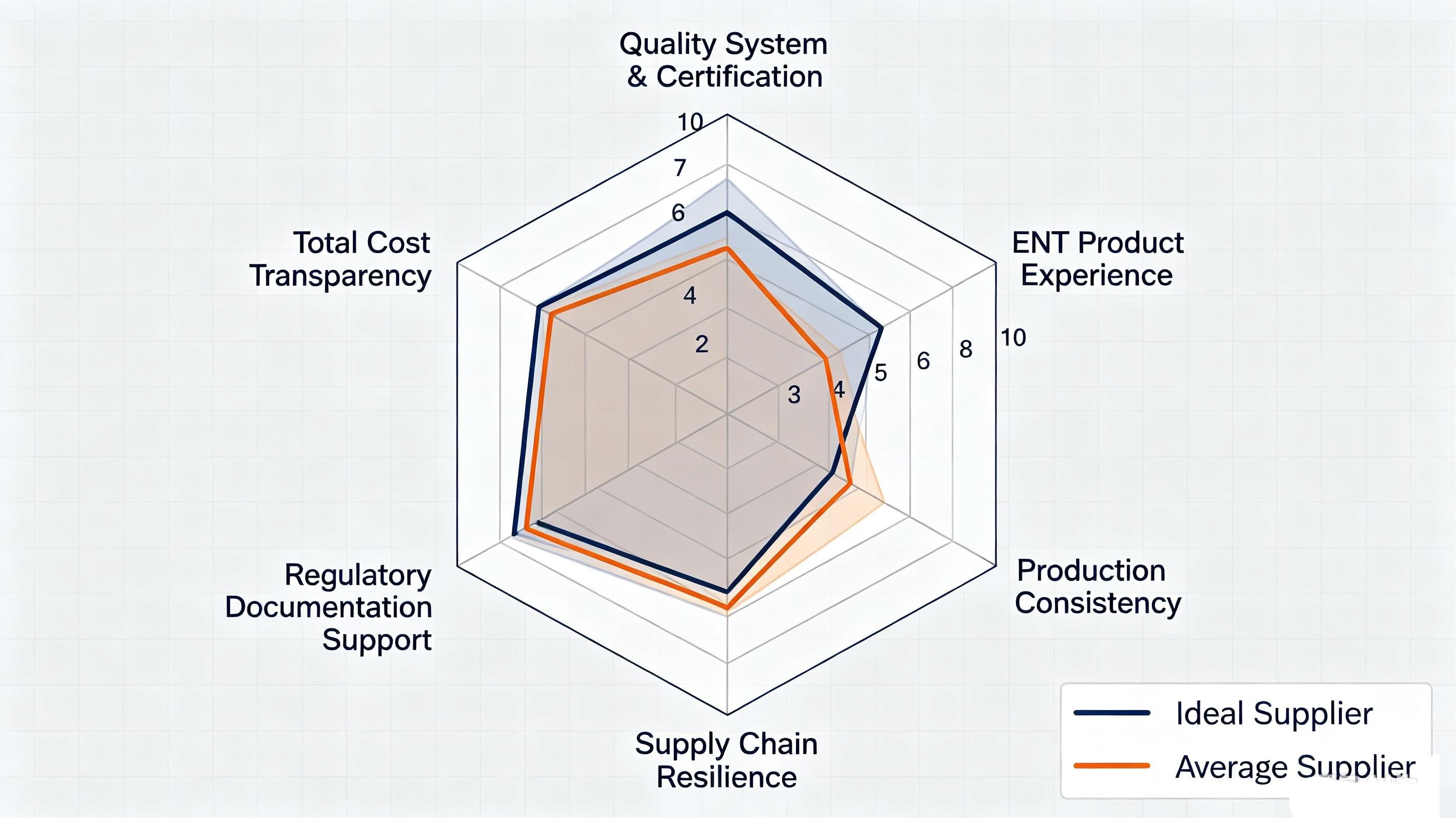
Check Production Consistency, Not Just Capacity
Many suppliers can make a good sample. The more important question is whether they can produce the same quality consistently across hundreds or thousands of units.
When evaluating a factory, look at its production controls, inspection equipment, assembly processes, employee training, traceability system, and capacity.
For OEM projects, also discuss what happens when your volume increases.
A manufacturer should be able to support the transition from samples and pilot orders to regular commercial production without requiring you to rebuild the project from the beginning.
Understand the Supply Chain
The performance of a medical device depends on more than the final assembly line.
Critical metals, polymers, cables, connectors, packaging materials, and other components may come from outside suppliers. Ask how these suppliers are qualified and how material changes are controlled.
This becomes particularly important for products that require regulatory registration.
An apparently minor change in material or component specification can create additional verification or documentation work. Your manufacturer should have a clear process for notifying customers before significant changes are introduced.
Evaluate Regulatory and Documentation Support
For international distributors, documentation can be almost as important as the product itself.
Before placing a large order, confirm what the manufacturer can actually provide. Depending on the product and destination market, this may include:
· ISO 13485 documentation
· Product specifications
· Test reports
· Biocompatibility information
· Sterilization documentation
· Packaging information
· Technical documentation
· Declaration or regulatory documents where applicable
· Labels and IFU support
· Documents required for local registration
This should be discussed early rather than after the commercial agreement has already been signed.
If you are a distributor registering a new ENT product in your country, ask the manufacturer for a sample regulatory document package before making your final decision.
Compare Total Cost, Not Only Unit Price
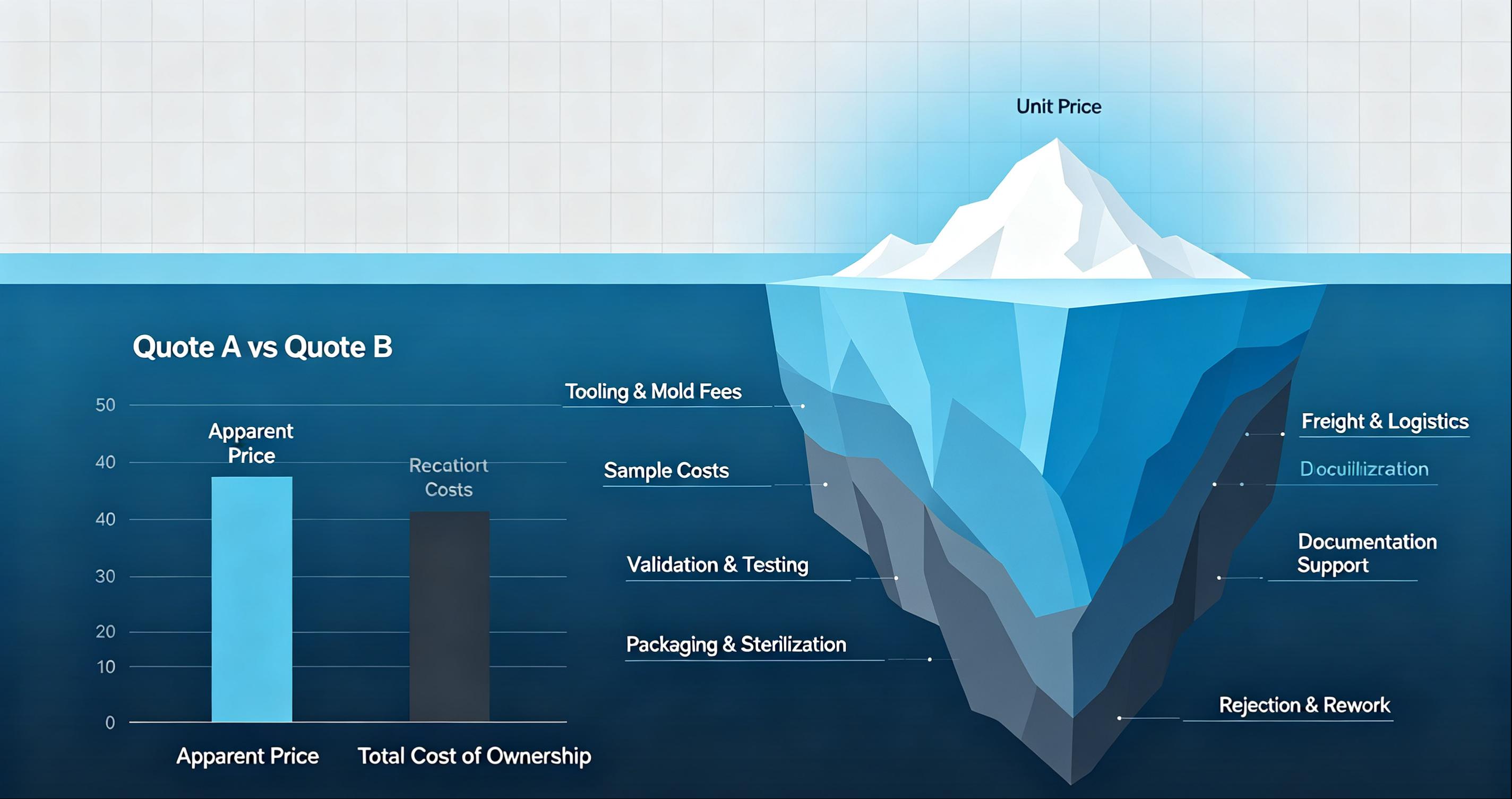
A lower quotation does not always mean a lower purchasing cost.
Tooling charges, MOQ, sample costs, validation, packaging, sterilization, freight, rejected products, documentation work, and lead time can all affect the final cost of bringing a product to market.
When comparing quotations, ask each manufacturer to clearly state:
Unit price + MOQ + tooling + sample cost + lead time + packaging + sterilization + documentation support.
This gives your purchasing team a much more useful comparison than unit price alone.
Test Before You Commit
For a new supplier or OEM project, moving directly from quotation to a large commercial order creates unnecessary risk.
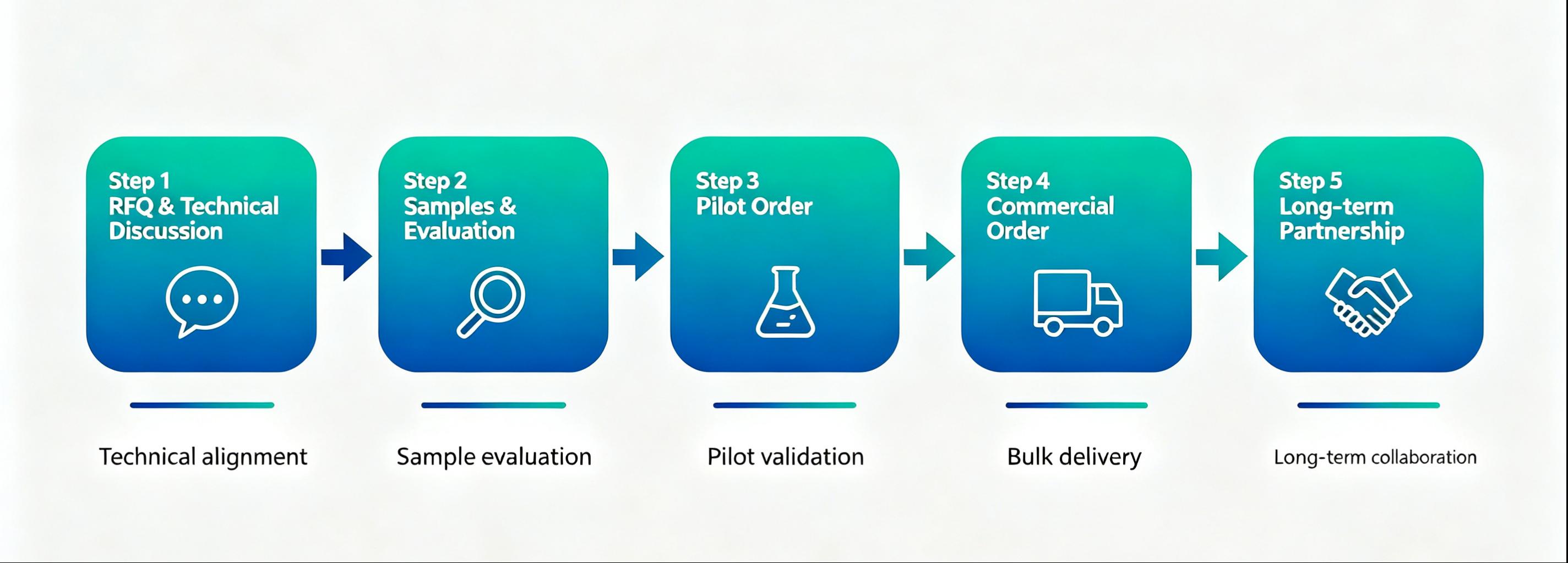
A better process is:
RFQ → Technical discussion → Samples → Evaluation → Pilot order → Commercial order
For products such as Coblation wands and RF plasma electrodes, sample evaluation is particularly important because specifications on paper do not always tell you how the device will perform in actual use.
Compatibility, cutting or ablation performance, coagulation, electrode durability, ergonomics, and connection with the intended generator should all be evaluated before larger orders are placed.
Questions to Ask an ENT Manufacturer
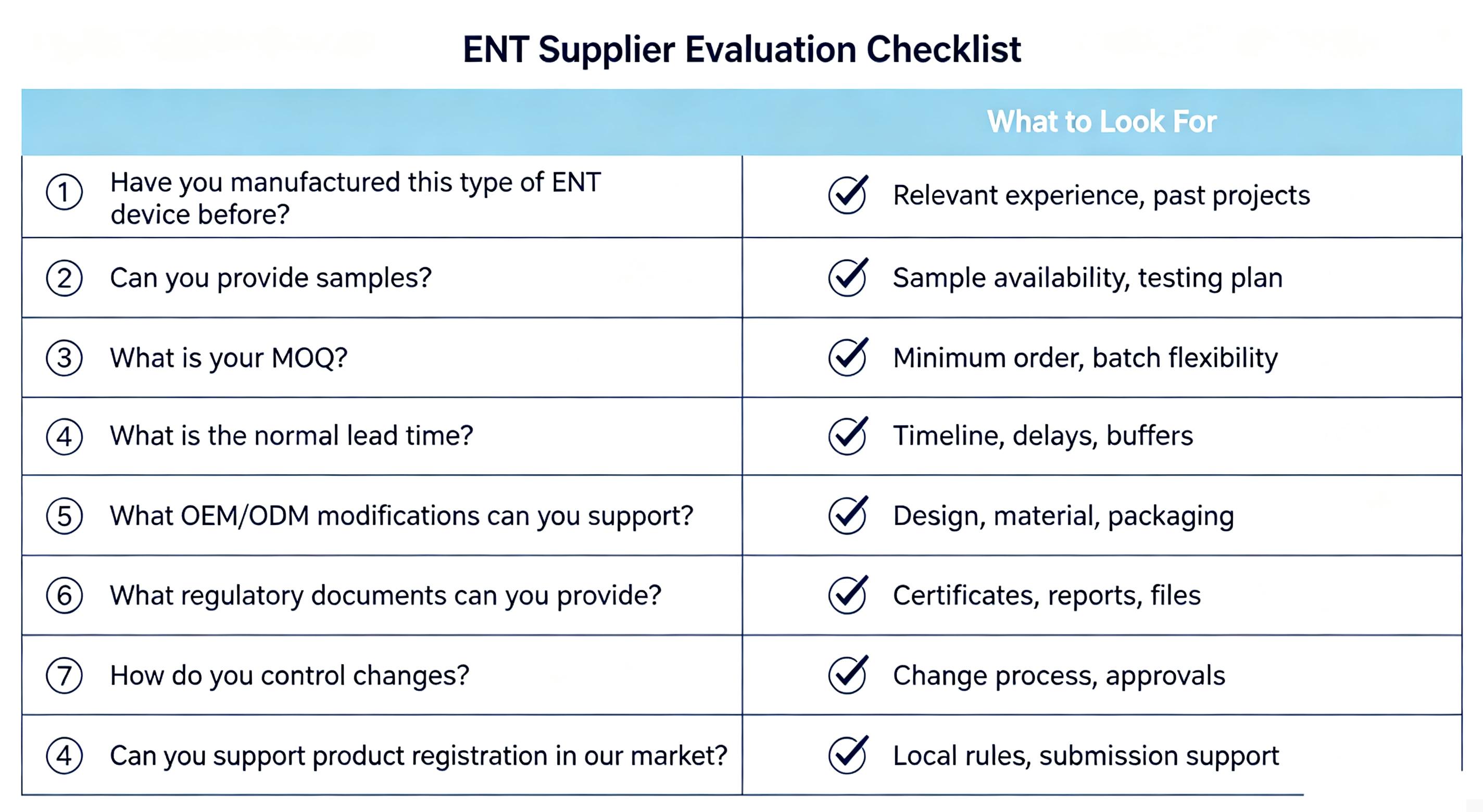
Before choosing a supplier, you should be able to get clear answers to a few practical questions:
Have you manufactured this type of ENT device before?
Can you provide samples for evaluation?
What is your MOQ for standard and OEM products?
What is the normal production lead time?
What OEM/ODM modifications can you support?
What regulatory documents can you provide?
How do you control material and design changes?
Can you support product registration in our market?
The quality of the answers often tells you as much about the supplier as the quotation does.
Looking for an ENT OEM/ODM Manufacturing Partner?
Hunan ENT&PAIN Medical Technology specializes in Coblation wands, RF plasma surgical electrodes, and related minimally invasive surgical products.
We work with international distributors and medical device companies that need more than a product catalogue. Depending on the project, we can support:
· OEM/ODM development
· Product samples for evaluation
· Private labeling and packaging
· Technical documentation
· Regulatory documentation support
· Commercial production and export supply
If you are currently sourcing Coblation wands, RF plasma electrodes, or related ENT surgical consumables, send us the product you are looking for, your target market, and estimated order quantity.
We can review the requirements and let you know what we can manufacture, what documentation is available, and the next step for samples or quotation.
Contact ENT&PAIN to discuss your project or request product samples.

