

Grommet Tympanostomy Tube: Indications, Procedure, Types, and Aftercare Guide
Grommet tympanostomy tubes (also known as ear tubes, ventilation tubes, or pressure equalization tubes) are small devices placed in the eardrum to treat middle ear fluid, recurrent ear infections, and problems caused by poor Eustachian tube function.
They are one of the most common ear procedures performed in children, helping restore hearing, reduce infections, and improve quality of life.
1. What Is a Grommet Tympanostomy Tube?
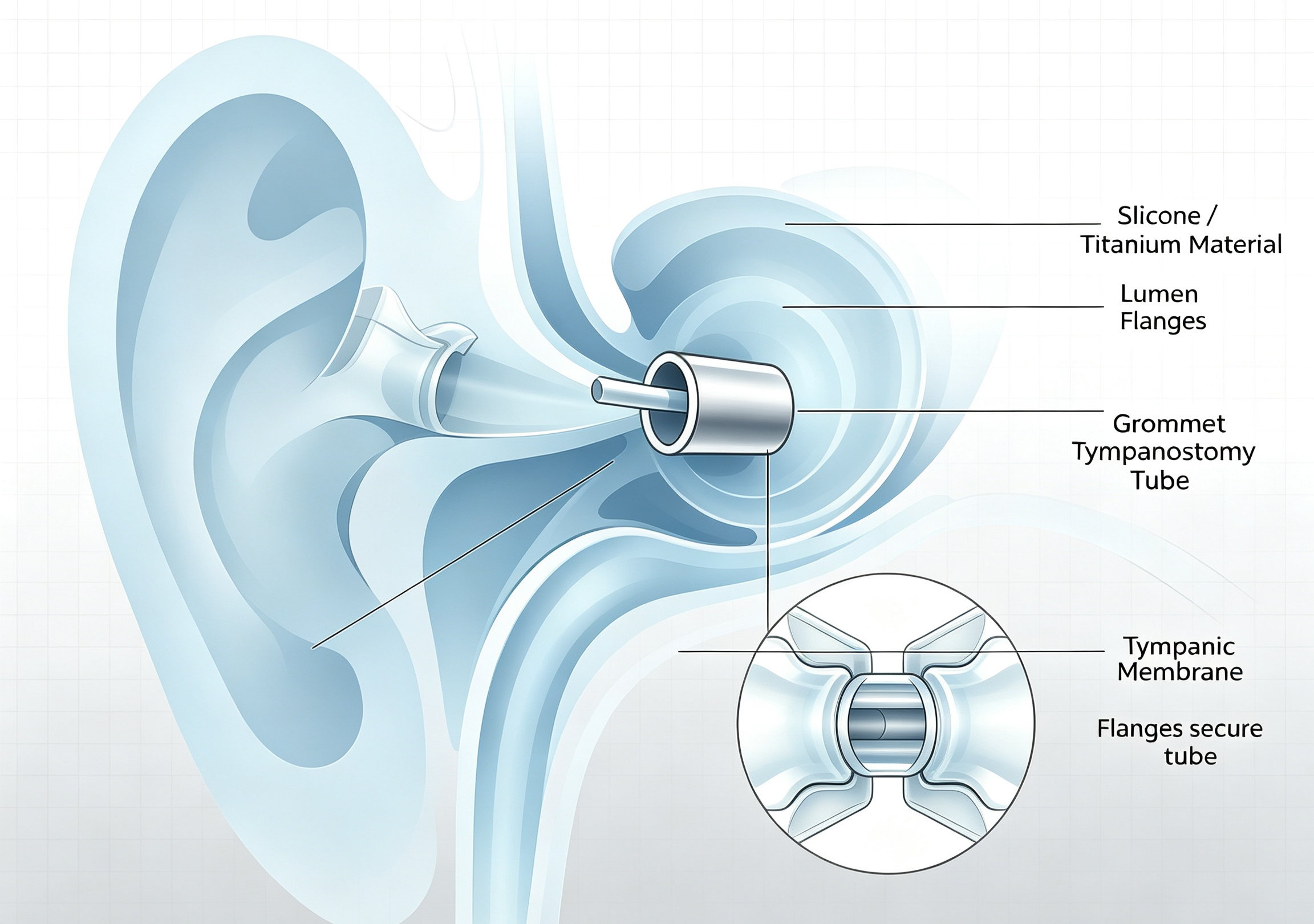
A grommet tympanostomy tube is a tiny hollow tube, usually made of plastic, silicone, or titanium, inserted into the eardrum.
The tube creates a temporary opening that allows air to enter the middle ear and helps fluid drain. It works as a bypass when the Eustachian tube cannot ventilate the ear properly.
Without adequate ventilation, fluid can build up behind the eardrum, causing hearing problems, discomfort, and repeated infections.
2. When Are Ear Tubes Recommended?
A doctor may recommend tympanostomy tubes for:
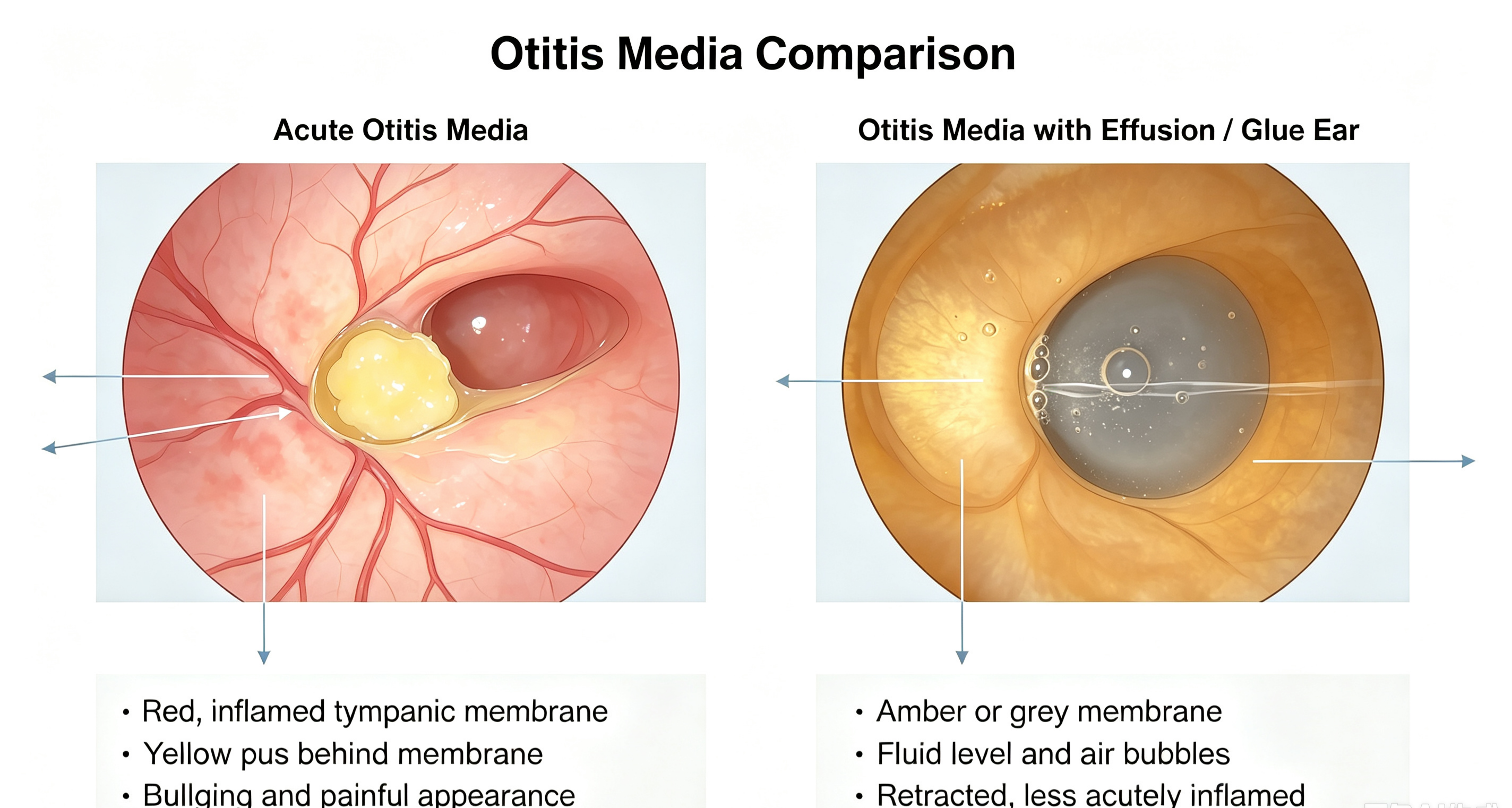
Recurrent Acute Otitis Media
· Three or more ear infections within 6 months, or
· Four or more infections within 12 months.
Otitis Media With Effusion (Glue Ear)
· Middle ear fluid lasting 3 months or longer, especially when it causes hearing loss.
Other Conditions
Ear tubes may also be considered for:
· Persistent Eustachian tube dysfunction
· Severe eardrum retraction or retraction pockets
· Cleft palate with ongoing ear problems
· Barotrauma related to pressure changes
Children are the most common patients because their Eustachian tubes are shorter and less efficient. Adults may also benefit from grommet insertion for chronic fluid buildup, hearing loss, or repeated infections.
3. How Is Grommet Insertion Performed?
The procedure is called myringotomy with tympanostomy tube insertion.
Procedure Steps
1. The ear is examined under a microscope.
2. A small incision is made in the eardrum.
3. Fluid behind the eardrum is removed.
4. The grommet tube is placed into the opening.
5. Antibiotic ear drops may be applied.
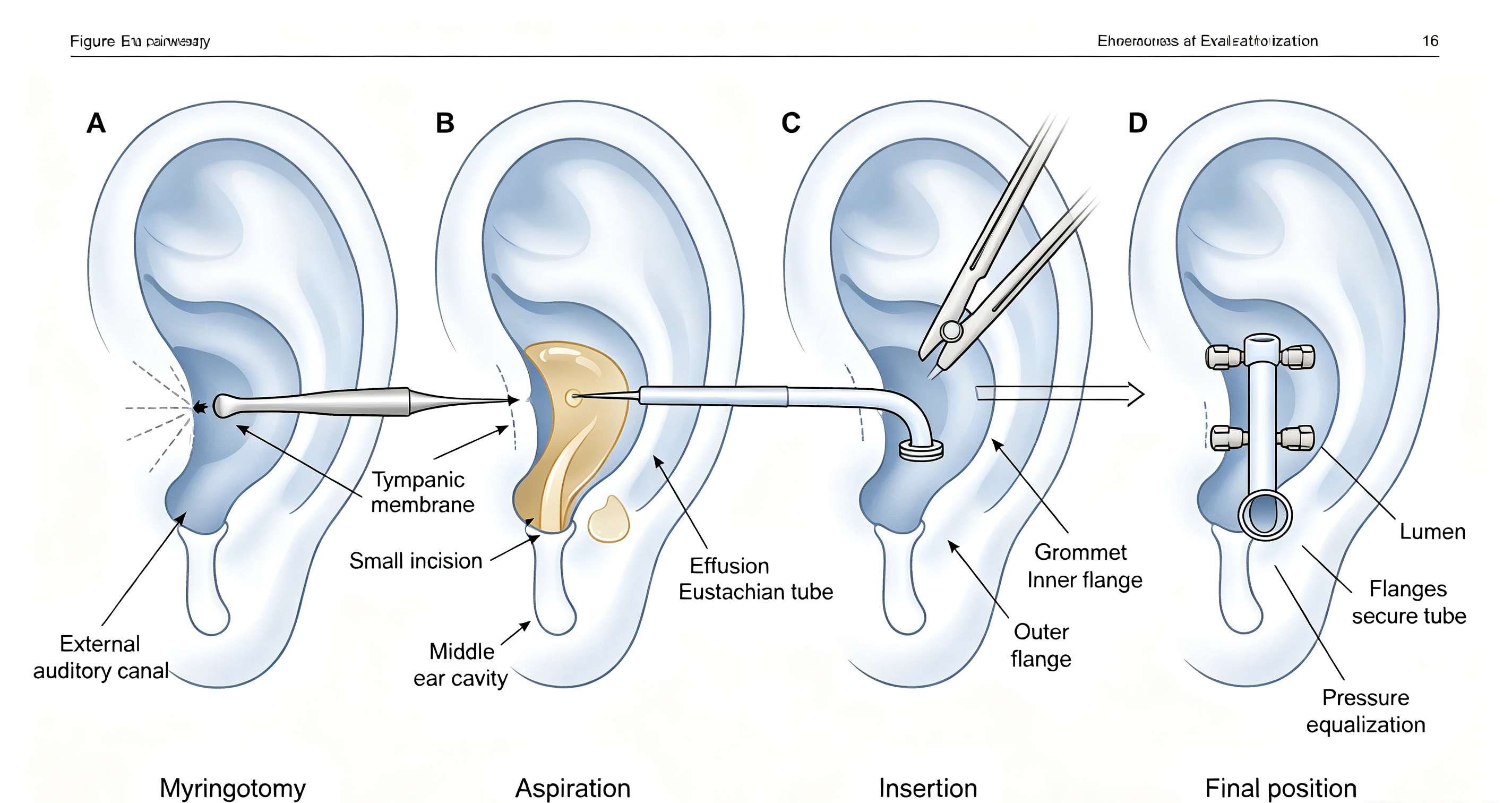
The procedure usually takes 10–15 minutes per ear. Most patients go home the same day after a short recovery period.
Children usually receive general anesthesia, while some adults may undergo the procedure with local anesthesia.
4. Recovery and Aftercare
After Surgery
Most patients recover quickly.
Common short-term effects include:
· Mild ear discomfort
· Small amounts of blood-stained drainage
· Temporary fussiness in young children
Pain is usually mild and can be managed with common pain relievers if needed.
Hearing Improvement
When hearing loss is caused by middle ear fluid, improvement often occurs immediately after tube placement. Some children may notice sounds seem louder at first because they are adjusting to normal hearing.
A follow-up hearing test may be recommended.
Daily Activities
· Most children return to school or daycare within 1–2 days.
· Normal bathing is usually allowed.
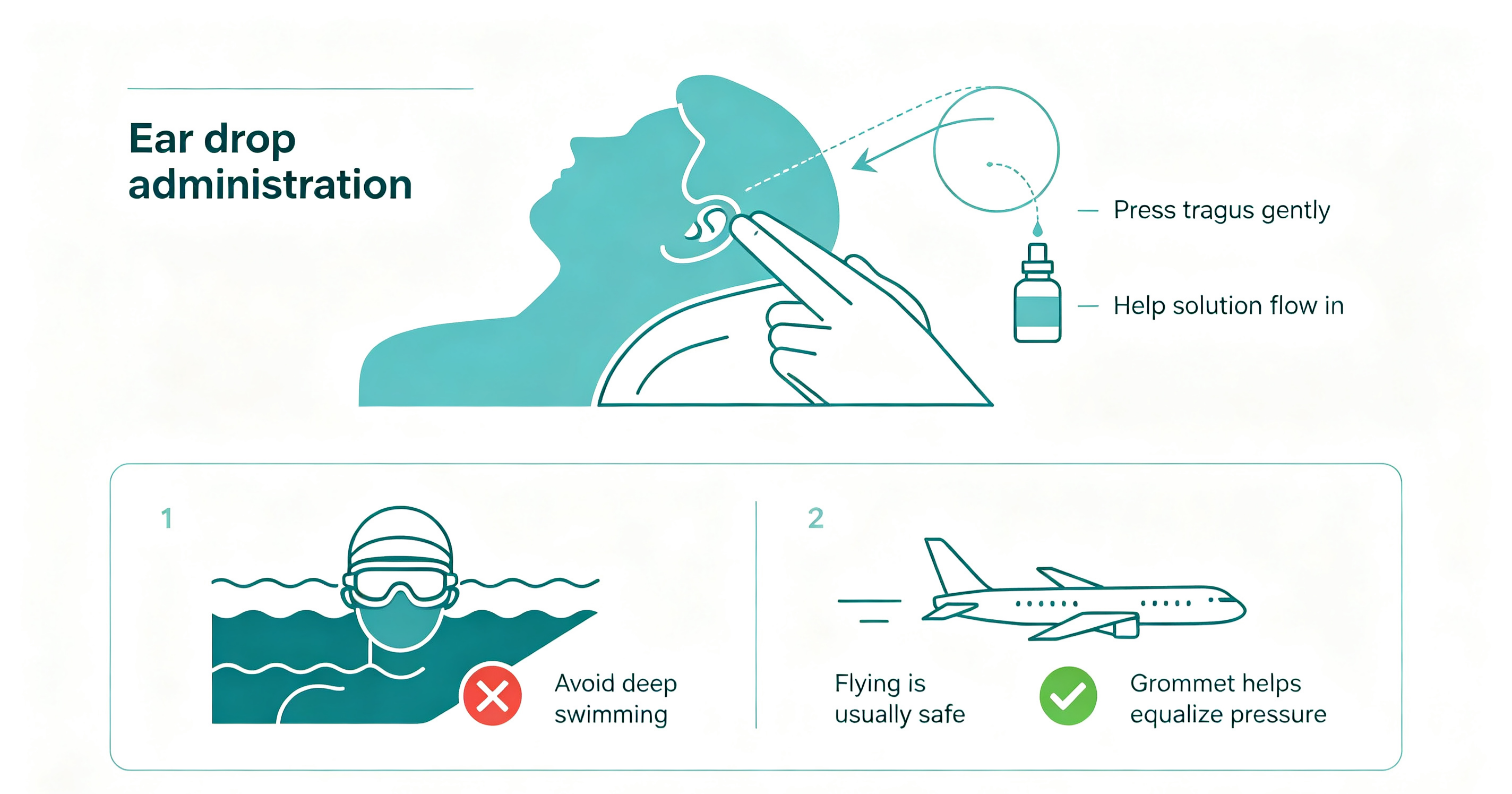
· Swimming restrictions are generally not required unless ear problems occur.
· Avoid swimming when there is active ear drainage.
Ear Drops
If prescribed, antibiotic ear drops help prevent infection and keep the tube functioning properly. Follow your doctor’s instructions for correct use.
Flying
Air travel is usually safe after tympanostomy tube placement because the tube helps equalize middle ear pressure during altitude changes.
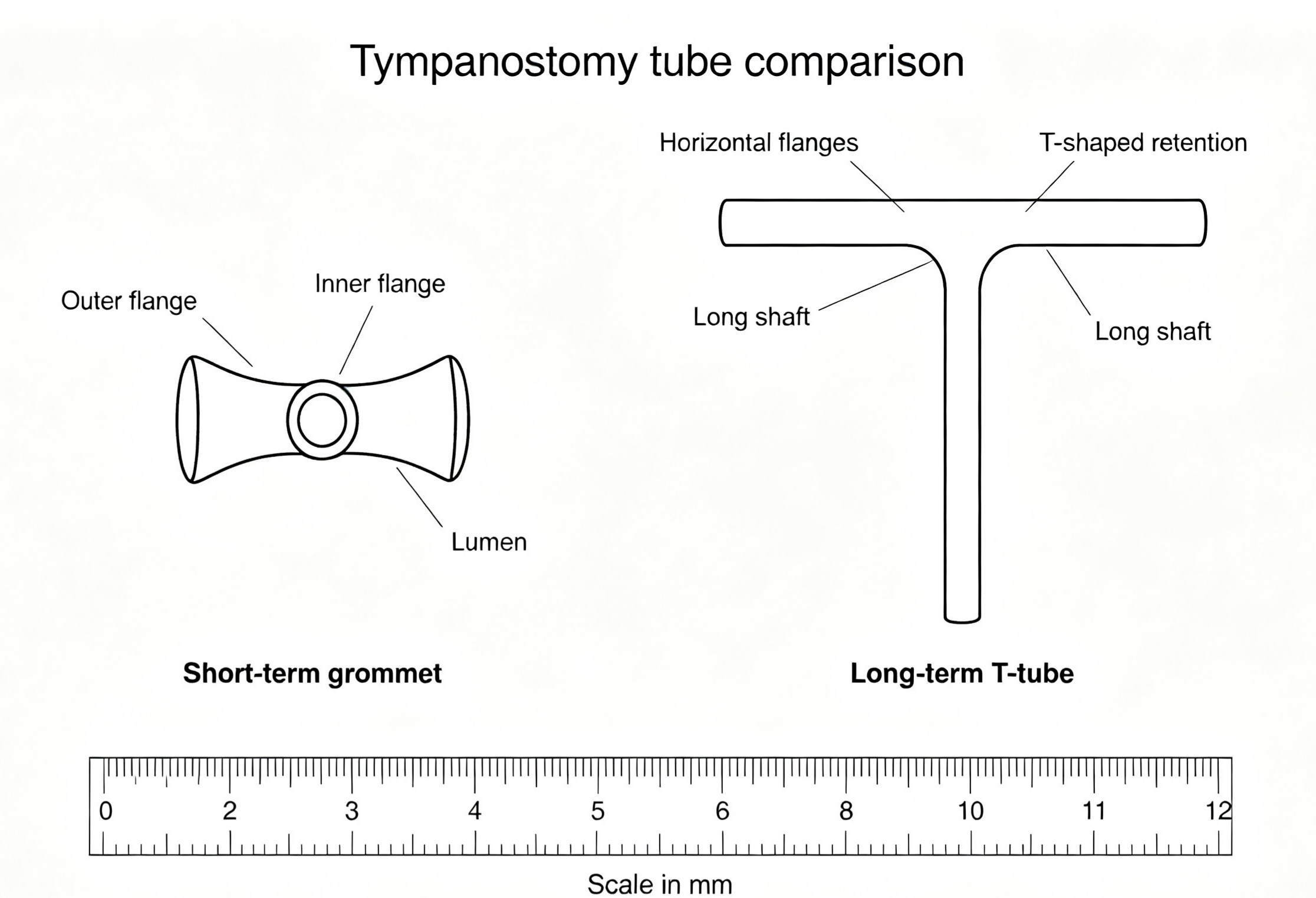
5. Types of Tympanostomy Tubes
Tympanostomy tubes are mainly divided into two types:
Short-Term Tubes
· Usually stay in place for 6 months to 2 years.
· Designed to fall out naturally as the eardrum heals.
· Most commonly used in children.
Examples:
· Paparella Type I
· Armstrong Beveled
· Shepard tubes
Long-Term Tubes
· Designed to remain longer, often 2 years or more.
· Used when prolonged ventilation is needed.
· Some may require removal by a doctor.
Example:
Tube selection depends on the patient’s age, condition, and risk of recurrence.
6. Frequently Asked Questions
Do ear tubes fall out naturally?
Yes. Most short-term grommets come out naturally within 6–18 months. Long-term tubes may remain longer and sometimes require removal.
How long do tympanostomy tubes last?
Short-term tubes usually last several months to 2 years. Long-term tubes can stay in place for several years.
Can adults get grommet tubes?
Yes. Adults may receive ear tubes for persistent middle ear fluid, hearing problems, or Eustachian tube dysfunction.
Do ear tubes improve hearing?
Yes. They usually improve conductive hearing loss caused by fluid behind the eardrum.
Are grommet tubes painful?
The procedure itself is painless under anesthesia. Mild discomfort after surgery is common but usually temporary.
Can children still get ear infections with tubes?
Yes, but infections are usually less frequent and easier to treat with antibiotic ear drops.
What should I do if fluid leaks from the ear after tube placement?
Ear drainage can occur, especially during infections. Contact your doctor for advice. Antibiotic ear drops are commonly used.
Conclusion
Grommet tympanostomy tubes are a safe and effective solution for children and adults with recurrent ear infections, persistent middle ear fluid, or Eustachian tube problems.
The procedure is quick, recovery is usually short, and most patients experience improved hearing and fewer ear-related problems. Choosing the right tube type and following proper aftercare help achieve the best long-term results.