

Electrosurgery vs. Plasma Knife: How Surgical Technology Changes Postoperative Recovery
At a Glance: Key Differences
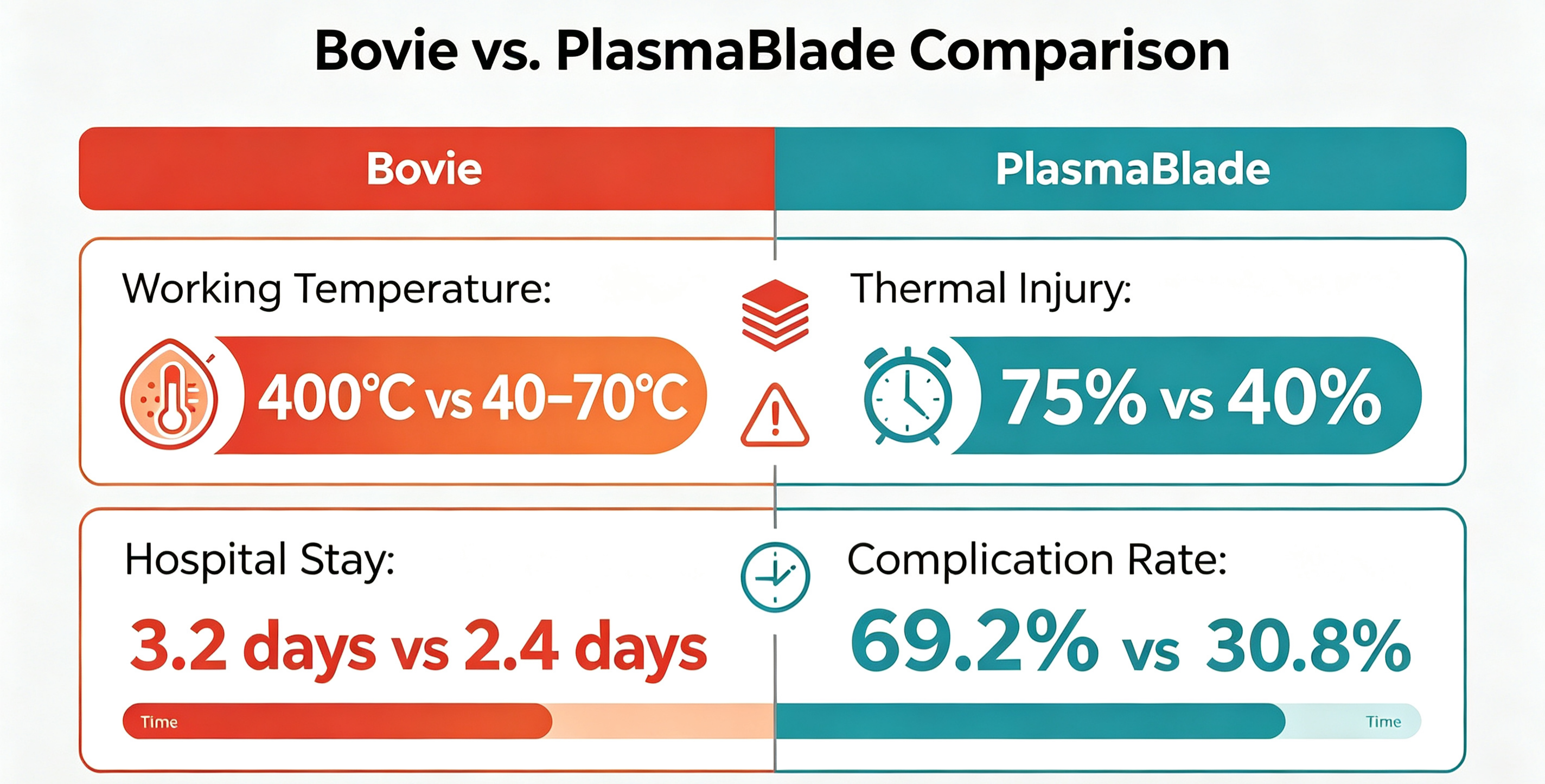
Conventional Electrosurgery | Low-Temperature Plasma Knife (PlasmaBlade) | |
Working Temperature | Up to 400°C | 40–70°C |
Thermal Injury | Significant thermal damage | Minimal thermal damage |
Pain-Free Swallowing | 15.76 days | 13.28 days |
Hospital Stay | 3.2 days | 2.4 days |
Scar Width | 25% wider | Narrower scars with better cosmetic results |
Complication Rate | 69.2% | 30.8% |
Drain Output | 95.1 mL | 61.1 mL |
Different Technologies, Different Tissue Responses
Conventional Electrosurgery: Effective Cutting With High Heat
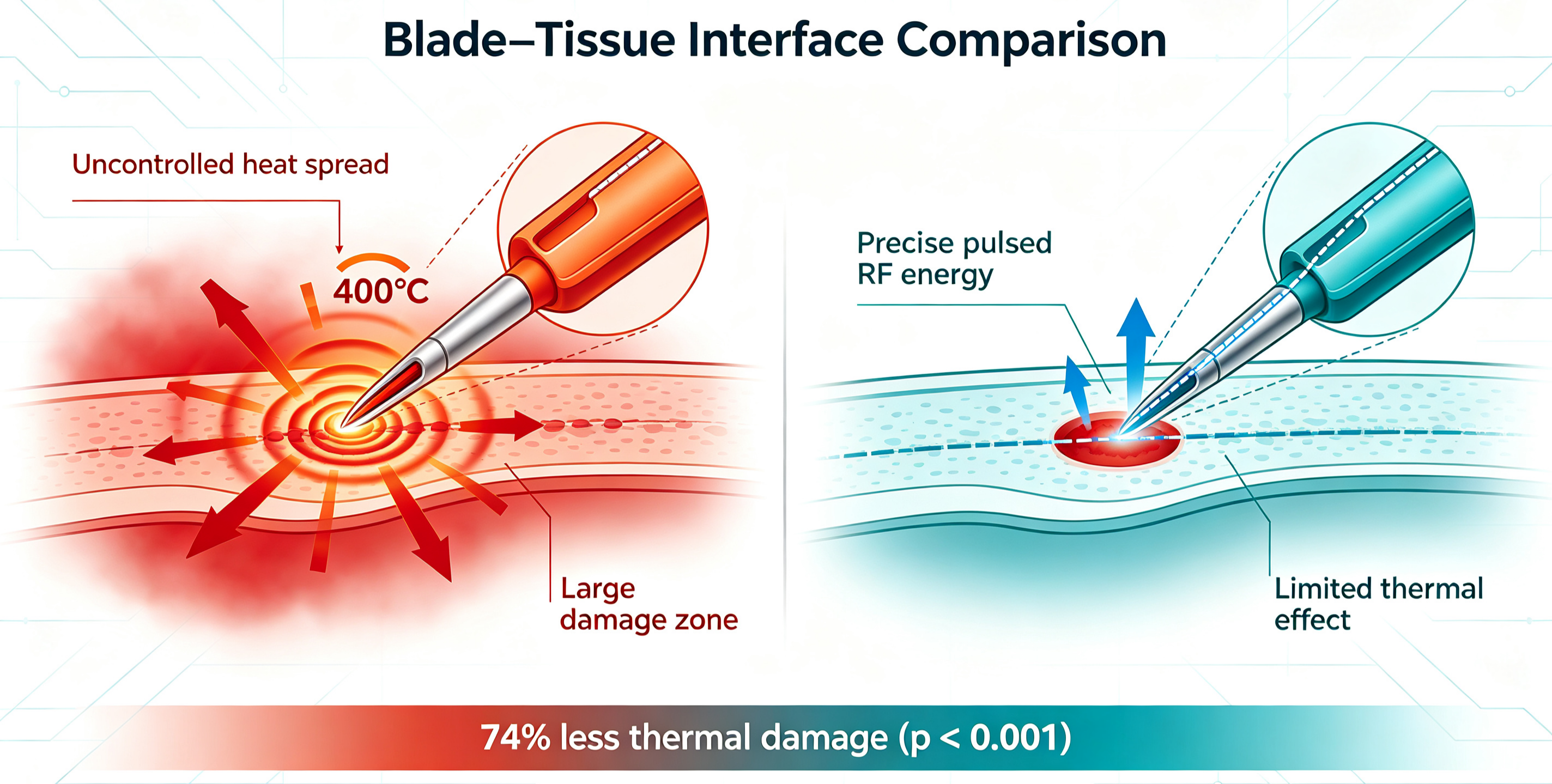
Conventional electrosurgery (often called "Bovie") uses high-frequency electrical energy to generate heat, reaching temperatures of up to 400°C. It cuts tissue and seals blood vessels effectively, but the high temperature can also affect surrounding healthy tissue.
This thermal spread may increase tissue damage, inflammation, postoperative pain, and healing time.
Low-Temperature Plasma Knife: Precision With Less Thermal Damage
The low-temperature plasma knife (PEAK PlasmaBlade) uses pulsed radiofrequency energy to create a controlled plasma discharge along the edge of an insulated blade.
Unlike traditional electrosurgery, the blade operates at approximately 40–70°C, allowing precise tissue cutting while minimizing heat transfer to surrounding structures.
Clinical studies have shown that thermal injury depth is reduced by 74% compared with conventional electrosurgery (p < 0.001).
Recovery Differences: Pain, Healing, and Scarring
Less Postoperative Pain
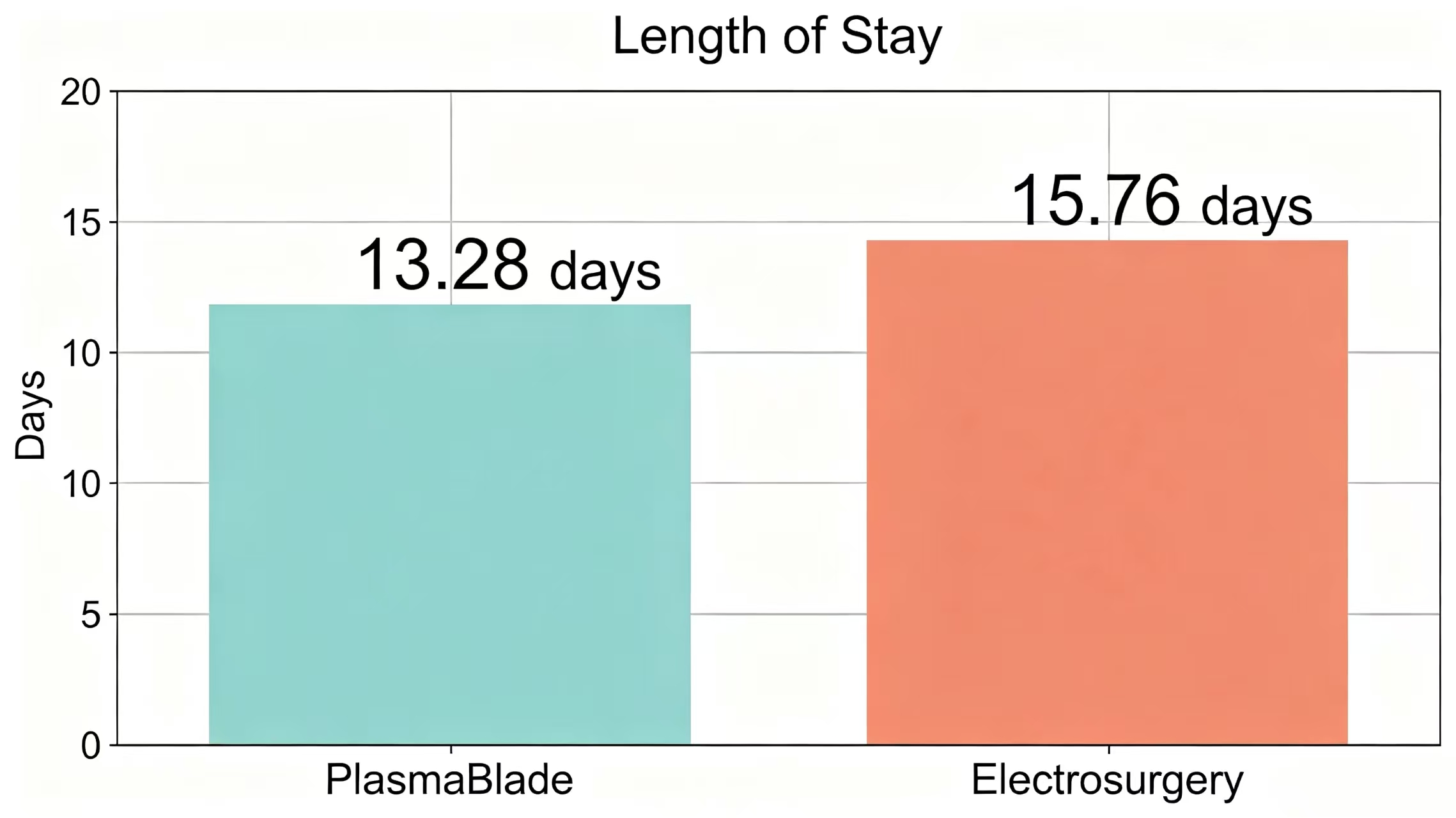
A prospective double-blinded randomized controlled trial in adult tonsillectomy patients found that the PlasmaBlade group achieved pain-free swallowing in 13.28 days, compared with 15.76 days in the electrocautery group (p = 0.035).
Patients treated with PlasmaBlade also reported significantly higher satisfaction scores (p = 0.046).
Faster Healing With Reduced Inflammation
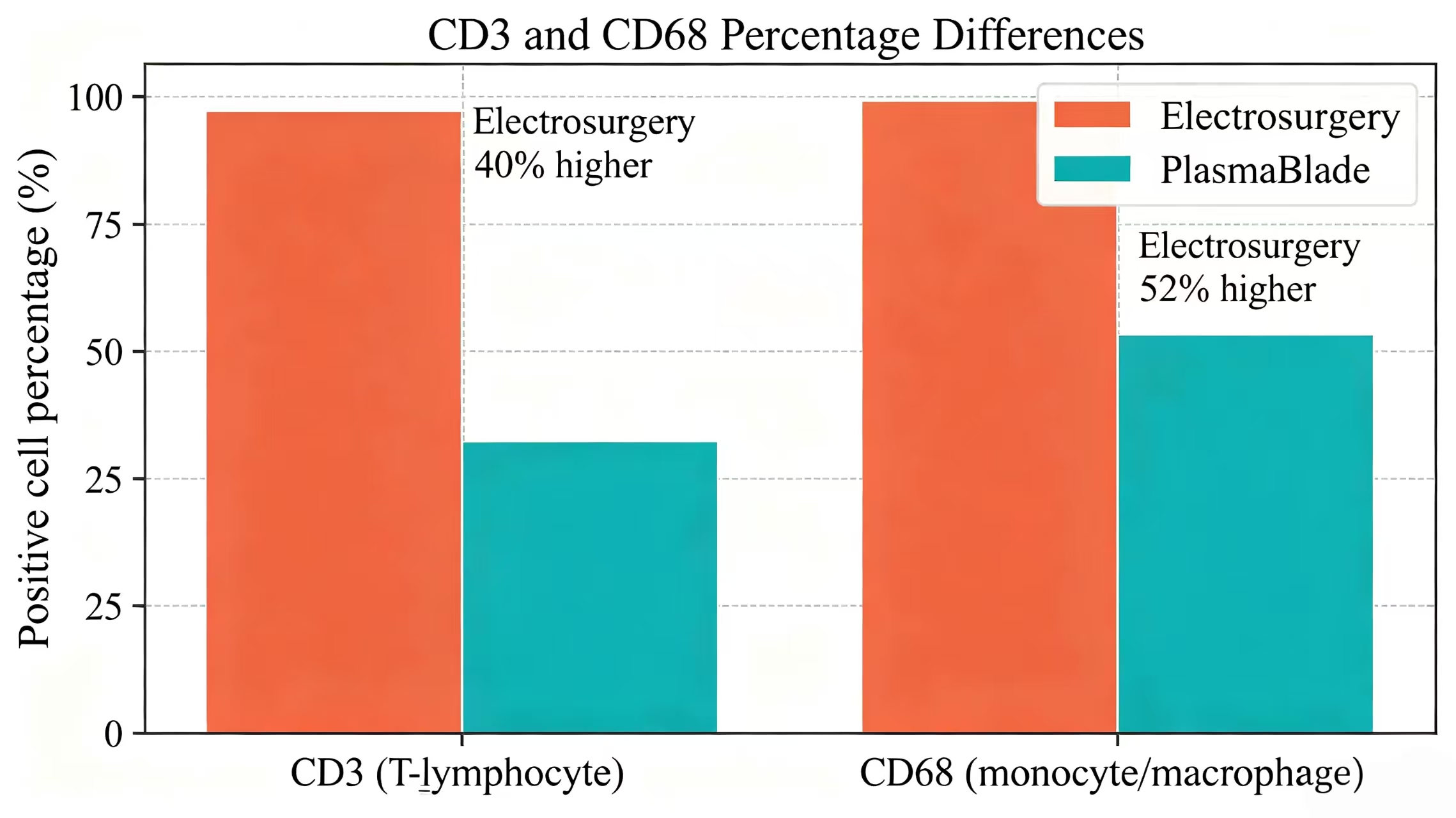
The difference is not only about pain. Tissue recovery also varies significantly.
At 3 weeks after surgery, the electrosurgery group showed:
· 40% higher CD3 (T-lymphocyte) response
· 52% higher CD68 (monocyte/macrophage) response
Compared with PlasmaBlade, indicating a stronger inflammatory response after electrosurgery.
Lower inflammation may contribute to smoother healing and improved recovery.
Better Scar Appearance
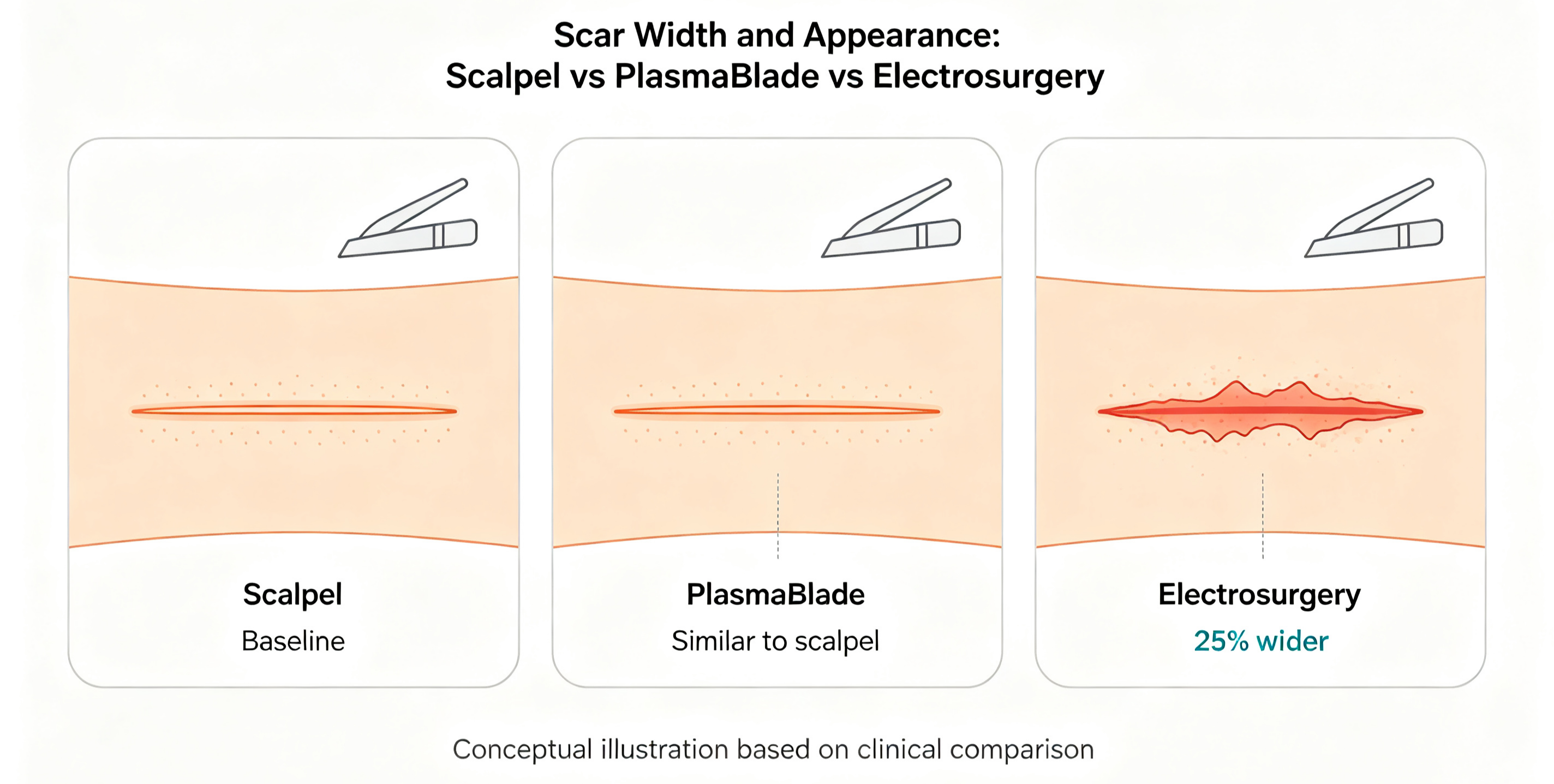
Scar formation is another important consideration.
Studies found that PlasmaBlade incisions produced scars 25% narrower than conventional electrosurgery (p = 0.01).
At 6 weeks after surgery, healed PlasmaBlade and scalpel incisions demonstrated approximately three times greater wound strength than electrosurgical incisions, with improved cosmetic outcomes.
Shorter Procedure Time and Hospital Stay
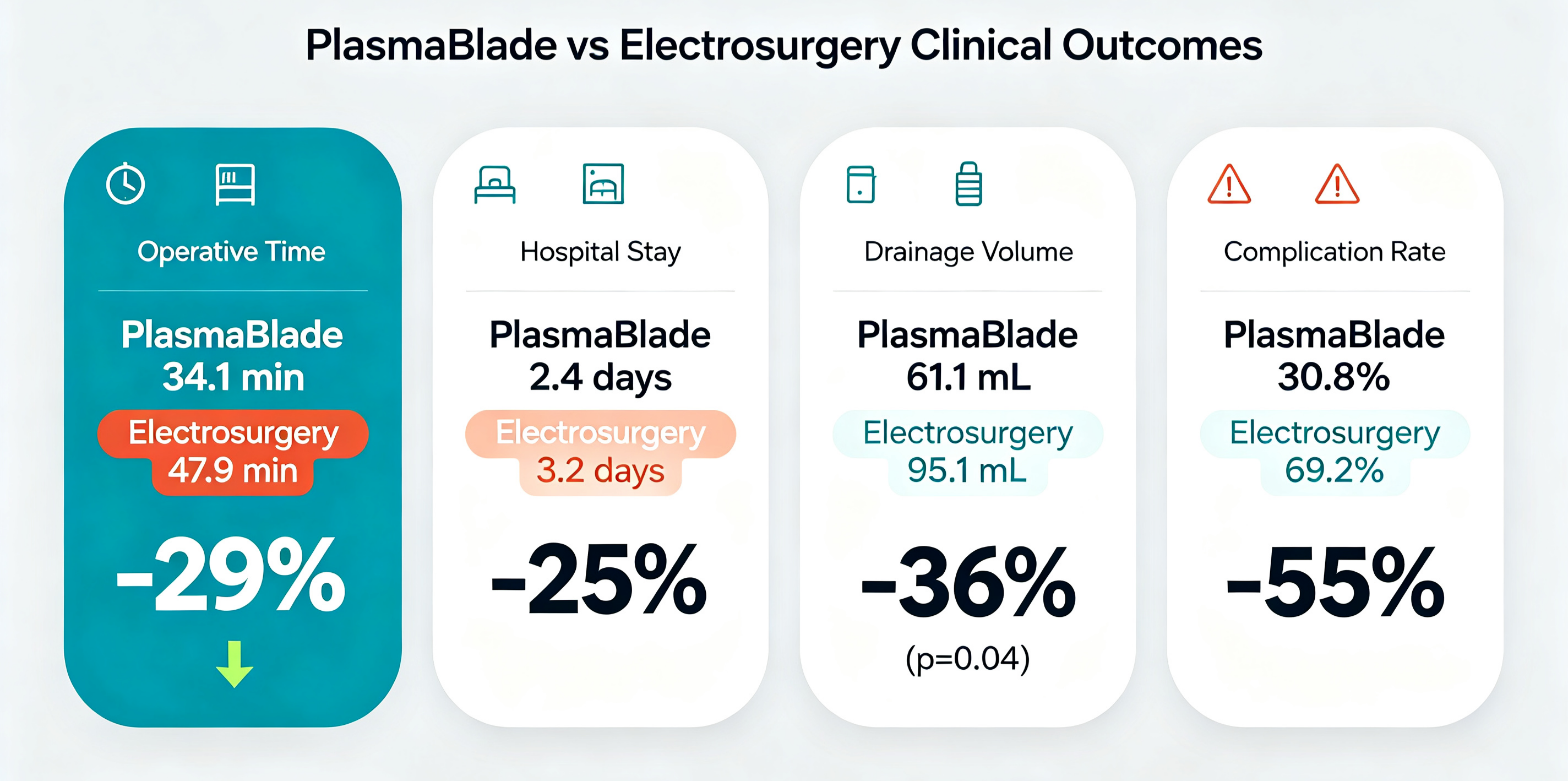
Clinical outcomes also show practical advantages:
Outcome | PlasmaBlade | Electrosurgery |
Procedure Time | 34.1 min | 47.9 min |
Hospital Stay | 2.4 days | 3.2 days |
Drain Output | 61.1 mL | 95.1 mL (p = 0.04) |
Common Procedures Where PlasmaBlade Shows Advantages
Procedure | Potential Benefits |
Tonsillectomy / Adenoidectomy | Less postoperative pain, especially valuable for pediatric patients |
Breast Surgery / Reconstruction | Reduced drain output and faster wound recovery |
Post-Bariatric Body Contouring | Lower complication rates and improved wound healing |
In post-bariatric abdominoplasty, the PlasmaBlade group showed:
· Wound healing problems reduced from 46.2% to 19.2%
· No seromas compared with four cases in the electrosurgery group
· Overall complication rate reduced from 69.2% to 30.8%
Frequently Asked Questions
Q: Which recovers faster—PlasmaBlade or electrosurgery?
A: PlasmaBlade generally provides faster recovery.
Clinical data show:
· Pain-free swallowing achieved about 2.5 days earlier
· Hospital stay reduced by nearly 1 day
· Thermal injury reduced by 74%
· Scar width reduced by 25%
Q: How soon can patients go home after PlasmaBlade surgery?
A: The average hospital stay is around 2–3 days, although some patients may be discharged within 24 hours depending on the procedure and recovery condition.
Q: Is PlasmaBlade suitable for every surgery?
A: Not necessarily. Conventional electrosurgery remains an effective option for many routine procedures.
However, when reducing thermal injury, improving cosmetic outcomes, and supporting faster recovery are priorities—such as in tonsillectomy, breast surgery, and body contouring—the low-temperature plasma knife may provide important advantages.
The final choice should always be based on the surgeon’s evaluation and the patient’s specific condition.
The Bottom Line
The difference between electrosurgery and the low-temperature plasma knife is not only about cutting tissue—it is about how the body recovers afterward.
Clinical evidence shows that PlasmaBlade can provide:
· 74% less thermal injury
· Faster return to pain-free swallowing
· Shorter hospital stays
· 25% narrower scars
· Lower complication rates in selected procedures
Conventional electrosurgery remains a reliable and widely used technology. However, for procedures where tissue preservation, recovery speed, and cosmetic results are important, PlasmaBlade offers a more precise approach with reduced thermal damage.
The surgical device chosen in the operating room can directly influence the patient's recovery experience afterward.