

Ear Tubes (Tympanostomy Tubes): A Clinical Guide for Patients and Families
What Are Ear Tubes?
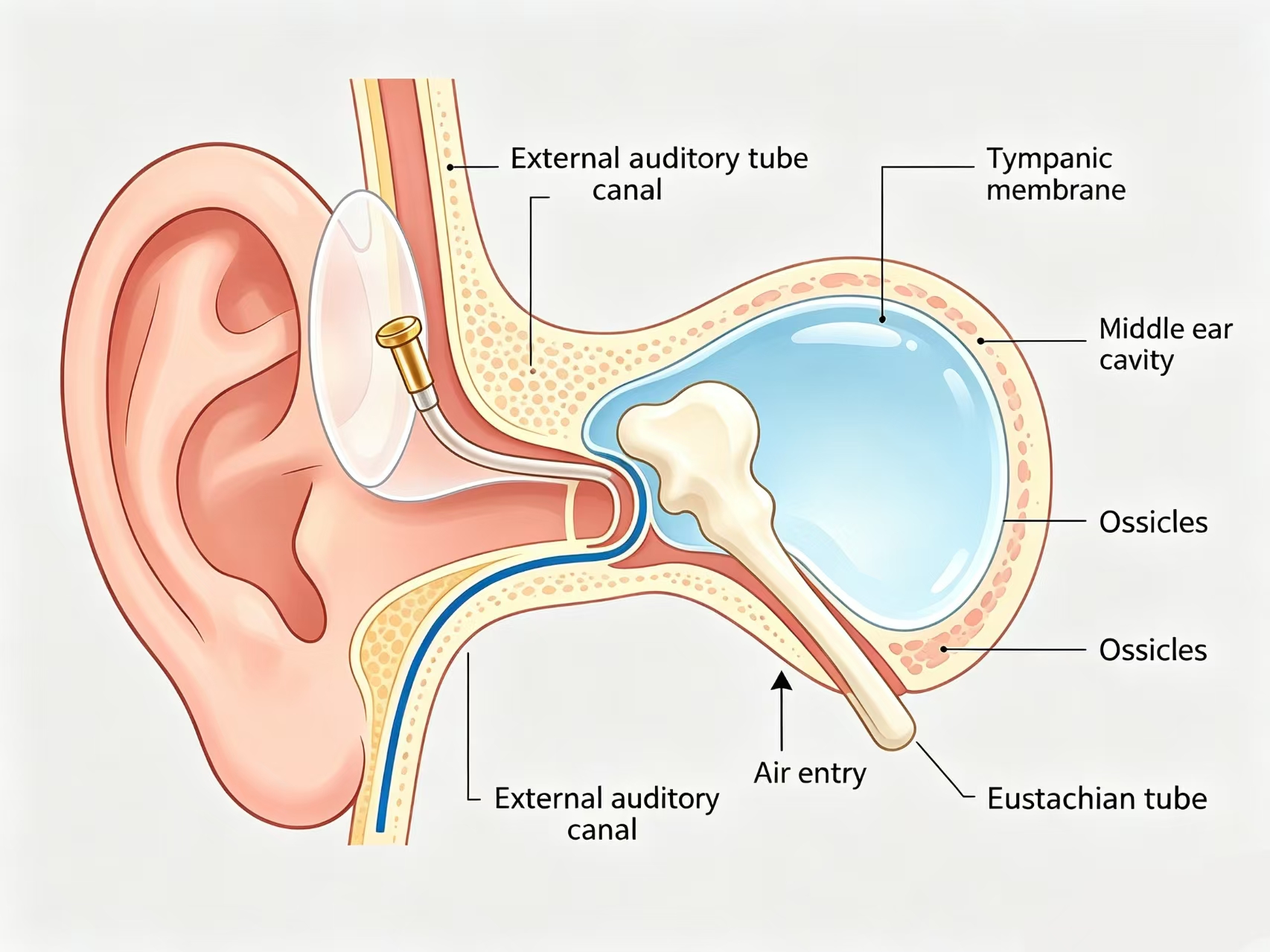
Ear tubes (also called tympanostomy tubes, PE tubes, or grommets in the UK) are small hollow tubes placed through the eardrum to improve middle ear ventilation.
They allow air to enter the middle ear, help drain trapped fluid, and balance pressure when the Eustachian tube is not working properly.
Ear tubes act as a temporary pathway that bypasses Eustachian tube dysfunction. This helps reduce fluid buildup and prevents repeated ear infections.
· Short-term tubes usually fall out naturally within 6–18 months.
· Long-term tubes can remain in place for several years but have a higher risk of complications.
Who Needs Ear Tubes?
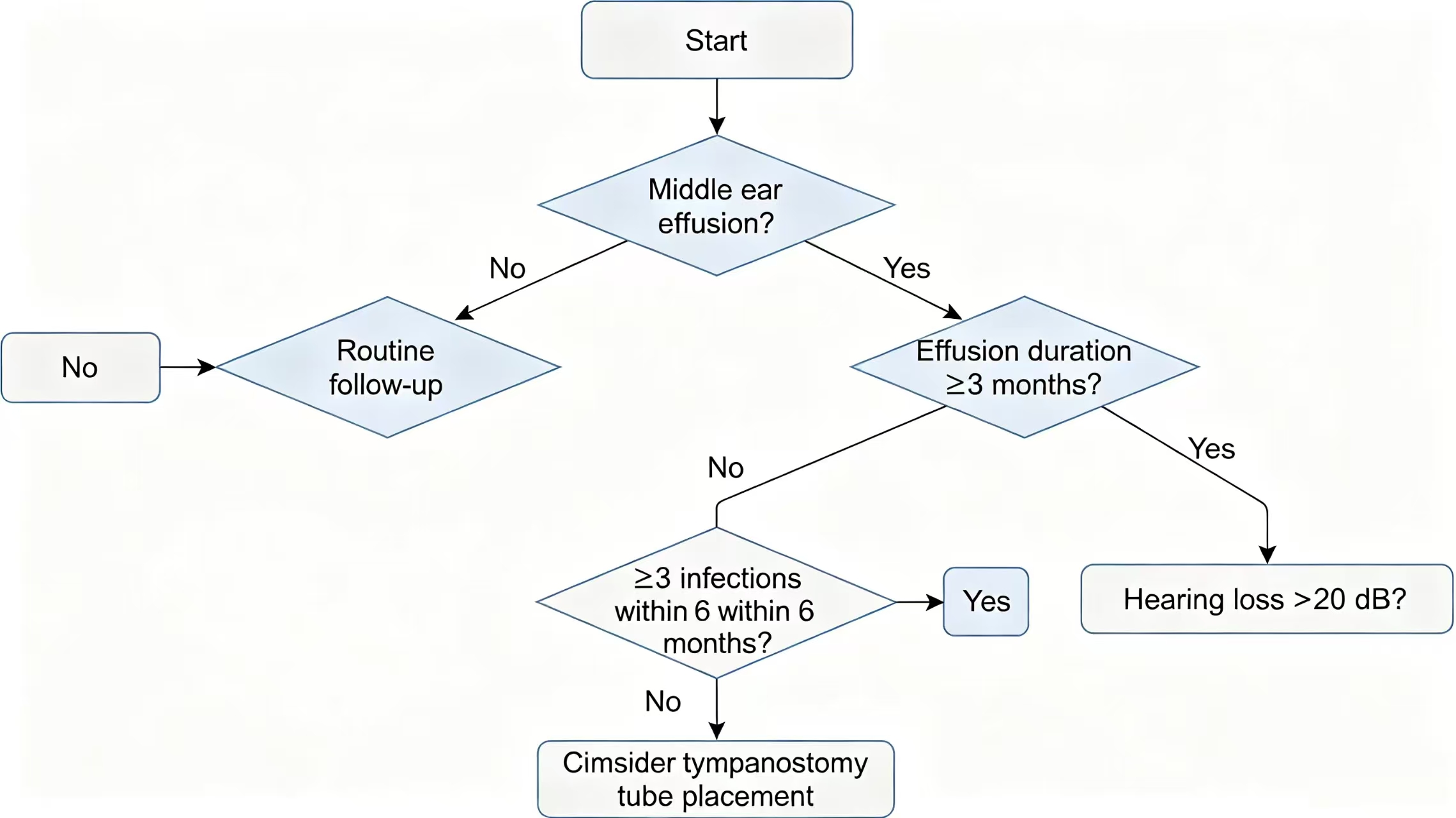
According to the AAO-HNS 2022 guidelines, ear tubes are commonly recommended for children between 6 months and 12 years old in specific situations.
Chronic Otitis Media with Effusion (OME)
Children may benefit from ear tubes when:
· Fluid is present in both ears
· The fluid lasts for 3 months or longer
· Hearing loss is greater than 20 dB
Recurrent Acute Otitis Media (AOM)
Ear tubes may be considered when a child has:
· 3 or more ear infections within 6 months, or
· 4 or more ear infections within 12 months
AND fluid is present in the middle ear at the time of evaluation.
Key rule: No middle ear fluid, no tubes.
Children with special conditions, including cleft palate, developmental delays, or Down syndrome, may need earlier evaluation.
Ear Tubes in Adults
Although ear tubes are more common in children, adults may also benefit from tympanostomy tubes.
Common reasons include:
· Chronic Eustachian tube dysfunction
· Pressure problems caused by flying or diving (barotrauma)
· Middle ear problems after radiation therapy
Many adults can have in-office tube placement using local anesthesia instead of undergoing surgery under general anesthesia.
The Procedure: Myringotomy with Tube Insertion
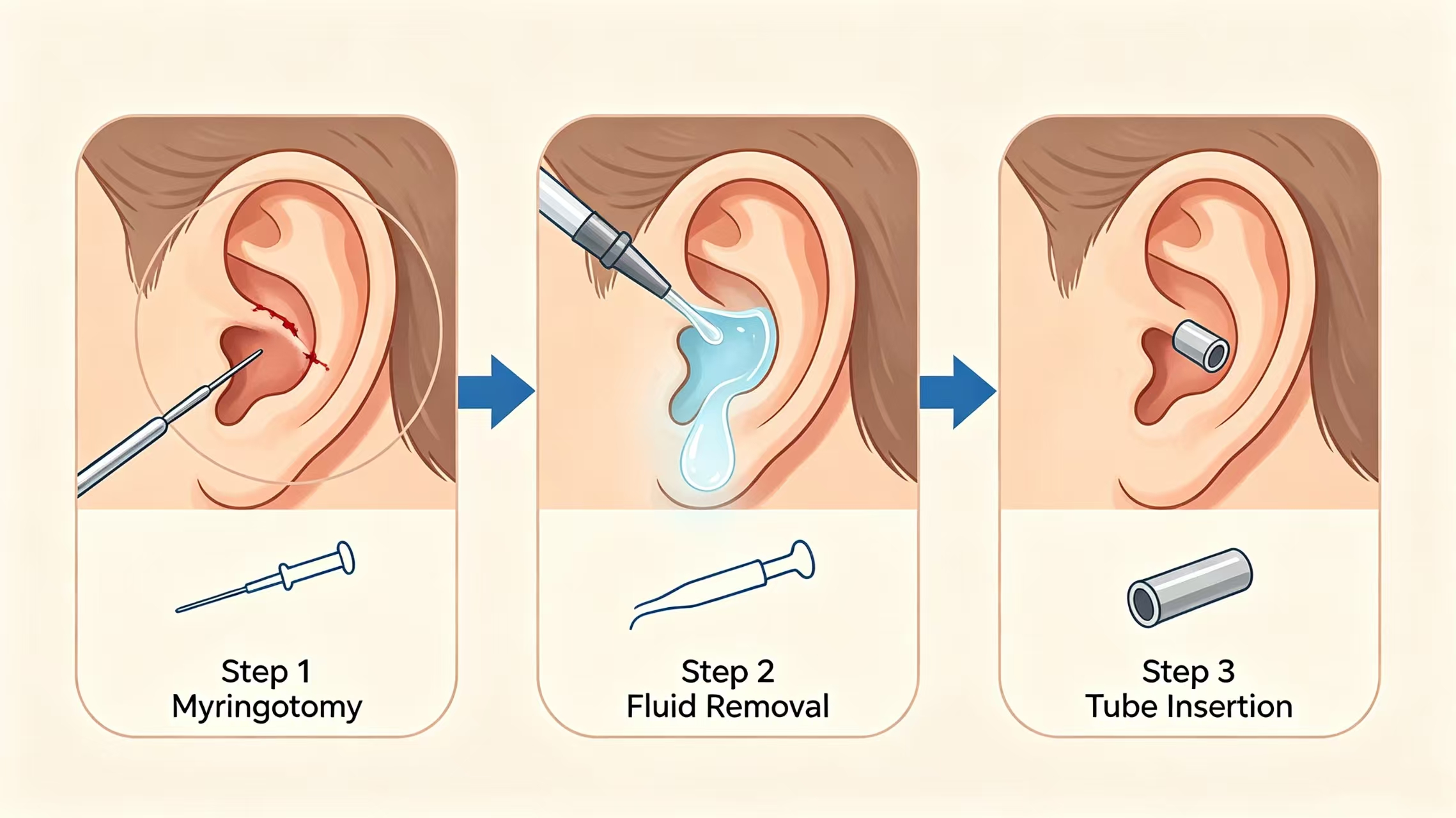
Myringotomy with tube insertion is a short procedure that usually takes about 10–15 minutes.
The surgeon:
1. Makes a tiny opening in the eardrum (myringotomy)
2. Removes trapped fluid from the middle ear
3. Places the tympanostomy tube into the opening
Most children receive general anesthesia, while adults may receive local anesthesia.
Bilateral ear tube placement (both ears) is common because it allows treatment during a single procedure.
Recovery After Ear Tube Surgery
Most patients go home within 1–2 hours after the procedure.
Recovery is usually quick:
· Pain is minimal
· Many children return to school the next day
· Hearing improvement is often noticeable immediately
Follow-up visits are typically scheduled:
· First check: around 2 weeks to 6 months
· Then every 3–4 months while the tubes remain in place
Most current guidelines do not require routine earplugs for swimming unless ear drainage occurs.
Common Ear Tube Complications
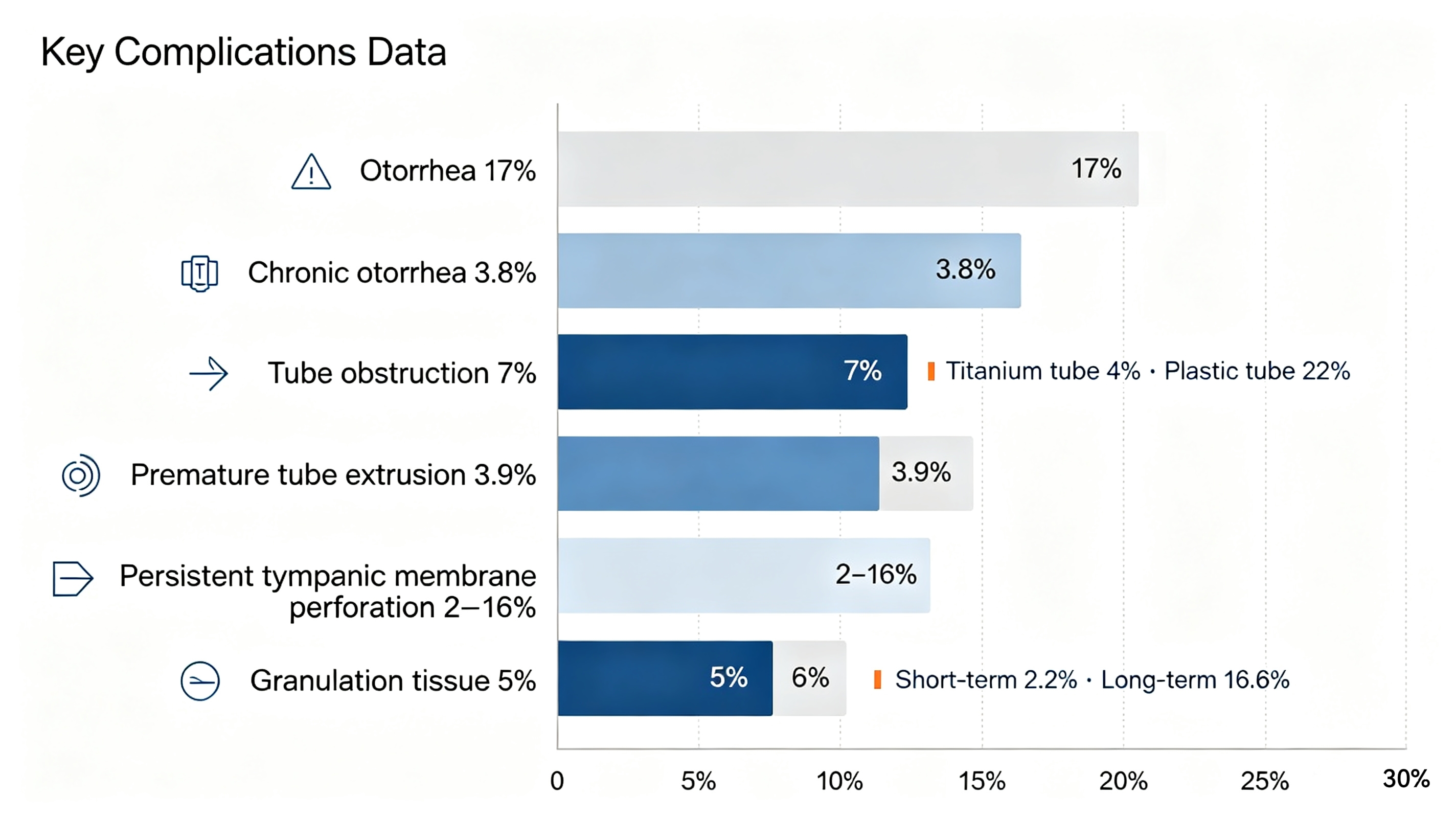
Although ear tubes are generally safe, complications can occur.
Complication | Approximate Rate | Notes |
Tube otorrhea (ear drainage) | ~17% | Most common complication; usually treated with antibiotic ear drops |
Chronic otorrhea (≥10 days) | ~3.8% | Requires medical treatment |
Tube obstruction | ~7% | Titanium tubes clog less frequently (4%) than plastic tubes (22%) |
Premature extrusion | ~3.9% | Some patients may need another tube placement |
Persistent eardrum perforation | 2–16% | Higher with long-term tubes (16.6% vs 2.2%) |
Granulation tissue | ~5% | Usually managed with medication or tube removal |
Cholesteatoma | Risk increased 2.6× | Mainly associated with long-term tubes |
Risk factors for chronic drainage include:
· Ear drainage immediately after surgery
· Rapid nasal irrigation
· Tube placement under local anesthesia
When to See an ENT Specialist
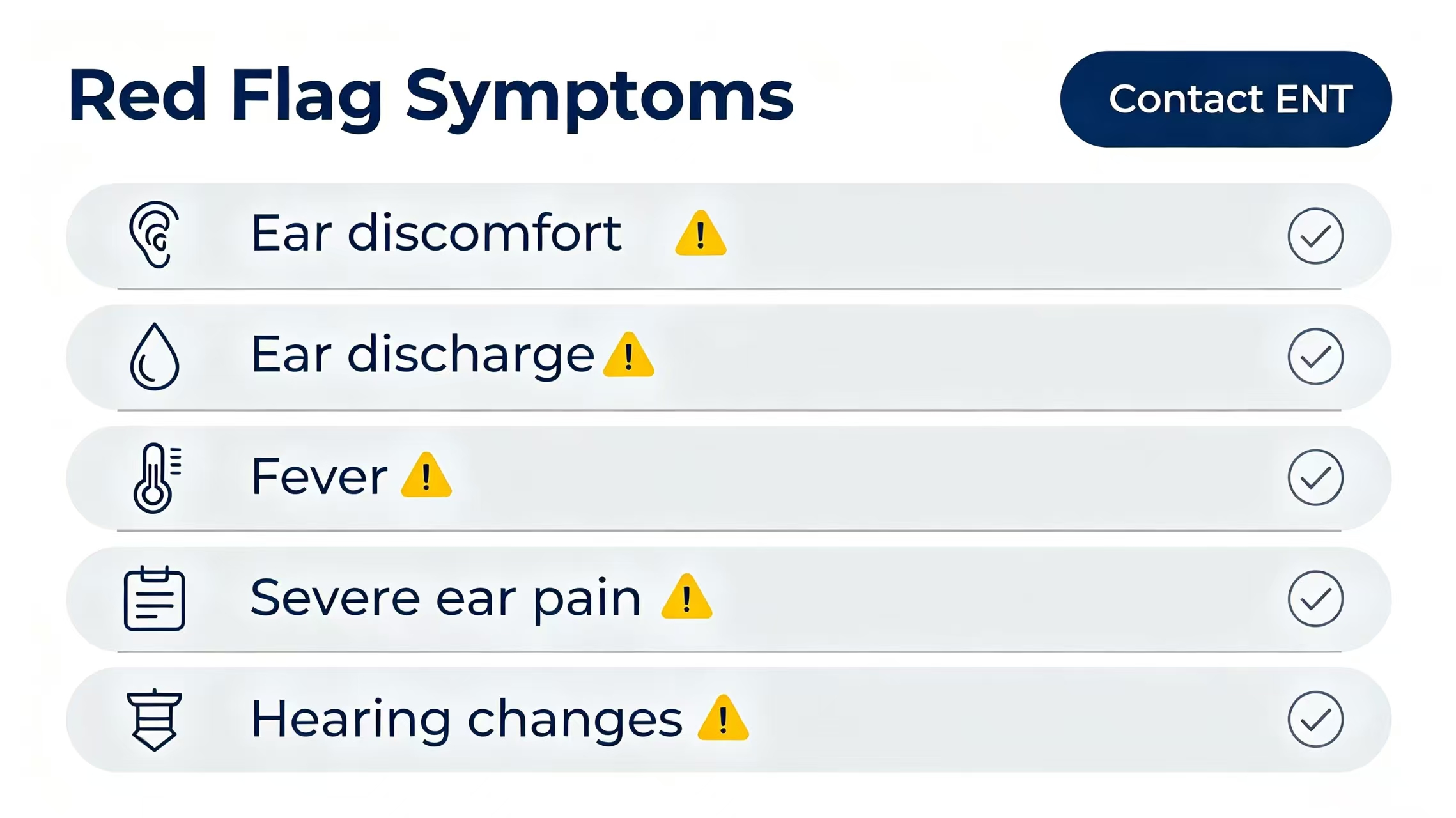
You should contact an ENT specialist if you notice:
· Ear drainage lasting more than a few days
· Increasing ear pain
· No improvement in hearing or worsening hearing
· Ear symptoms returning after tubes fall out
· Fever combined with ear symptoms
Parents looking for care should consider searching for a pediatric ENT experienced in ear tube surgery.
Key Takeaways About Ear Tubes
Ear tubes (tympanostomy tubes) are one of the most common treatments for children with chronic ear fluid or repeated ear infections when fluid is present during evaluation.
The procedure, myringotomy with tube insertion, is fast, usually takes about 15 minutes, and recovery is typically very quick. Many patients experience immediate hearing improvement.
However, complications can occur. Tube otorrhea is the most common issue, affecting about 17% of patients, making regular follow-up important.
Short-term tubes are generally safer, while long-term tubes remain longer but carry a higher risk of persistent eardrum perforation and cholesteatoma.
For adults, in-office tympanostomy tube placement may provide an effective option without general anesthesia.
Ear tubes can effectively manage symptoms, but they do not cure the underlying Eustachian tube dysfunction. Discuss the benefits and risks with your ENT specialist to determine whether ear tube surgery is the right choice for you or your child.