

Coblation vs. Curettage for Pediatric Adenoidectomy: Which Technique Is Safer for Children?
If your child snores loudly, breathes through the mouth, or suffers from repeated ear infections, enlarged adenoids may be the reason. When medication does not provide enough relief, an adenoidectomy may be recommended.
But when surgery is needed, many parents wonder: Which adenoid removal technique is safer — traditional curettage or modern Coblation?
Current evidence suggests that Coblation adenoidectomy offers advantages in precision, bleeding control, pain reduction, and recovery time.
Why Are Adenoids Removed?
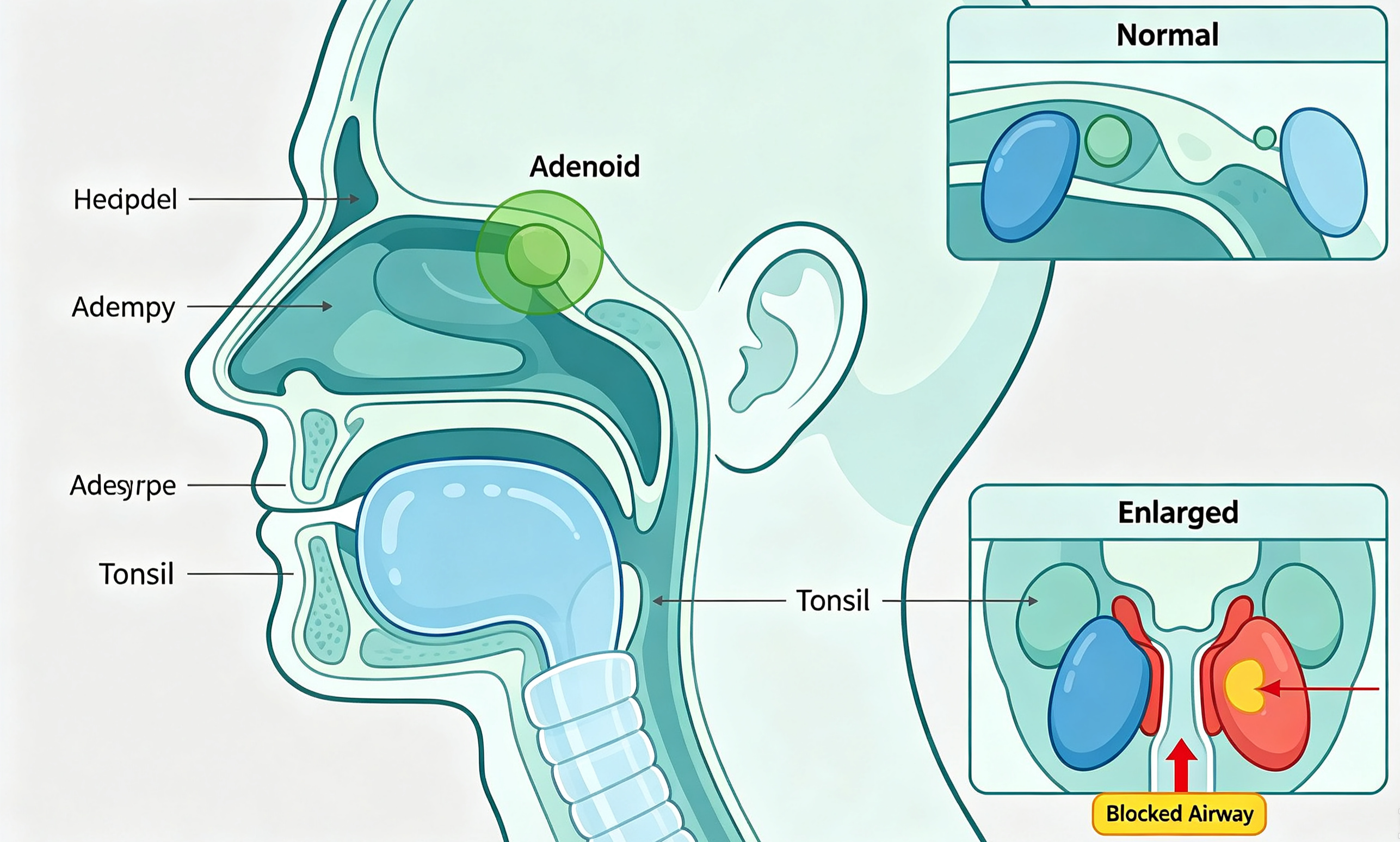
Adenoids are lymphatic tissue located behind the nose. They play a role in childhood immunity and usually shrink naturally during adolescence.
However, enlarged adenoids can cause problems such as:
· Blocked airway and sleep apnea
· Chronic middle ear fluid or repeated ear infections
· Mouth breathing and poor sleep quality
· Potential effects on facial growth and school performance
When these problems do not improve with medical treatment, an adenoidectomy may be considered.
Traditional Method: Blind Curettage
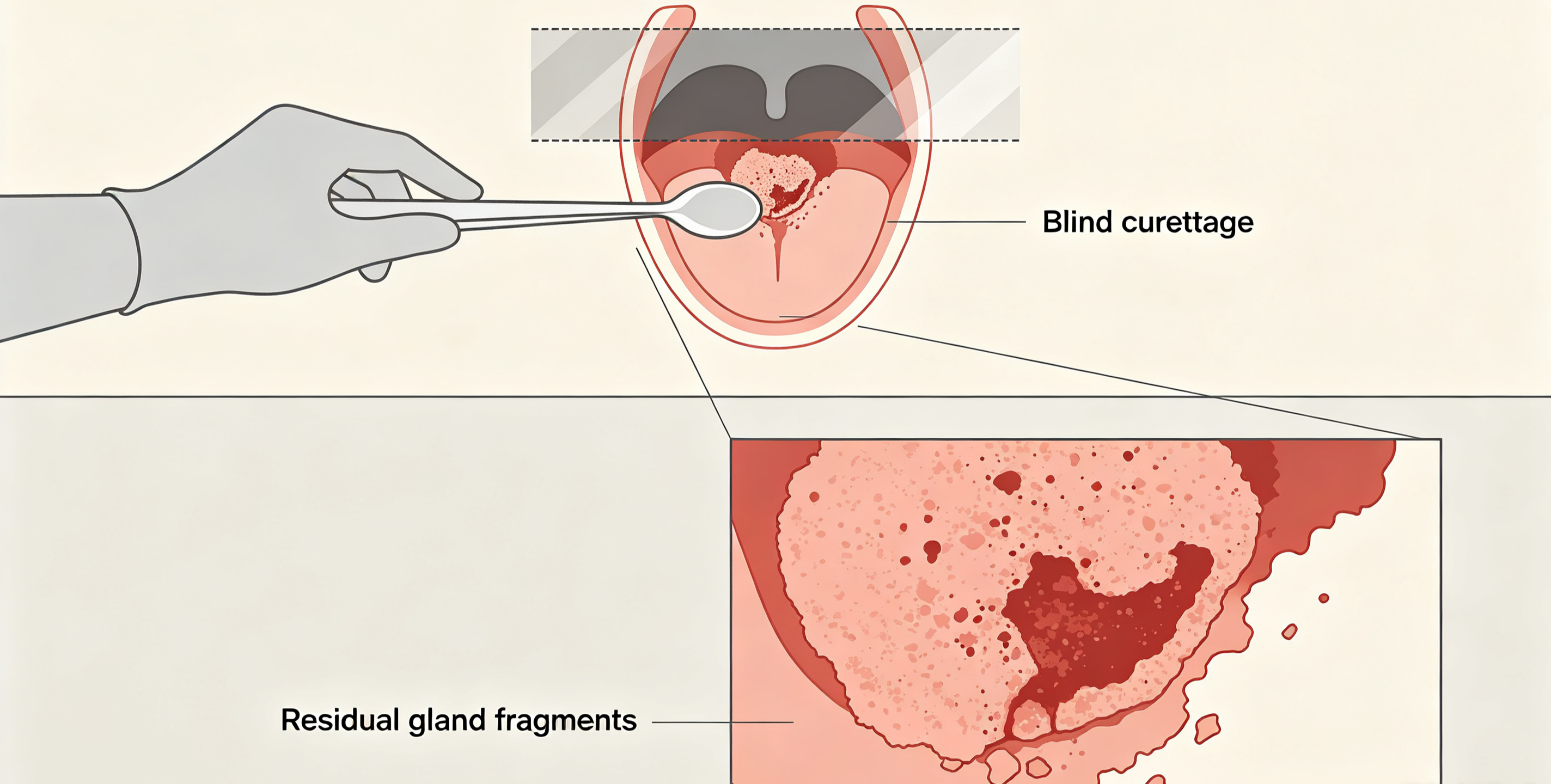
For many years, surgeons performed adenoidectomy using a curette, a spoon-shaped instrument used to remove adenoid tissue by touch without direct visualization.
Although this technique is fast and widely used, it has several limitations:
· Incomplete removal: residual adenoid tissue has been reported in up to 61.8% of cases
· Higher blood loss: approximately 24 mL on average
· Soft palate injury: reported in around 24.6% of patients
· More postoperative pain and longer recovery: usually 1–2 weeks
The procedure typically takes about 20 minutes, but limited visibility can make complete removal more difficult.
Modern Technique: Coblation Adenoidectomy
Coblation uses low-temperature radiofrequency energy (40–70°C) to remove adenoid tissue while minimizing damage to surrounding structures.
During the procedure, surgeons use a small endoscope (camera) to clearly view the surgical area, allowing more precise tissue removal.
Main advantages of Coblation include:
· More complete removal: one study reported 0% residual tissue with Coblation compared with 29.7% with curettage
· Less bleeding: approximately 12 mL compared with 24 mL with curettage
· Less postoperative pain: children often require fewer pain medications
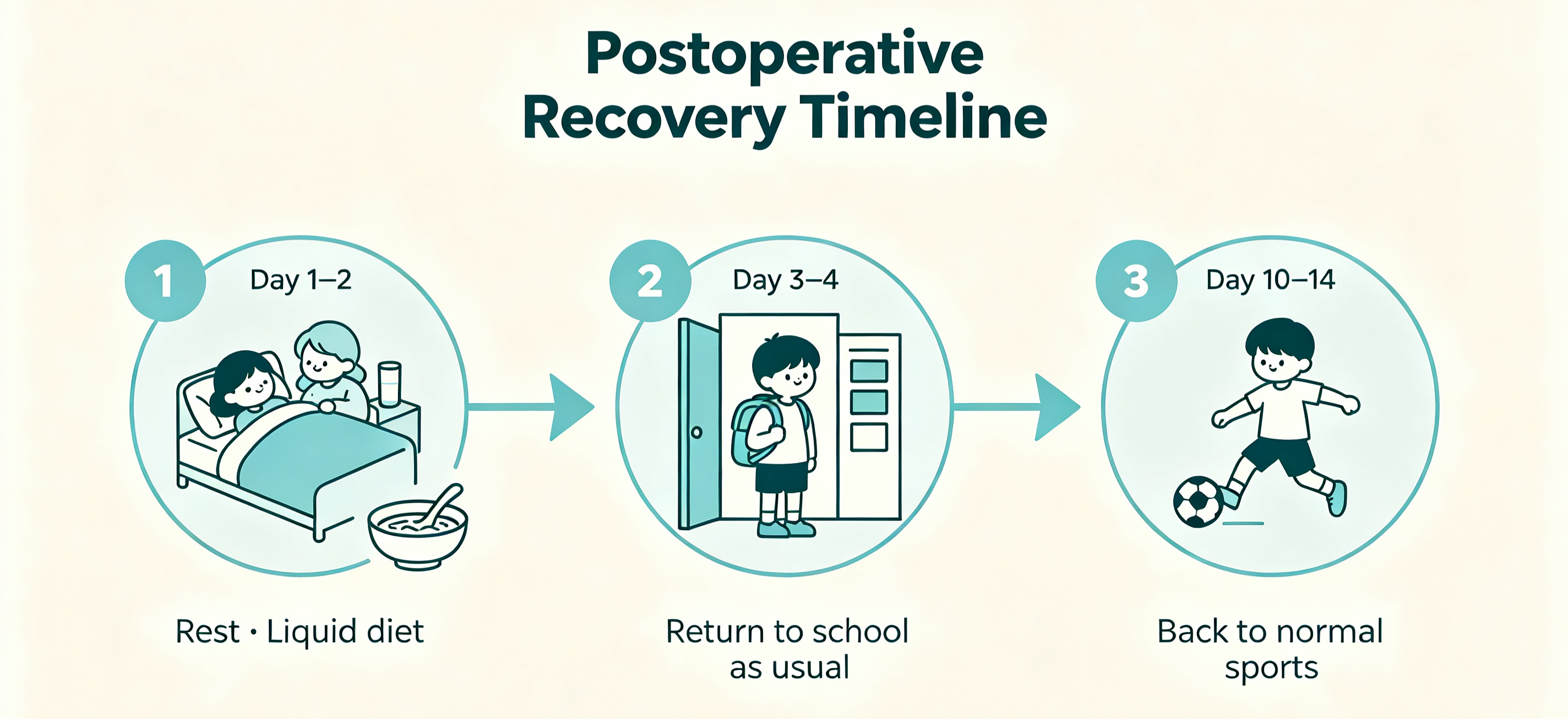
· Faster recovery: many children return to school within 2–3 days
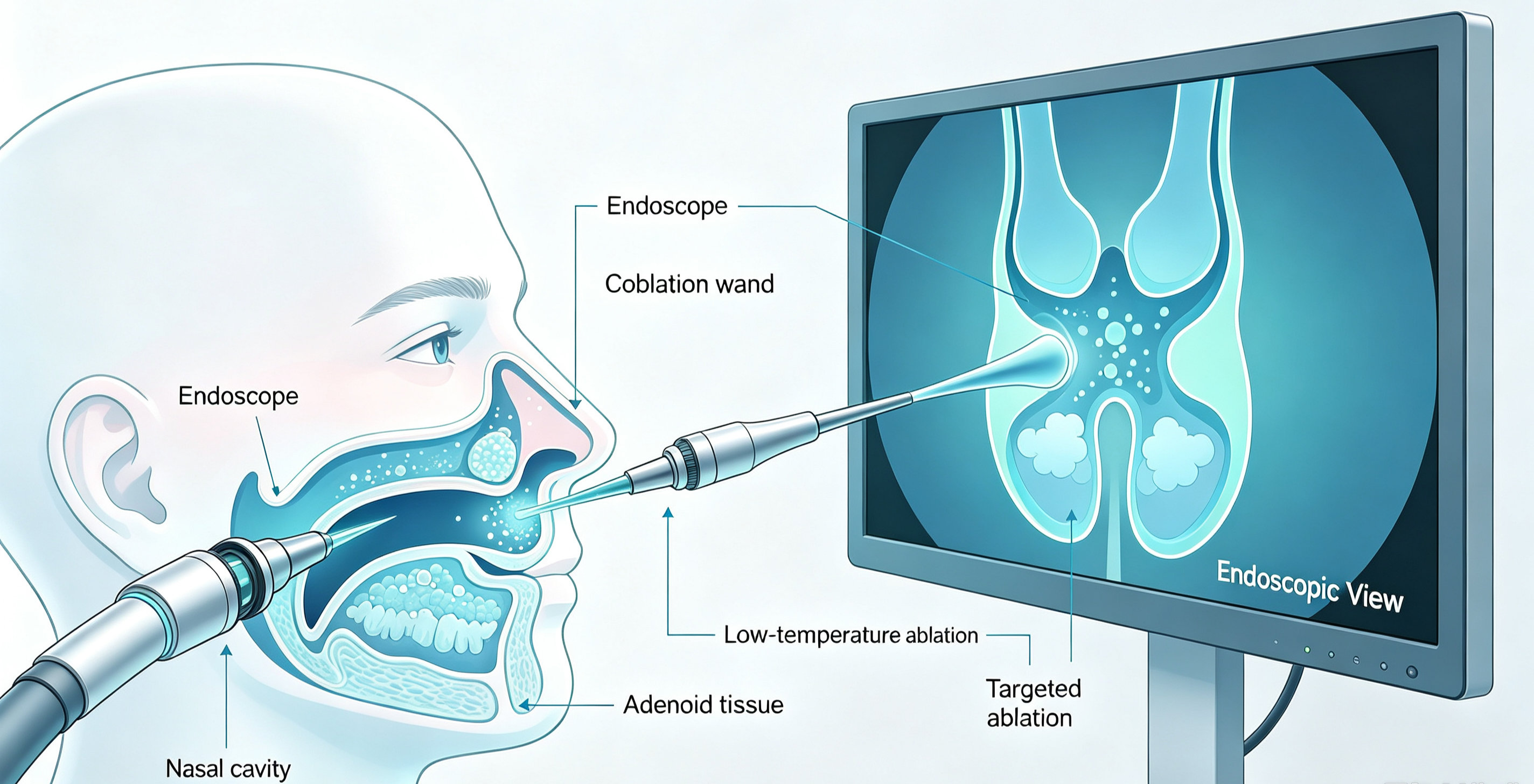
The main disadvantage is a slightly longer operating time (about 26 minutes vs. 20 minutes with curettage). Some children may experience temporary bad breath after surgery, which usually resolves within a few days.
Coblation vs. Curettage: Quick Comparison
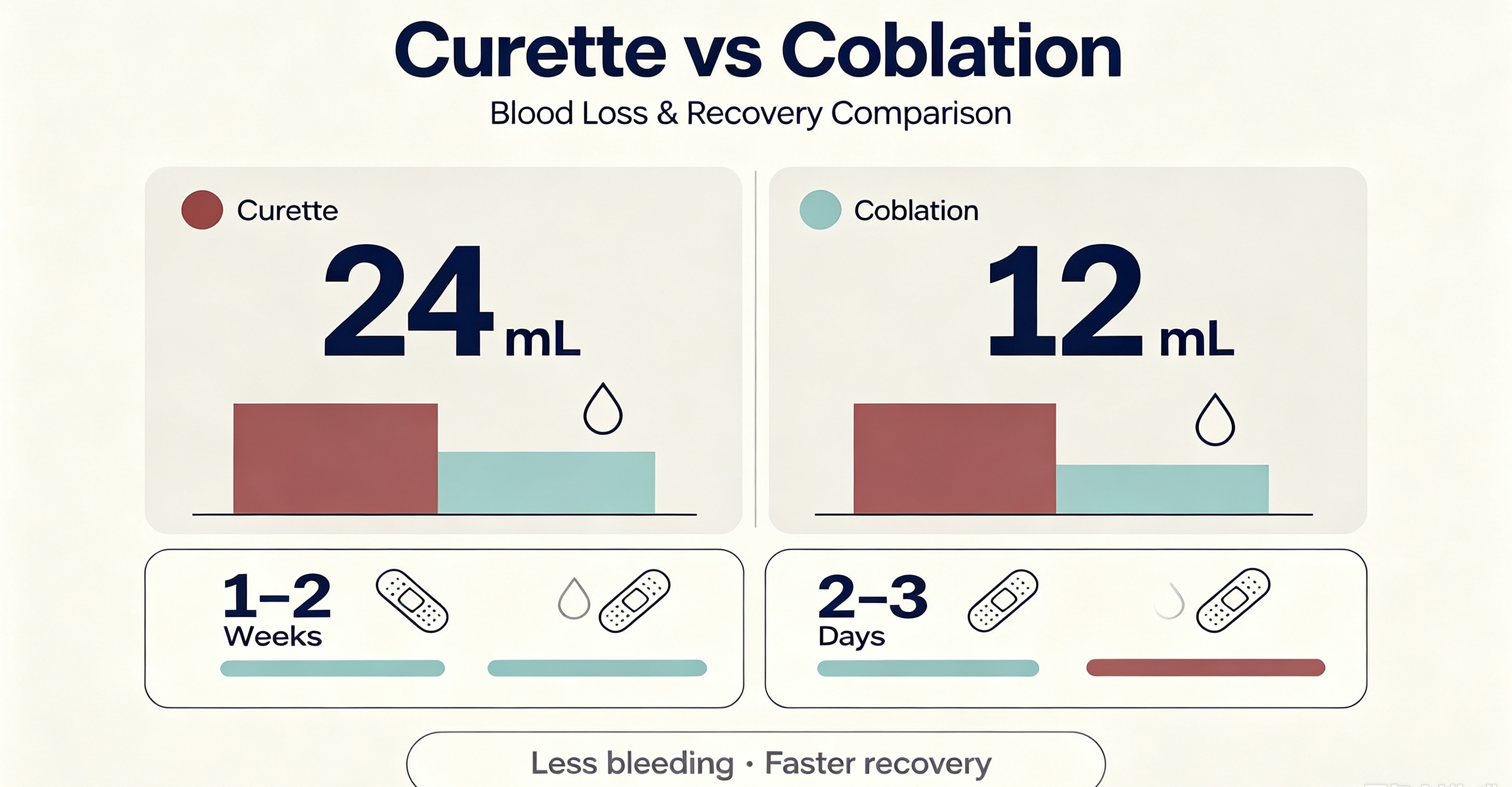
Factor | Curettage | Coblation |
Blood loss | ~24 mL | ~12 mL |
Residual tissue | Higher risk | Lower risk (0% reported in some studies) |
Pain after surgery | Higher | Lower |
Return to normal diet | ~7.6 days | ~2.4 days |
Recovery time | 1–2 weeks | 2–3 days (school return) |
Common Questions from Parents
Does every child with enlarged adenoids need surgery?
No. Mild cases may improve with medical treatment, such as nasal sprays. Surgery is usually considered for children with persistent breathing problems, sleep apnea, recurrent ear infections, or symptoms that do not respond to treatment.
Can adenoids grow back?
Adenoid regrowth can occur, but it is uncommon, usually around 5–10%. The precision of Coblation may help reduce the chance of remaining tissue that could contribute to regrowth.
Is Coblation more expensive?
The disposable Coblation wand increases the procedure cost. However, shorter recovery time, reduced bleeding, and fewer postoperative issues may help balance the overall cost.
What are the risks of adenoidectomy?
Possible risks include bleeding, infection, and anesthesia-related complications. Overall complication rates with Coblation are similar to or lower than traditional techniques. Major bleeding occurs in less than 0.5% of cases.
What is the best age for adenoidectomy?
Adenoidectomy is commonly performed in children 4 years and older, although younger children may require surgery if symptoms are severe. It is rarely needed after adolescence because adenoids naturally shrink.
The Bottom Line
For children who require adenoidectomy, Coblation provides a safer and more precise alternative to blind curettage.
Compared with traditional curettage, Coblation offers:
· More complete adenoid removal
· Less bleeding
· Less postoperative pain
· Faster recovery
Although Coblation may take slightly longer in the operating room, the benefits in surgical precision and patient recovery make it an increasingly preferred technique for pediatric adenoid surgery.
This article is for educational purposes only and does not replace professional medical advice. Always consult your child’s ENT specialist to determine the most appropriate treatment option.