

Coblation Turbinate Reduction: A Minimally Invasive Solution for Chronic Nasal Congestion
Anyone with chronic nasal congestion knows the feeling—groggy by day, restless at night, mouth-breathing. Nasal sprays lose their effect over time. If this sounds familiar, surgery may be worth discussing.
But the thought of nasal surgery is intimidating—pain? bleeding? will it damage my nose?
Coblation turbinate reduction is changing that.
What Is Turbinate Hypertrophy?
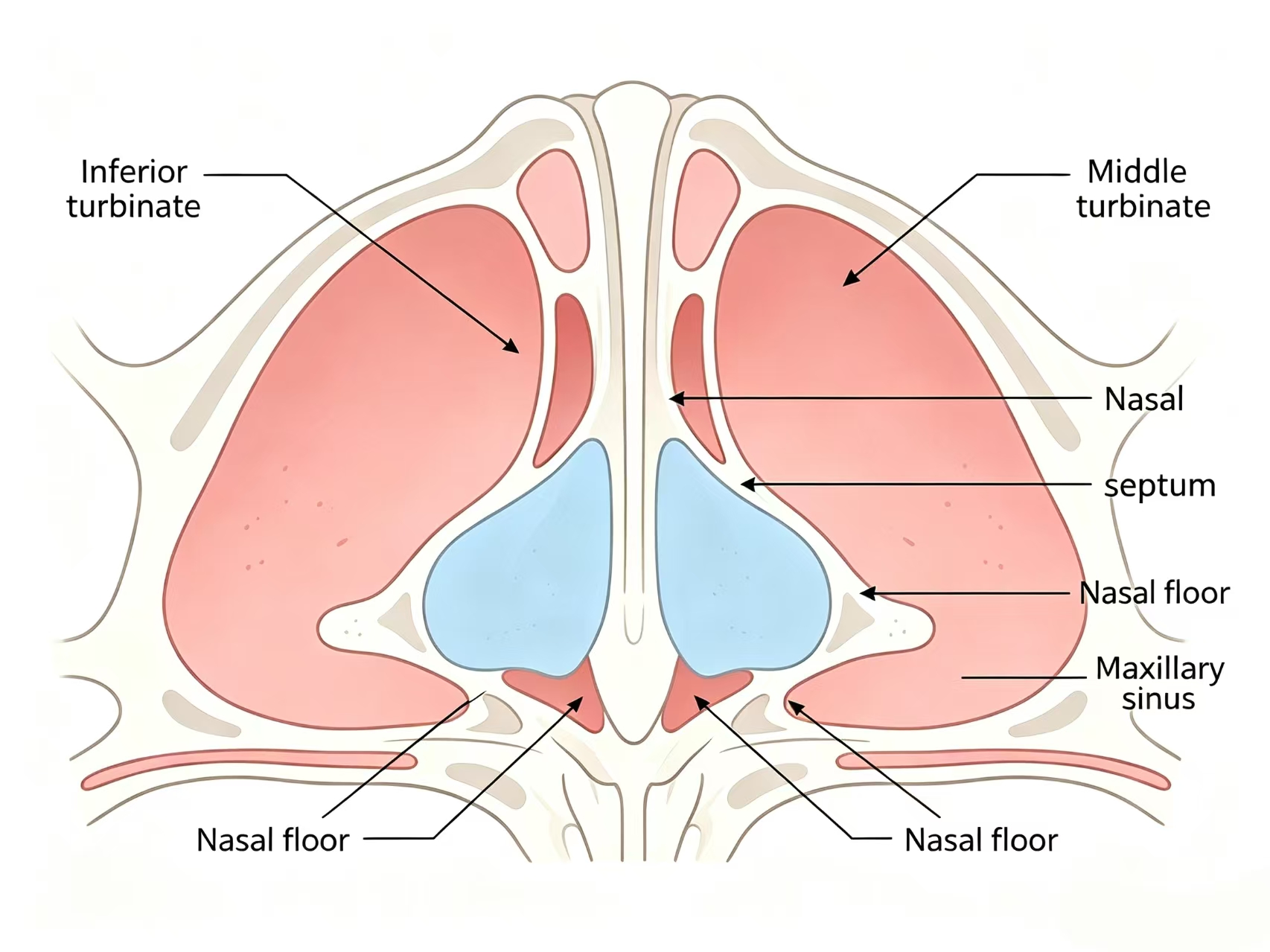
The inferior turbinate is a spongy tissue that warms and humidifies inhaled air. When it enlarges due to chronic inflammation or allergies, it swells like a waterlogged sponge—blocking the airway.
Consider surgery whenmedical therapy (steroids, antihistamines) fails after 3+ monthsand congestion significantly affects your daily life.
Two Surgical Approaches – The Difference
Traditional Partial Turbinectomy | Coblation Turbinate Reduction | |
Method | Tissue resection | Low‑temp (40‑70°C) submucosal ablation |
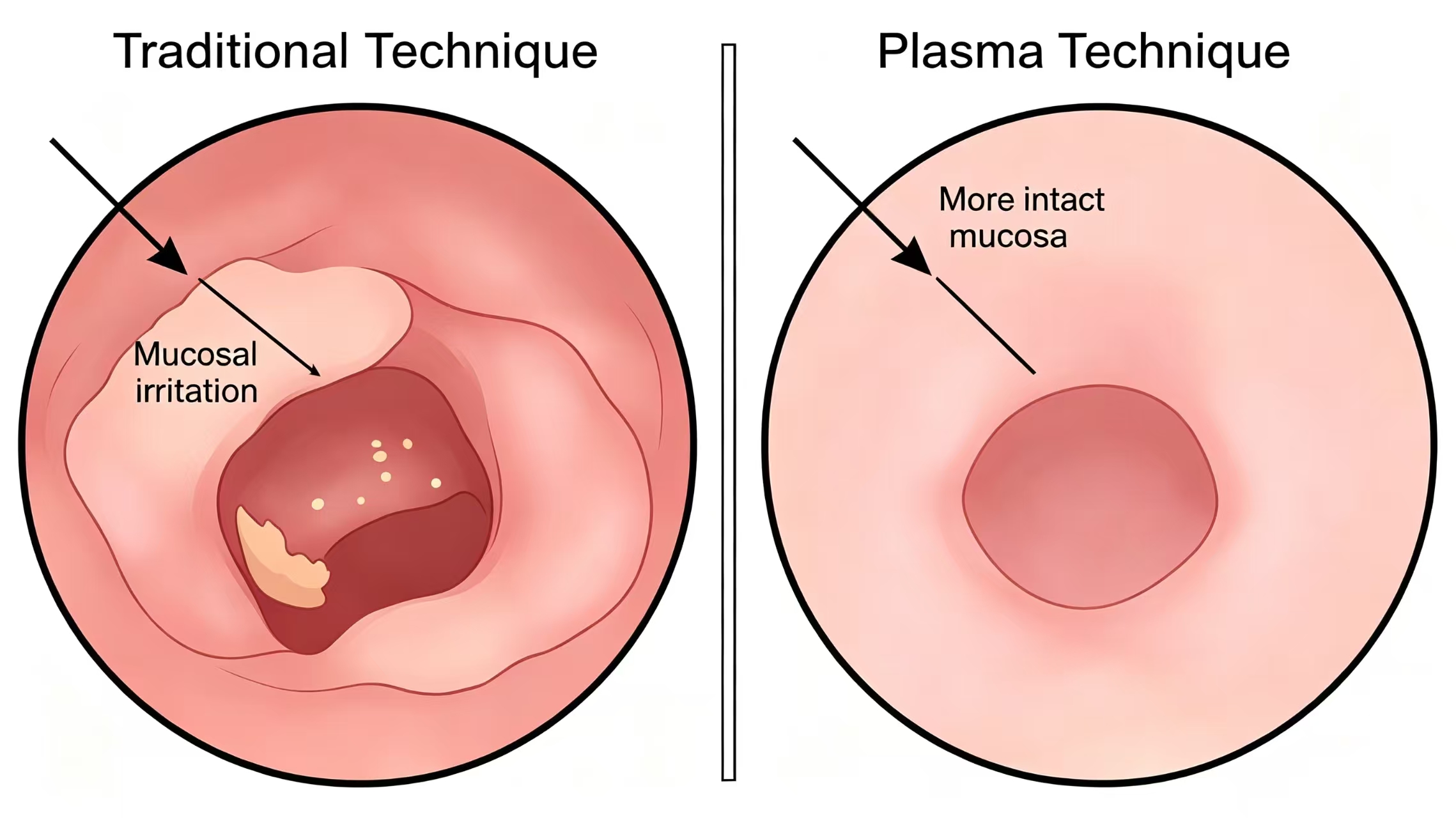
Mucosal impact | Mucosa removed, cilia lost | Mucosa preserved, cilia intact |
Bleeding | Significant, packing needed | Minimal, simultaneous coagulation |
Pain | Significant | Mild |
Complications | Dryness, crusting, adhesions | Fewer |
Hospital stay | 3‑5 days | Outpatient, same‑day discharge |
Bottom line: traditional surgery “demolishes” part of the turbinate; coblation “shrinks” it from within, leaving the turbinate body intact.
What the Data Shows
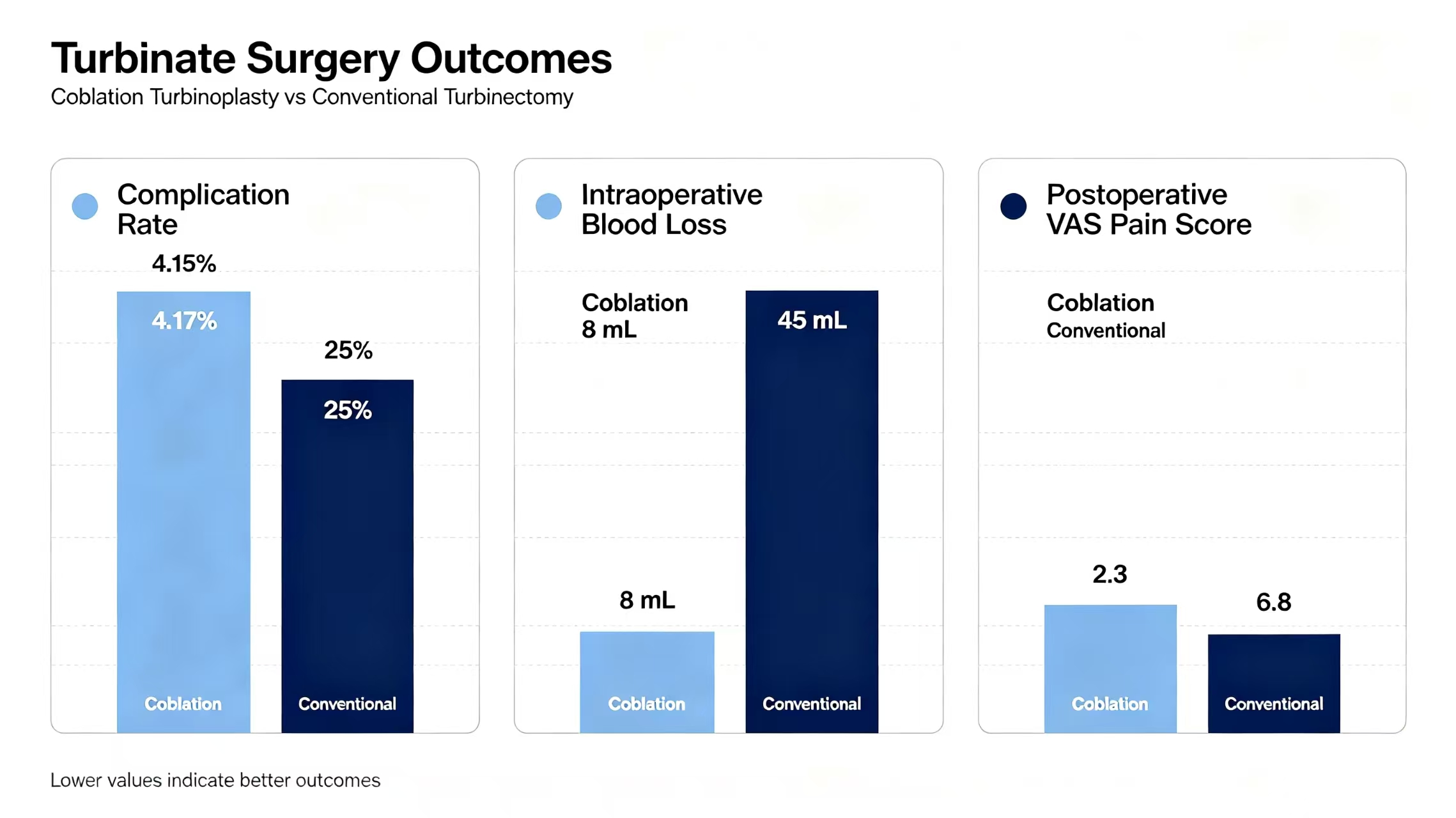
· Fewer complications: 2025 study (96 patients) inJ Med Sci Yanbian Univ: coblation complication rate4.17%vs.25.00%for traditional. Another 80‑patient study:5.0% vs. 20.0%.
· Less bleeding, faster recovery: Coblation blood loss5‑10ml, traditional30‑100ml. 100‑patient study showed significantly shorter operative time, pain duration, and hospital stay.
· Higher efficacy: Overall response rate significantly higher; nasal airway improvement lasts1‑3 years.
· Preserves nasal function: Mucociliary system preserved; animal study confirms reversible damage with recovery in ~20 days. PubMed clinical study confirms benefit persists at 6 months.
· Less pain: Coblation causes significantly less pain than bipolar electrocautery and microdebrider both during and after surgery.
The Procedure
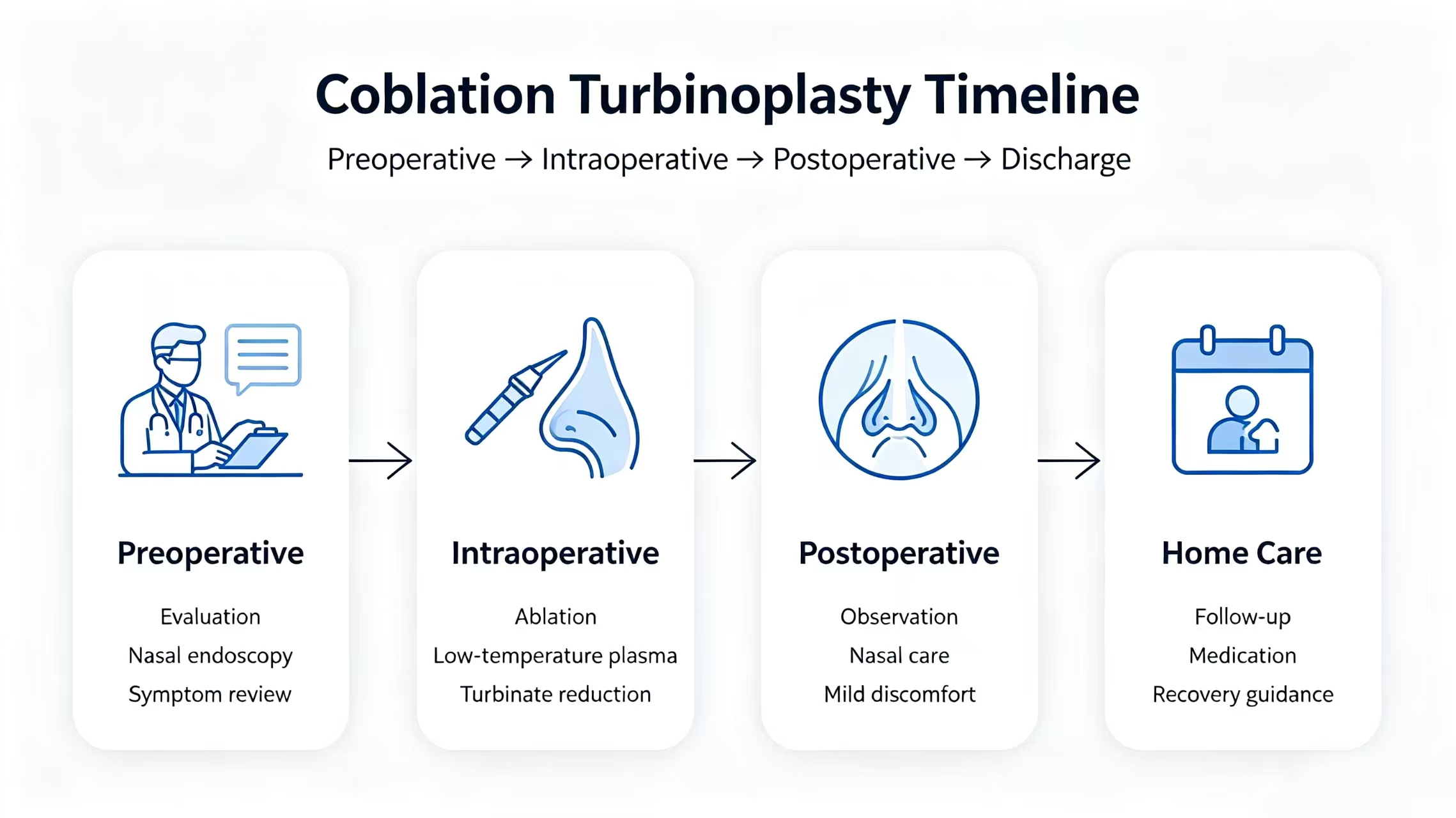
· Pre‑op (15-20 min): Topical and local anesthetic – mild pressure, fades in 10 sec.
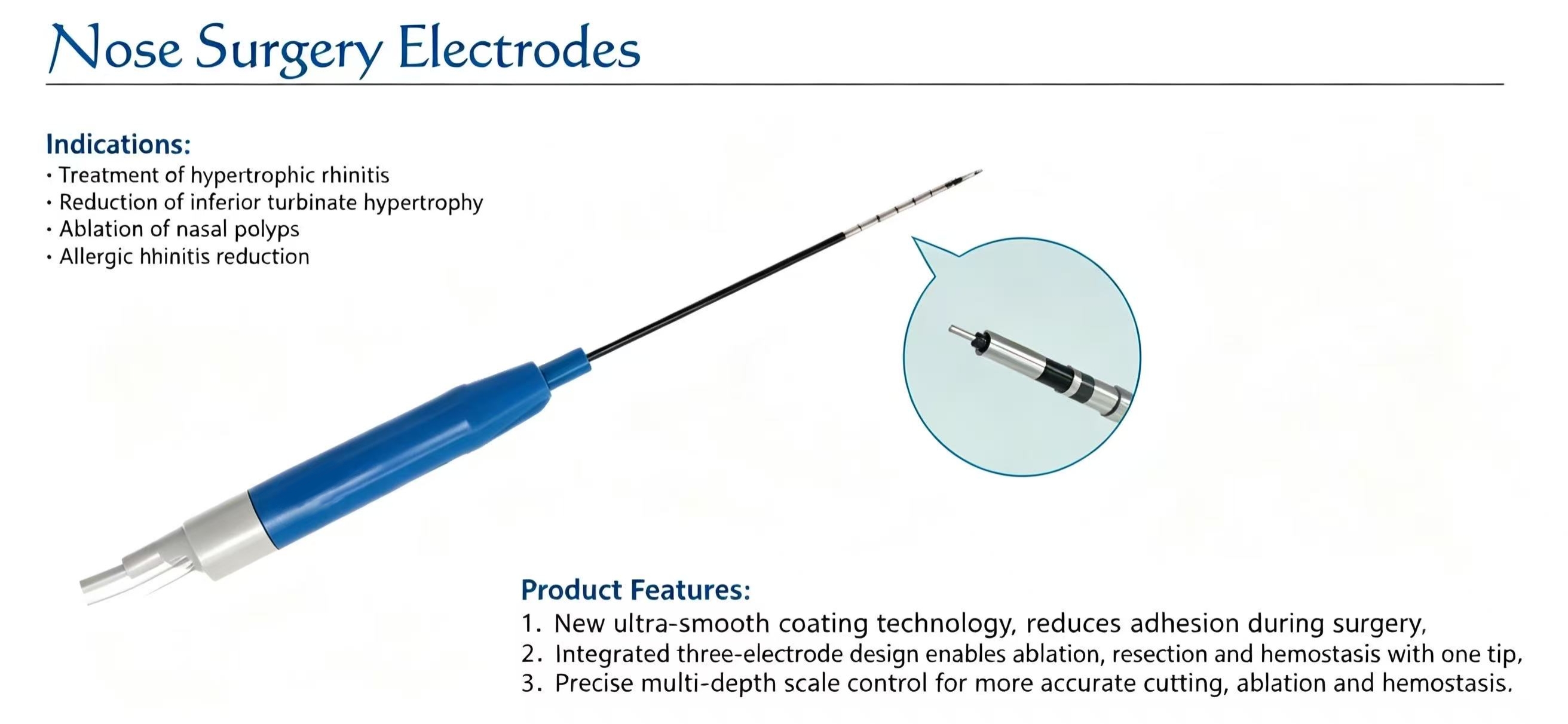
· Procedure (10-15 min): Thin probe inserted alongside turbinate, low‑temp energy ablates tissue. Awake, virtually no bleeding.
· Recovery: Most require no packing, go home same day.
FAQs
· Pain?Only pressure under local; 1‑2 days of stuffiness/soreness like a cold.
· Recovery time?Improvement in 48-72h; swelling resolves ~1 week; avoid forceful blowing/spicy food for 1 month.
· Recurrence?Manage allergies and dust – most remain clear long‑term.
· Side effects?Temporary dryness (1-2 weeks), minor oozing (<24h). Rare complications need medical attention.

Bottom Line
Chronic congestion isn't just annoying – it disrupts sleep, focus, and may strain heart/lungs. If it persists >3 months despite medication, coblation turbinate reduction offers aminimally invasive, low‑bleeding, function‑preservingoption.
For informational purposes only. Consult your ENT specialist.
Keywords: coblation turbinate reduction | turbinate coblation | radiofrequency ablation turbinate rhinitis | chronic hypertrophic rhinitis coblation | turbinate reduction recovery time | coblation turbinate side effects