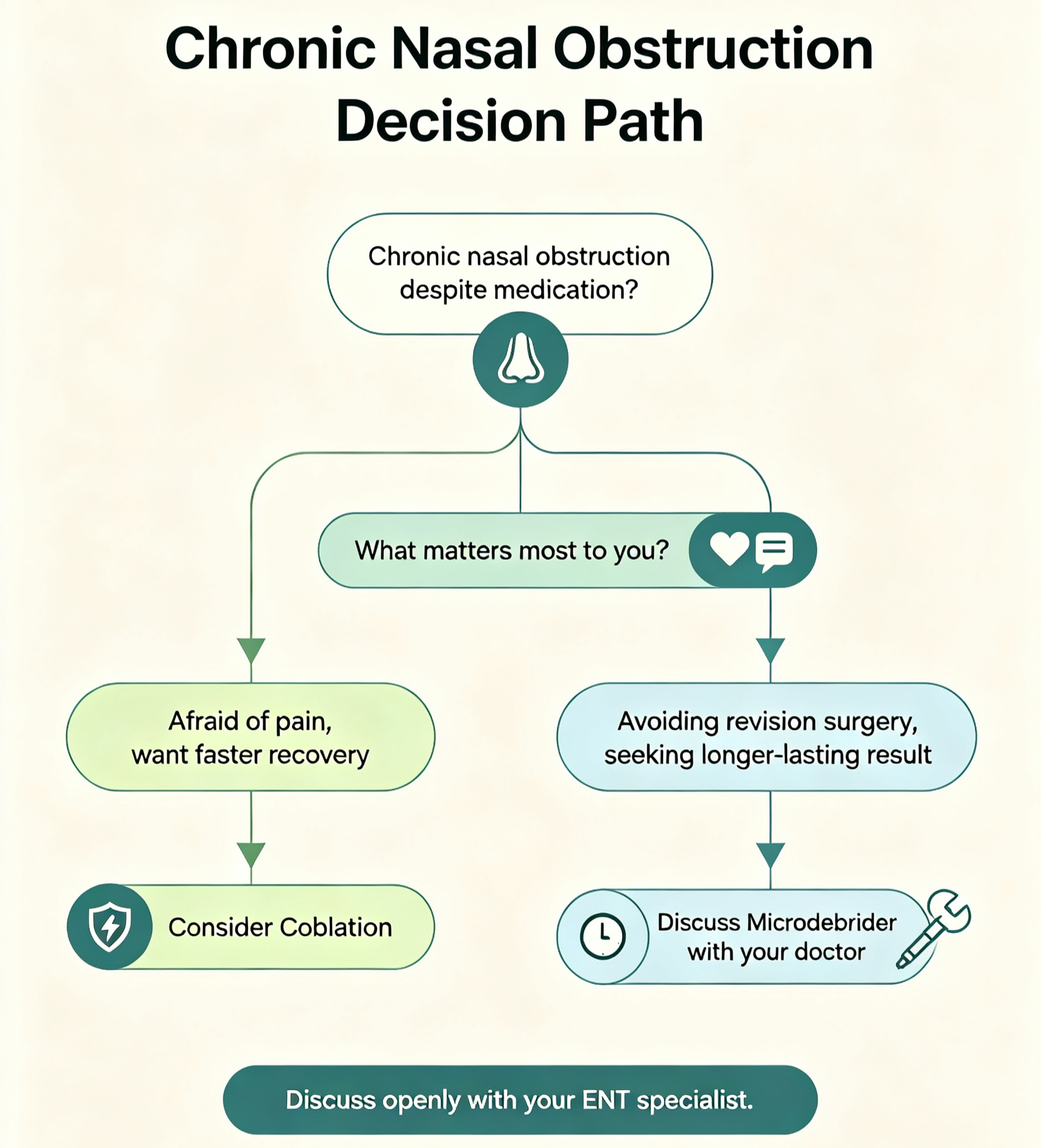
Coblation for Chronic Rhinitis: Does It Really Fix Nasal Obstruction Long-Term?
Why Chronic Nasal Obstruction Happens
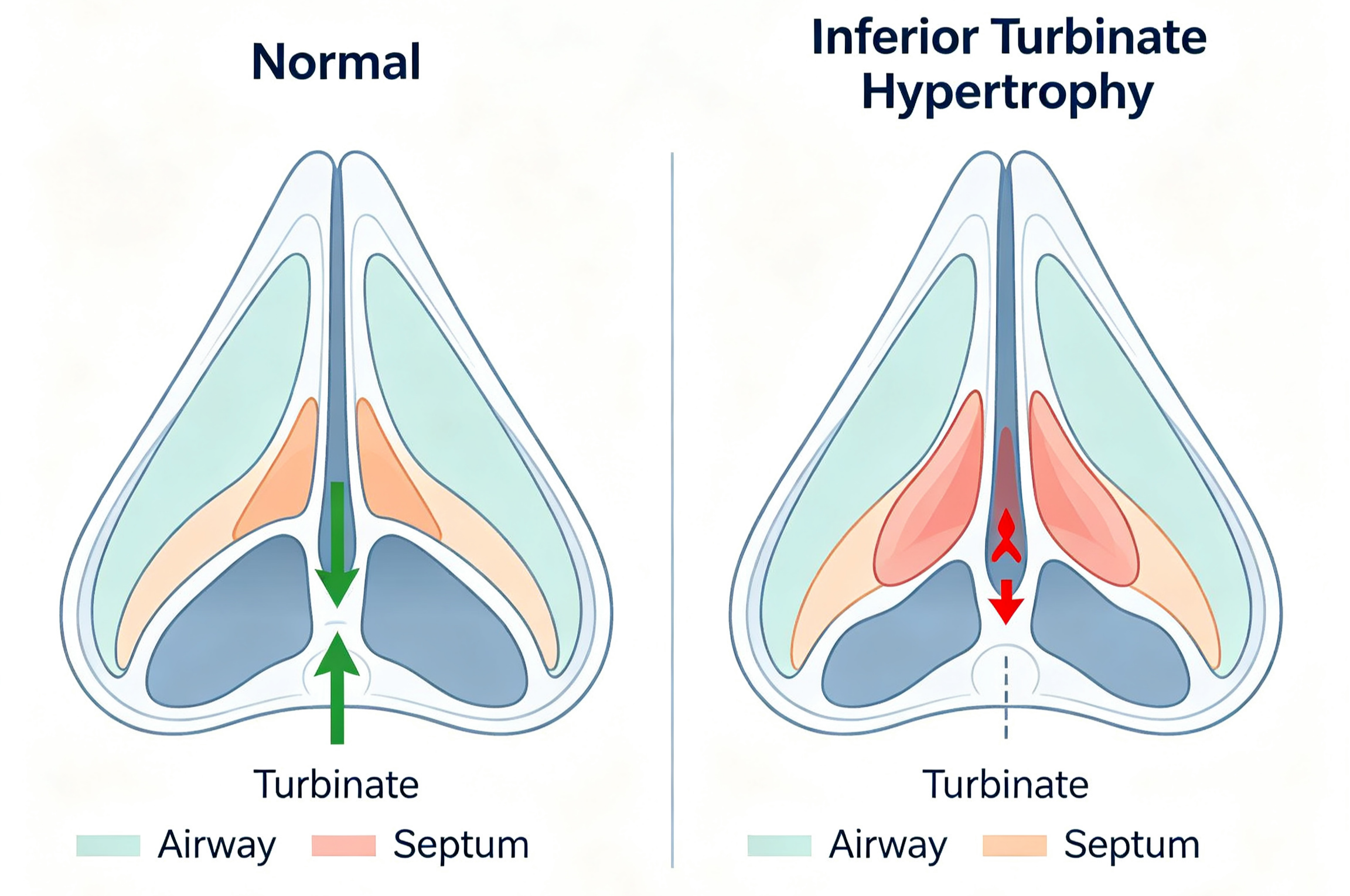
Chronic nasal congestion can affect sleep, concentration, and quality of life. One of the most common causes is inferior turbinate hypertrophy — enlargement of the tissues inside the nose that reduces airflow.
When medications such as nasal sprays and allergy treatments fail to provide enough relief, surgical options may be considered.
Coblation (low-temperature plasma ablation) has become a widely used minimally invasive technique for chronic rhinitis and nasal obstruction. But does it provide long-lasting results, or is the improvement only temporary?
Coblation Provides Strong Short-Term Relief
Clinical studies show that Coblation turbinate reduction can significantly improve nasal breathing.
A 2025 clinical trial reported that NOSE scores (Nasal Obstruction Symptom Evaluation) decreased from 73.1 to 19.3 at 3 months after surgery, representing approximately a 74% improvement. Peak nasal airflow also increased by nearly 60%.
Another study found that patients experienced about 79% improvement in nasal obstruction at 1–2 years after Coblation treatment.
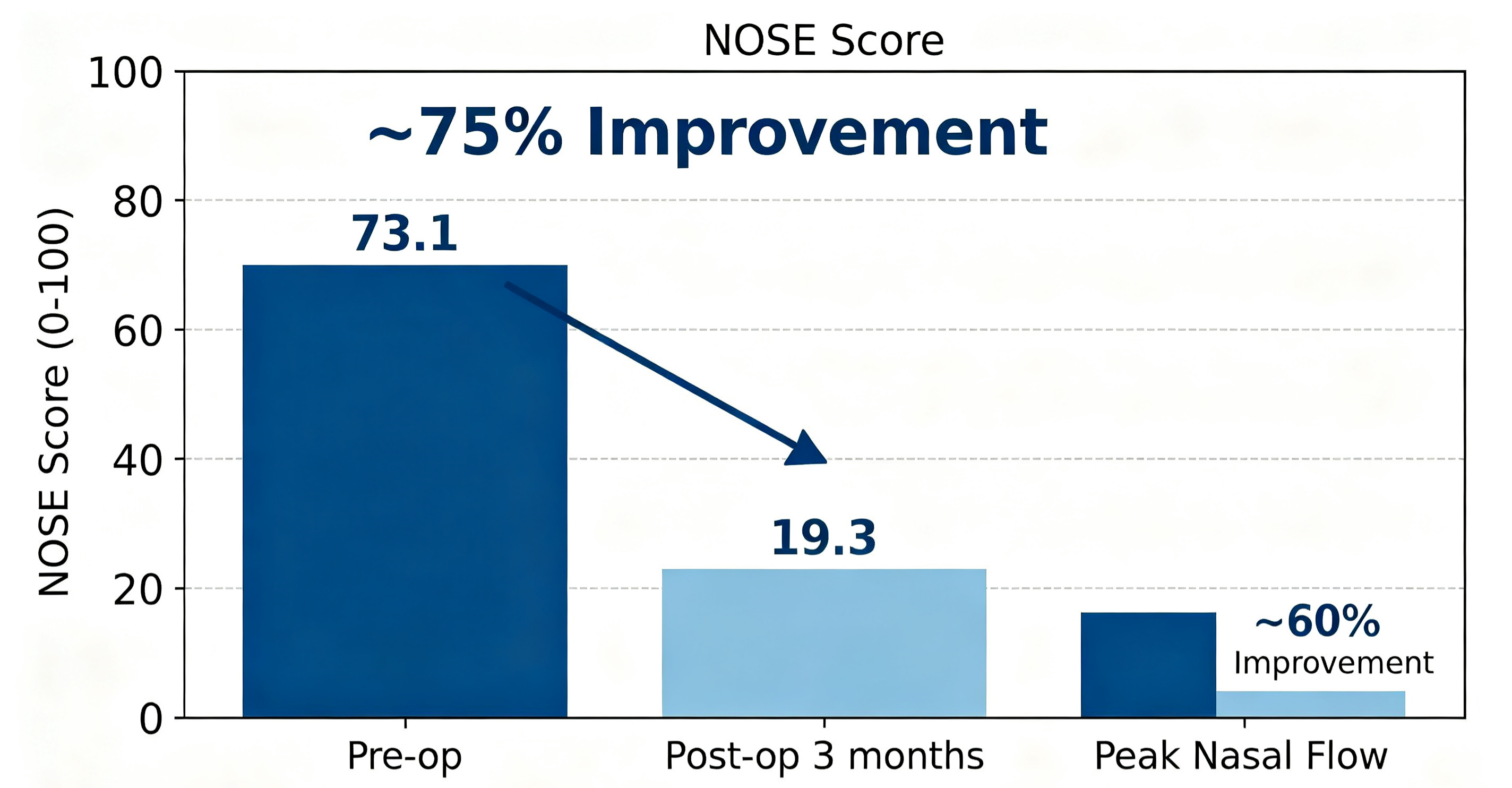
For most patients, Coblation provides noticeable improvement during the first one to two years after surgery.
Does Coblation Last Forever?
The main concern with Coblation for chronic rhinitis is long-term durability.
Research suggests that the benefits may gradually decrease over time. A large meta-analysis of thermal reduction techniques, including Coblation, found that symptom improvement tends to decline during long-term follow-up. A 3-year follow-up study also reported reduced effectiveness over time.
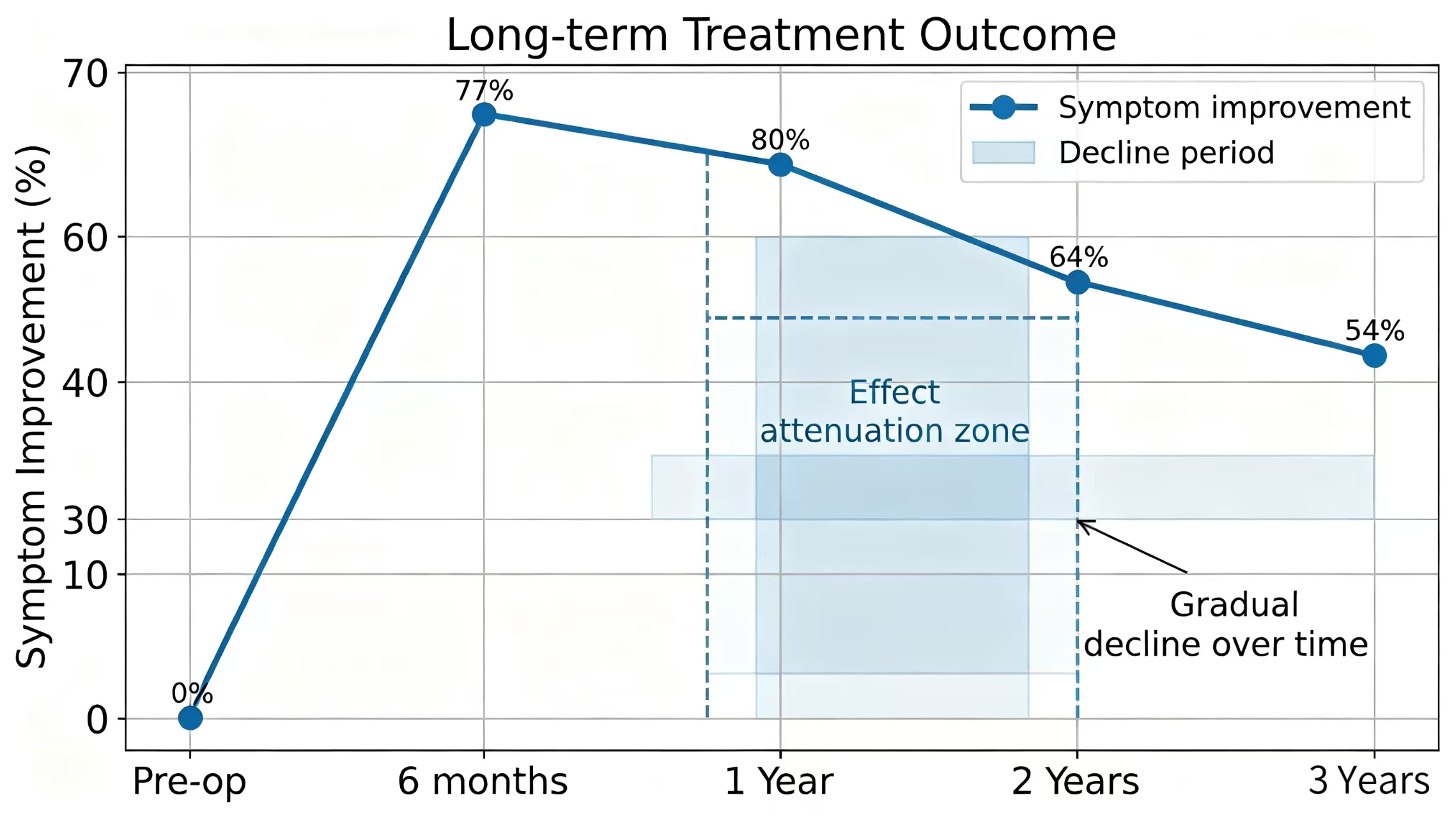
The reason is that Coblation mainly reduces soft tissue volume while preserving surrounding structures. However, it may not completely address underlying inflammation or changes in the nasal tissues. In some patients, tissue swelling may gradually return, causing recurrent nasal obstruction.
Coblation vs Microdebrider: Comfort vs Durability
When comparing long-term results, the main alternative to Coblation is the microdebrider, a mechanical device that removes hypertrophic tissue.
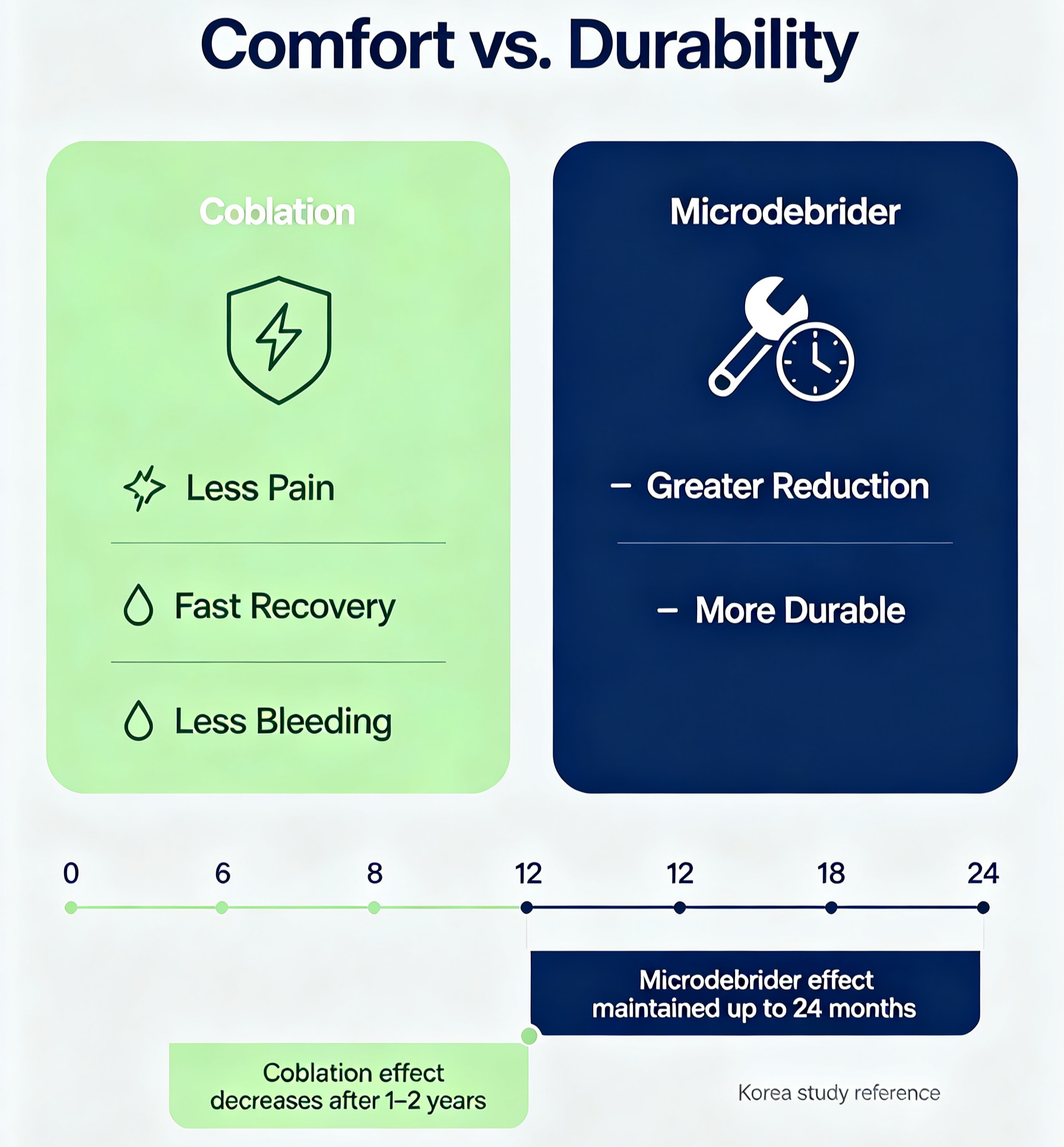
Coblation | Microdebrider | |
Pain and bleeding | Lower | Higher |
Recovery | Faster | Slower |
Short-term relief | Excellent | Excellent |
Long-term durability | May decrease after 1–2 years | More sustained |
A Korean 2-year clinical study found that microdebrider turbinate reduction maintained significant improvement at 24 months, while the Coblation group showed reduced statistical significance after 6 months.
Other research has also suggested higher long-term patient satisfaction with microdebrider treatment.
In simple terms:
· Coblation offers less trauma, faster recovery, and better comfort.
· Microdebrider may provide more durable tissue reduction.
Recovery and Safety of Coblation
One of the biggest advantages of Coblation is its minimally invasive nature.
Compared with traditional turbinate surgery, Coblation generally causes:
· Less postoperative pain
· Less bleeding
· Less crusting
· Faster recovery
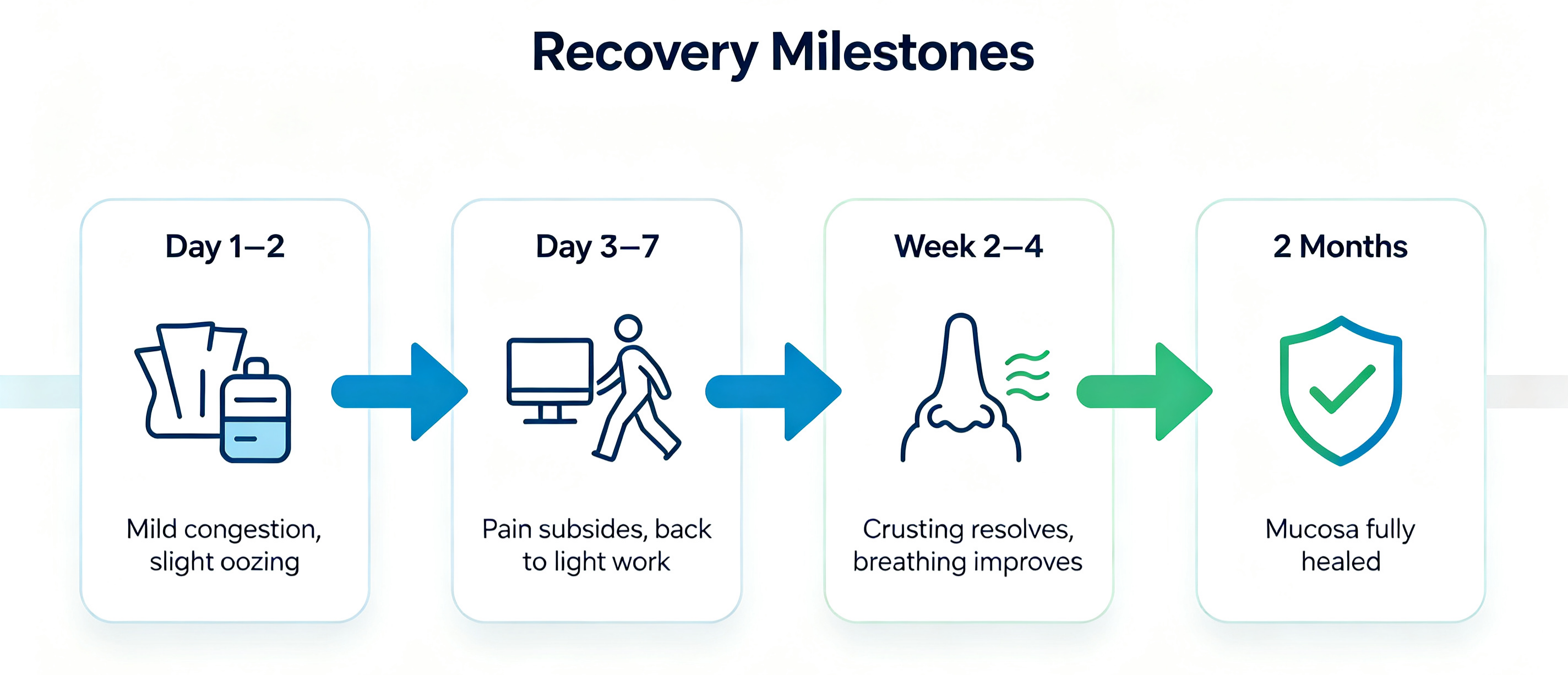
Most patients can return to normal activities within about one week. Complications are uncommon, although temporary bleeding, infection, or nasal discomfort may occur in some cases.
The Bottom Line
Coblation for chronic rhinitis is not a permanent cure, but it remains an effective and safe option for many patients with nasal obstruction.
It is especially suitable for people who prioritize:
· Lower surgical trauma
· Faster recovery
· Reduced postoperative discomfort
For patients seeking the most durable long-term result, discussing Coblation vs microdebrider with an ENT specialist is important.
Coblation may not last forever, but for many patients it provides years of improved breathing with fewer risks and a smoother recovery experience.